
Discover the Stunning European-Style Fountain Garden at Suma Rikyu Park


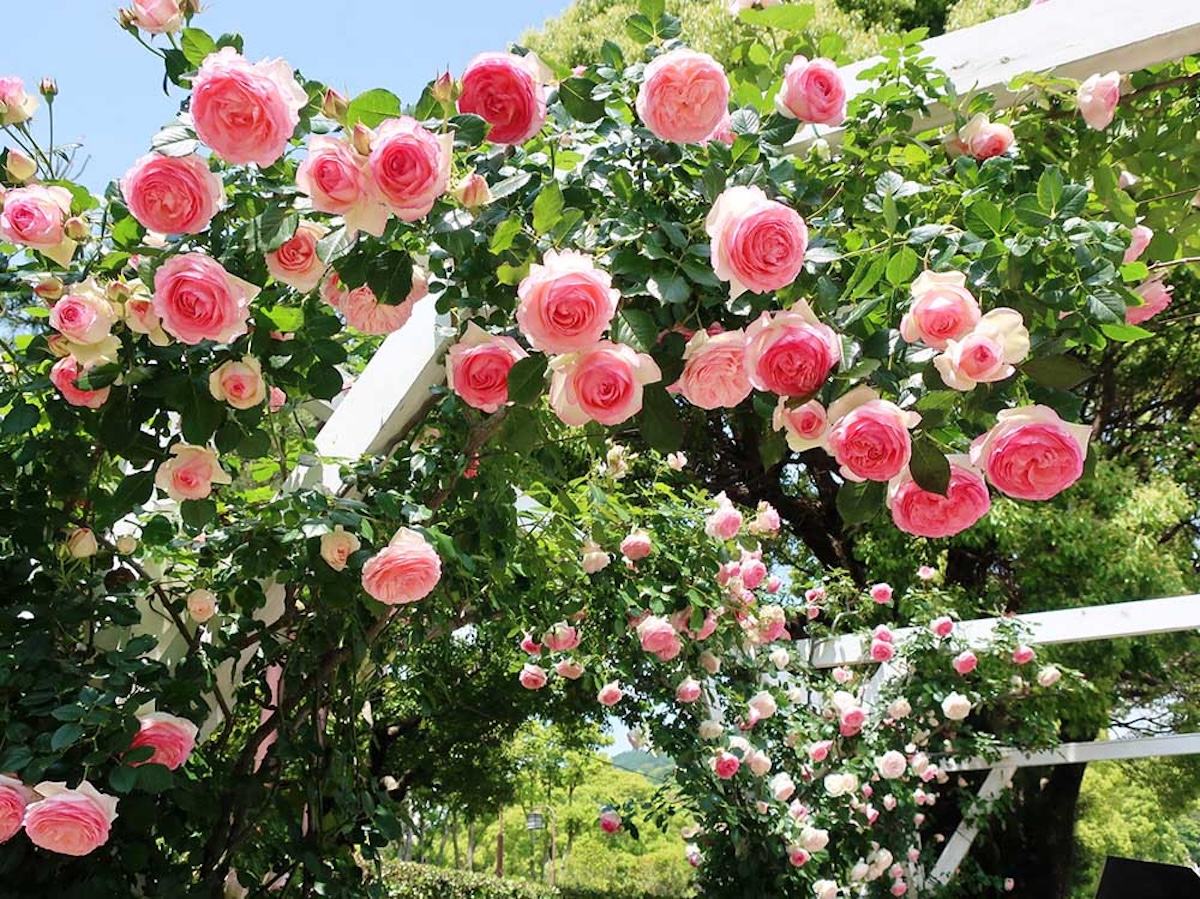
The Suma area has long been known as a place of relaxation and is home to historical sites dating back to the Heian period. Kobe Municipal Suma Rikyu Park (hereafter “Suma Rikyu Park”) was created on the former grounds of Muko Rikyu, an imperial villa. The park is filled with seasonal flowers throughout the year, but its highlight is the elegant European-style Fountain Garden, built in the 1960s. Roses are planted symmetrically along the central waterway, creating a stunning display that reaches its peak twice a year, in spring and autumn.
The “Rose Garden of Royalty”
A Garden Developed to Commemorate an Imperial Wedding
Suma Rikyu Park is an urban park built on the former site of Muko Rikyu, once an imperial villa for the Japanese Imperial Family. Development of the park began in 1958 as a commemorative project celebrating the wedding of the then Crown Prince, now His Majesty the Emperor Emeritus, and it officially opened to the public in 1967. The park consists of the Main Garden, featuring its iconic fountain plaza and covering 17.8 hectares (44.0 ac), and the Botanical Garden, spanning 5.2 hectares (12.8 ac). Together, the grounds are large enough to enjoy a leisurely stroll of around two hours.
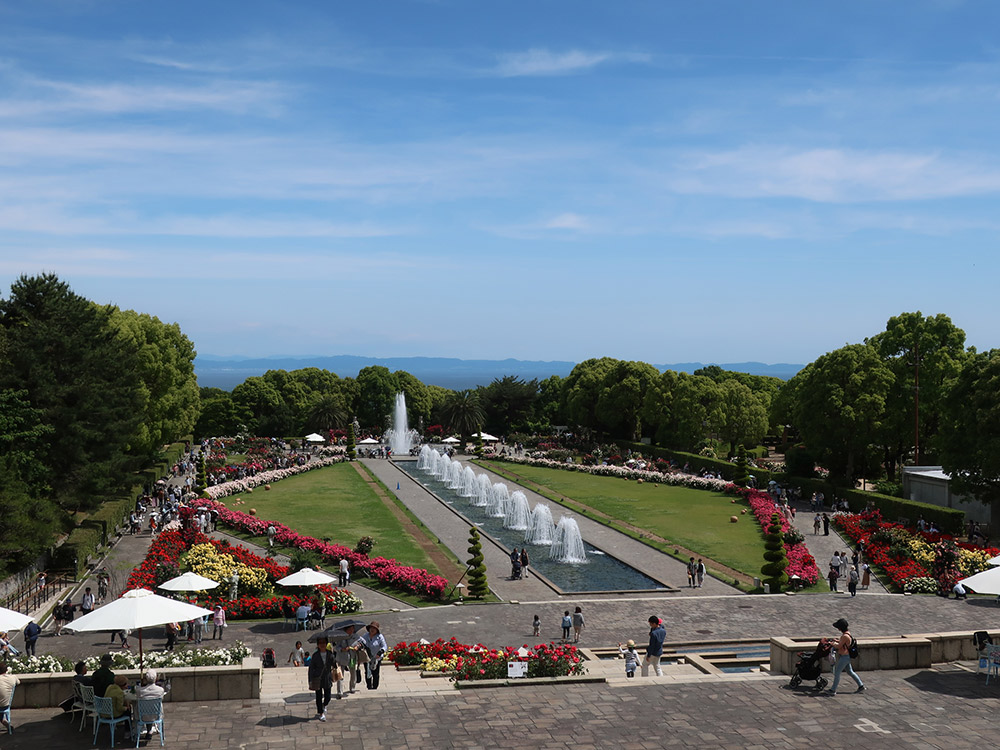
The Main Garden was designed by the Faculty of Engineering at Kobe University and features a beautifully landscaped European-style fountain garden inspired by the theme of water. Water flowing from the Rest House cascades down the Main Falls, continues through a series of cascading channels, and runs along a straight watercourse through the center of the park before reaching the impressive Grand Fountain.
Lining both sides of this waterway in perfect symmetry is the Rose Garden of Royalty, the park’s signature attraction. Around 4,000 rose bushes representing approximately 180 varieties create a magnificent display in spring and autumn. In addition to the rose garden, the Main Garden also includes a Camellia Garden and an Iris Garden.
Meanwhile, the Botanical Garden offers a diverse collection of landscapes, including a greenhouse, a traditional Japanese garden, the Flower Garden, Plum Garden, Peony Garden, Hydrangea Garden, and the Maple Walk. Designed around a year-round succession of blooms, the garden ensures that something is always in season whenever you visit.
This continuous floral display is one of its greatest attractions, inspiring many visitors to return again and again throughout the year.
At Suma Rikyu Park, a wide variety of events are held throughout the year. Visitors can enjoy guided park tours, butterfly observation sessions, craft workshops, tree climbing, yoga classes, concerts, and many other activities. Be sure to check the park’s website before your visit to see what’s on.
One highly recommended program is the “Rose Grower” Annual Rose Care Course. Designed for anyone interested in learning how to grow beautiful roses, the course includes two classroom lectures and ten outdoor practical training sessions spread over the course of a year. Advance registration is required, and participation is limited to the first 20 applicants. The fee is ¥1,000 per session.
Learning directly from professional rose growers is a great way to improve your gardening skills, and you may even make new friends who share your passion for gardening. We encourage you to join this rewarding program!
Best Time to Visit the Rose Garden of Royalty:
Mid–Late May & Late Oct.–Nov.
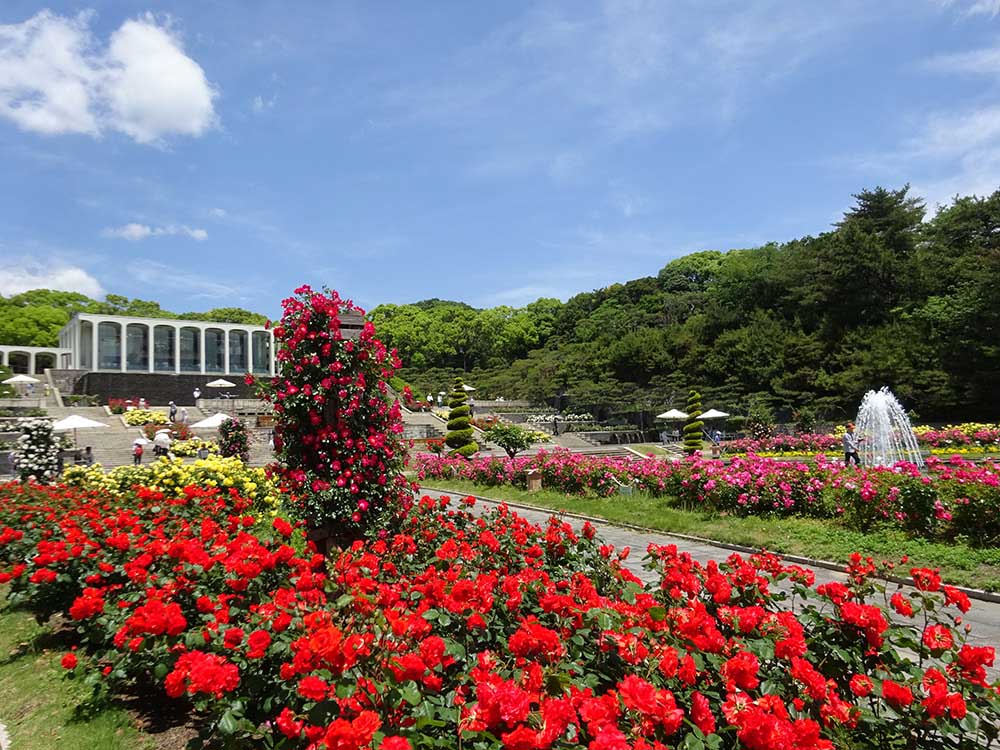
The highlight of the Main Garden is the Rose Garden of Royalty. The roses are at their peak in mid-May, when around 4,000 rose bushes representing approximately 180 varieties burst into bloom.
Reflecting the site’s history as the former location of an imperial villa, the garden features a collection of roses named after members of the Japanese Imperial Family, European royalty and nobility, and renowned artists. The garden is laid out in a perfectly symmetrical design on either side of a long central fountain canal.
In the foreground, the vibrant red ‘Cin Cin’ roses—named after the Italian toast meaning “cheers”—create a striking display, while the obelisk-trained ‘Dortmund’ roses at the far end complete this beautiful cornershowcasing red roses.
The park is also home to the World Hall of Fame Rose Garden, featuring all 17 rose varieties inducted into the World Federation of Rose Societies Hall of Fame, as well as the Rose History and Culture Garden, where visitors can trace the evolution of roses from wild species and Old Roses to modern hybrids.
Don’t miss the collection of historically significant roses that played a key role in rose breeding, including Rosa chinensis, the ancestor of repeat-flowering roses, and Rosa foetida, the species that brought yellow roses into modern rose breeding.
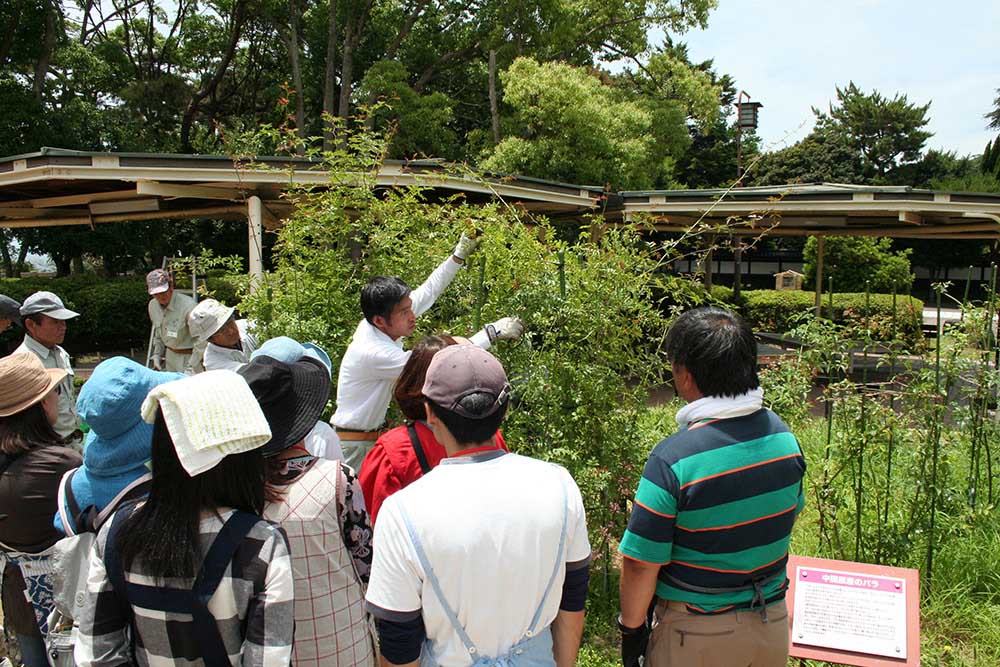
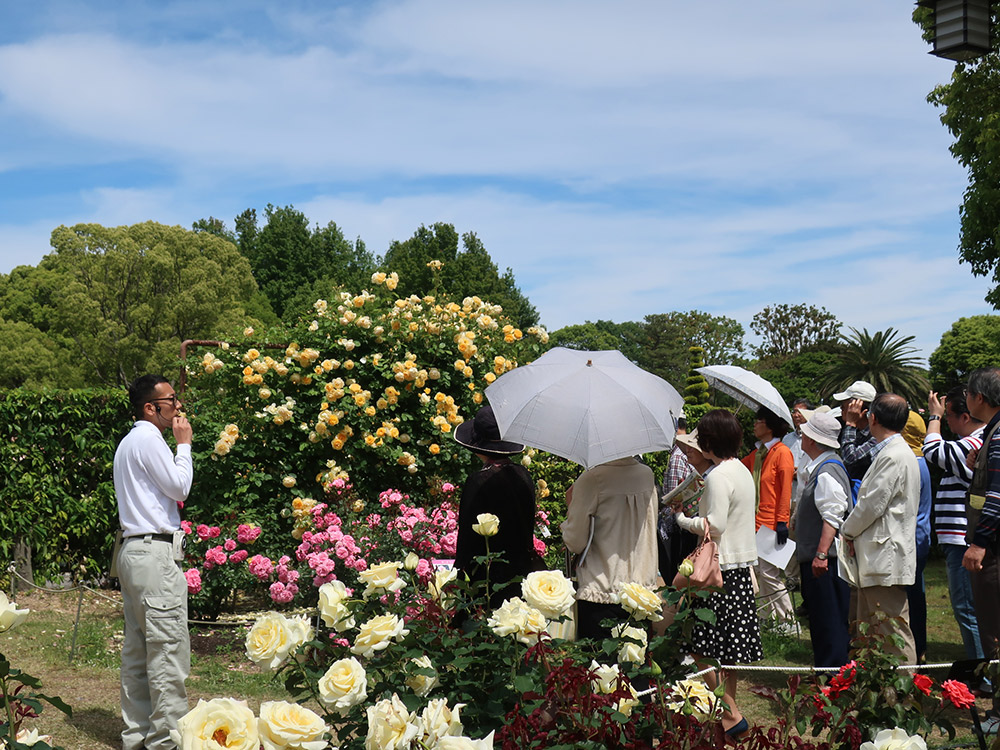
The photo shows one of the Rose Garden Guided Tours, held on Sundays during the Rose Festival. No reservation is required. The tours are offered twice daily, at 10:30 a.m. and 1:30 p.m., and last approximately 30 minutes, providing visitors with an informative introduction to the Rose Garden.
More Than Just Roses!
Experience the Colorful Beauty of the Four Seasons at Suma Rikyu Park
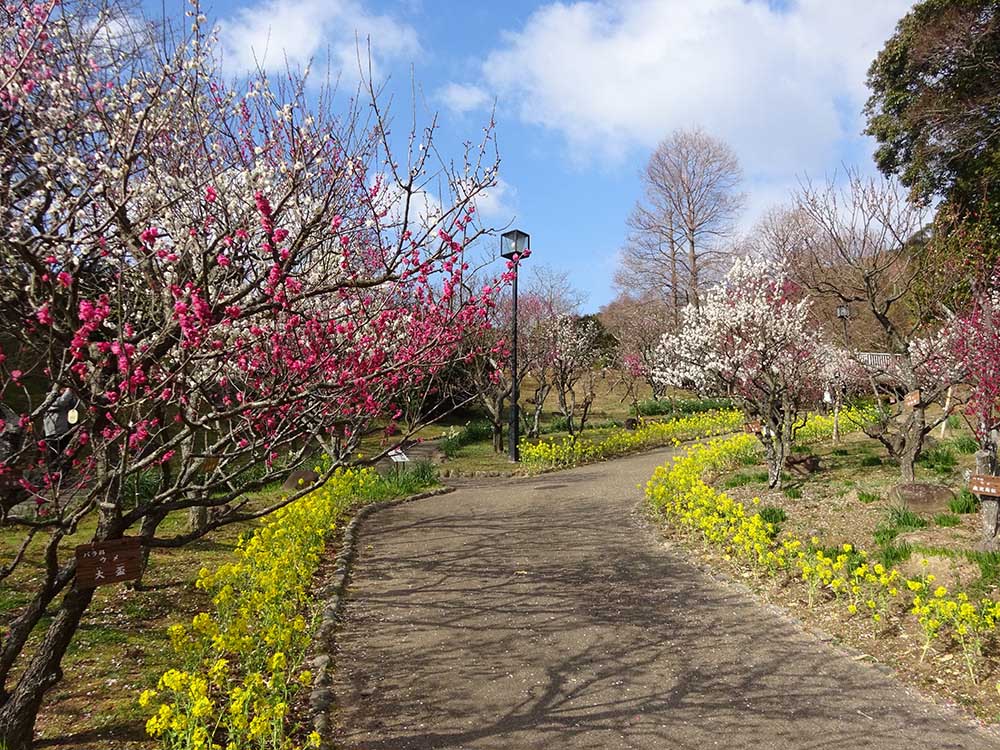
At the Plum Grove in Suma Rikyu Park, the early-blooming varieties ‘Tamabotan’ and ‘Yaekan-ko’ begin flowering in early January. The 1,500-square-meter grove is home to approximately 160 plum trees representing around 20 varieties, with the best viewing season lasting from February to early March.
During this time, bright yellow rapeseed blossoms also bloom at the trees’ feet, creating a cheerful scene that signals the arrival of spring. From early to late February, the park hosts Plum Blossom Viewing events and traditional tea ceremonies.
In early March, visitors can also enjoy the popular variety ‘Omoi no Mama’, whose blossoms appear in both red and white on a single tree, making it one of the grove’s most distinctive attractions.
The photo shows the Flower Garden area, where roses, perennials, and annuals are planted together to create vibrant seasonal displays throughout the year.
Each year, the flower beds are designed around a different theme. This photo, taken in 2019, features the theme “Three Eyes (Three ‘Ai’)”—a playful concept based on the Japanese pronunciation of the word “ai”. It combines “Eye,” represented by striking, eye-catching flowers; “Love” (ai), expressed through charming and cheerful blooms; and “Indigo” (also pronounced “ai” in Japanese), symbolized by blue flowers that evoke the nearby sea of Suma.
Taken in May, the scene showcases one of the park’s most colorful and visually captivating floral displays.
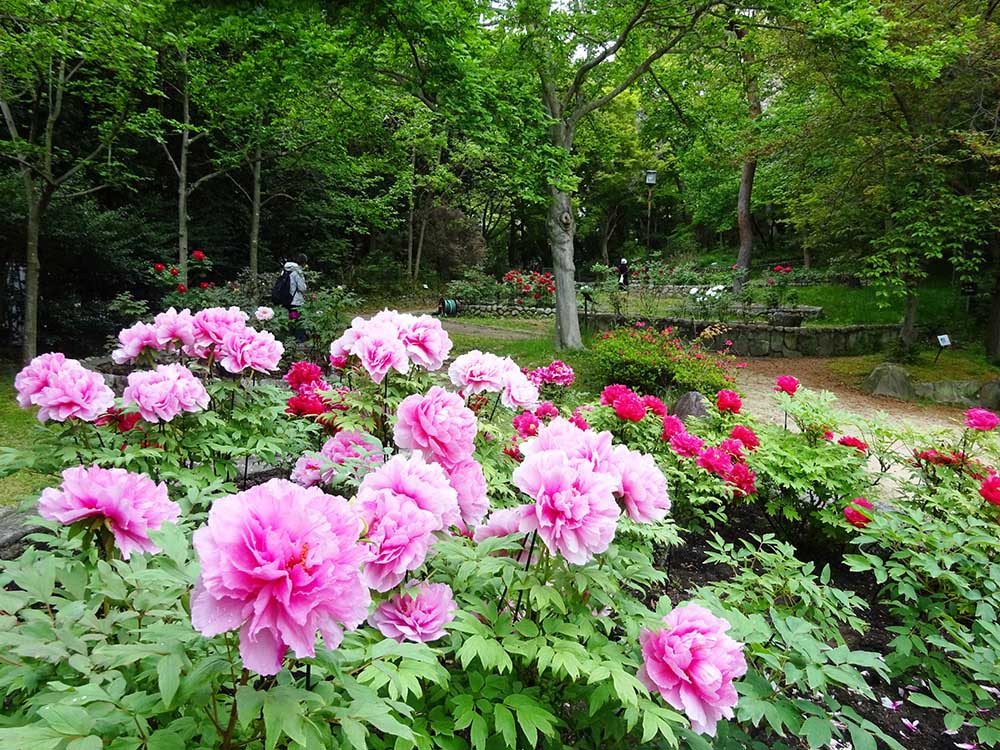
The Peony Garden in the Botanical Garden is at its best from mid to late April. It features approximately 200 peony plants representing around 40 varieties.
Although each individual flower blooms for only about a week, the garden has been carefully planted with a balanced selection of early-, mid-, and late-season varieties, allowing visitors to enjoy a continuous succession of blossoms over an extended period.
With their large, lavish blooms and layers of luxurious petals, the peonies create an elegant display that is sure to captivate every visitor.
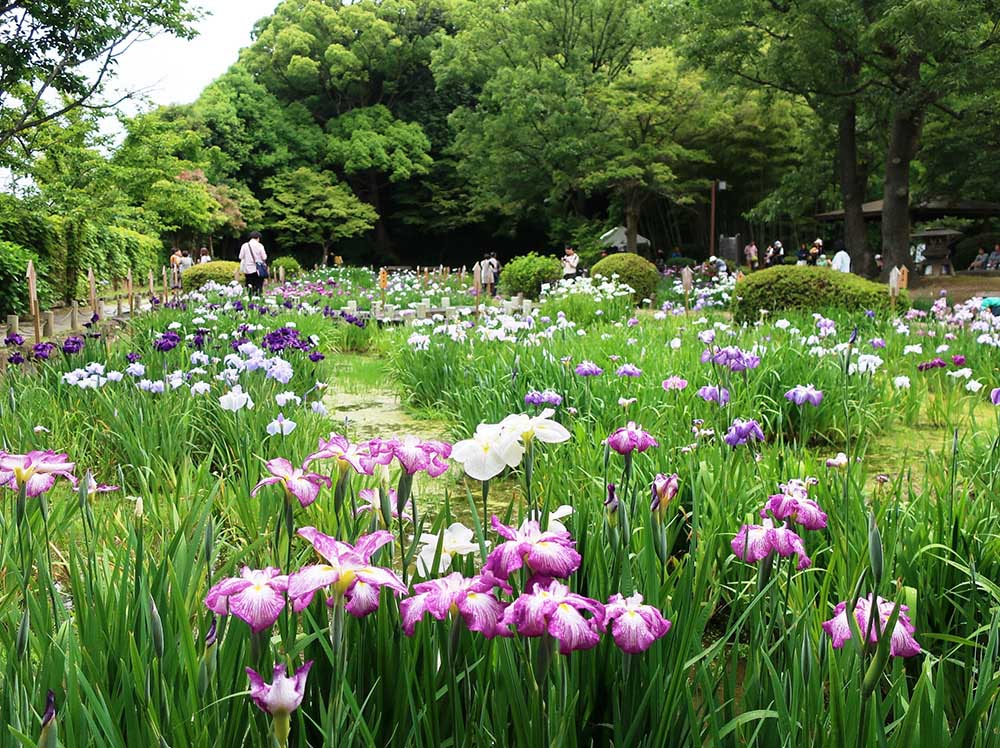
Located in the southeastern part of the Main Garden, the Japanese Iris Garden is home to approximately 4,000 iris plants representing around 60 varieties. The irises are at their peak in mid-May.
The collection includes many historic cultivars and is arranged by traditional horticultural groups, such as the Ise, Edo, and Higo lineages. Visitors can also admire yellow interspecific hybrids and varieties introduced from overseas.
Because this area has been celebrated as a moon-viewing spot since the Heian period (794–1185), the garden also features irises named after characters and places from The Tale of Genji, including ‘Akashi’, ‘Aoi no Ue’, and ‘Hikaru Genji’.
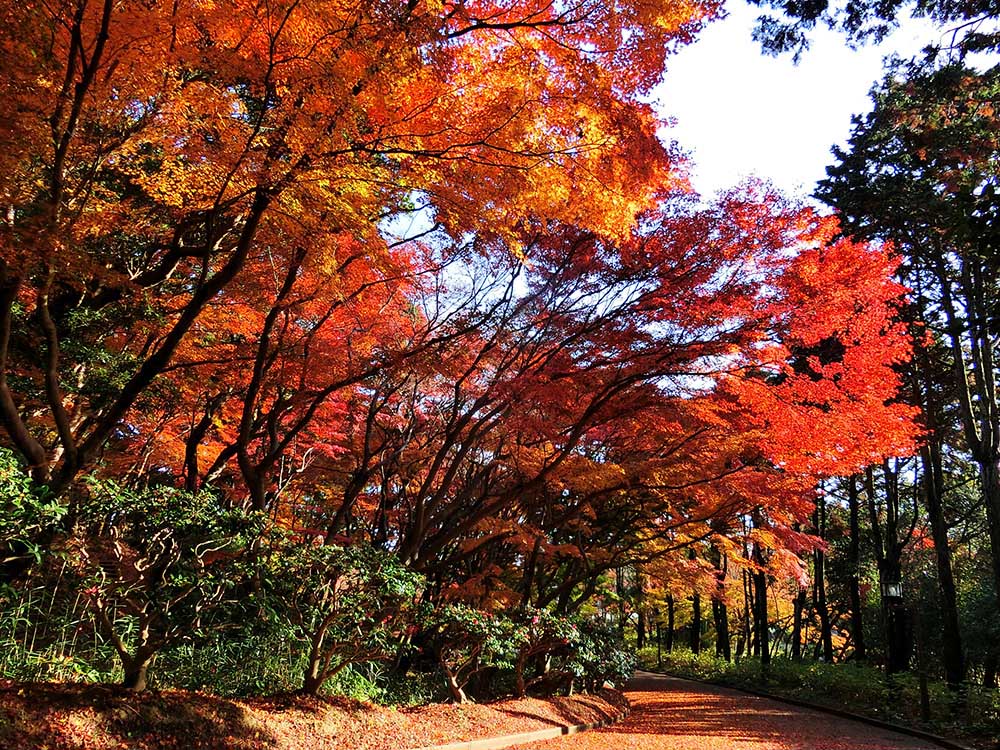
From late November to early December, the park is transformed by the vibrant colors of autumn foliage. This is the perfect time to explore scenic spots in the Botanical Garden, including Momiji Path, Momiji Waterfall, and the Japanese Garden. Around 600 deciduous trees, primarily Japanese maples (Acer palmatum), create a stunning display of brilliant autumn colors throughout the park.
During the same period, the greenhouse hosts the Autumn Orchid Exhibition, which is also well worth a visit. Approximately 200 potted orchids are on display, filling the greenhouse with their elegant beauty and sweet fragrance.
Scenic Dining
Enjoy a Luxurious Lunch or Afternoon Tea
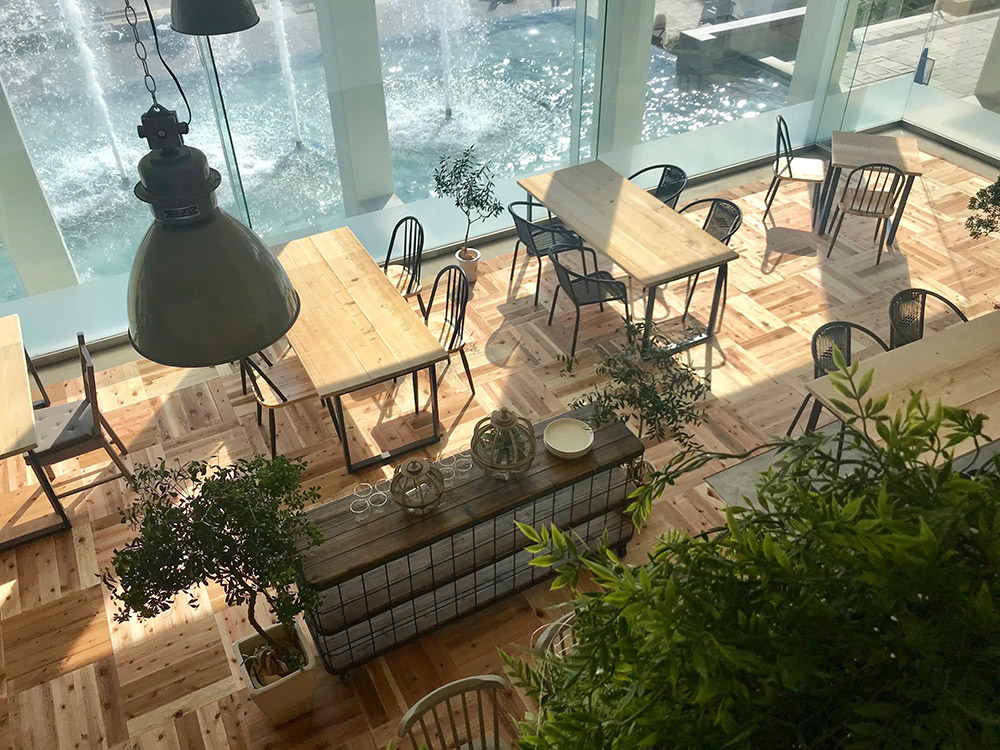
Overlooking the park, Garden Potager Suma Rikyu is the perfect place to enjoy lunch or afternoon tea while taking in beautiful garden views.
Lunch is served from 11:00 a.m. (last order 2:00 p.m.), while the café is open from 2:00 p.m. to 4:00 p.m. (last order 3:00 p.m.). The restaurant is closed on Thursdays.
The lunch menu offers a wide variety of dishes, including stewed hamburg steak, spare ribs, and butter chicken curry, as well as a children’s menu, making it an excellent choice for families.
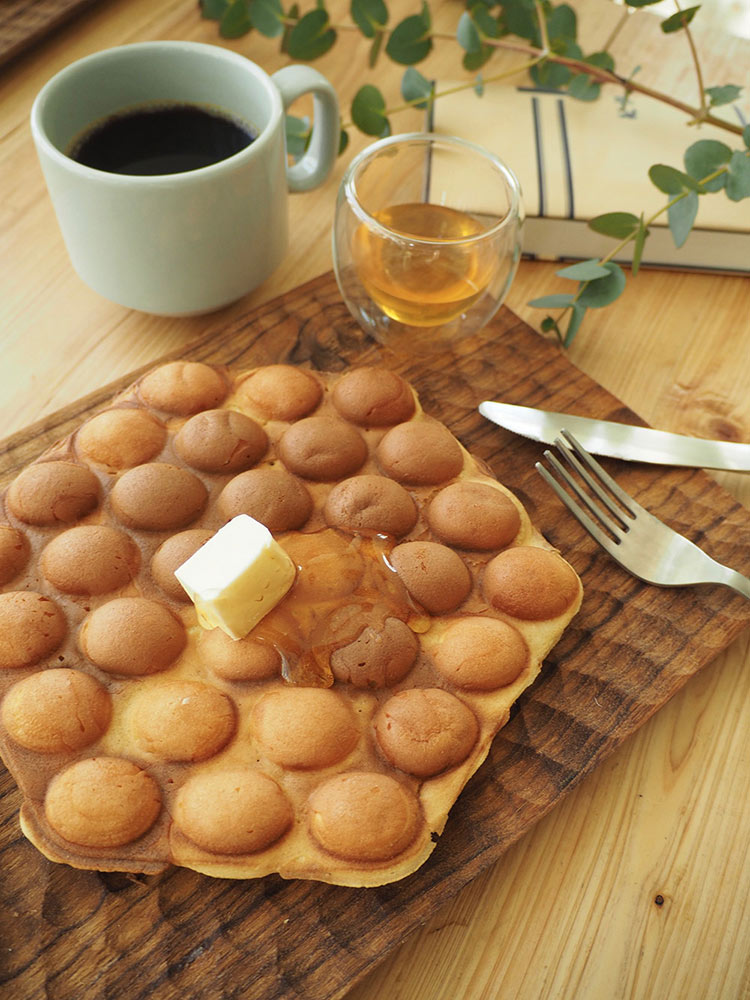
The photo shows one of the most popular menu items at Garden Potager Suma Rikyu: the Plain Bubble Waffle (with butter and honey), made with dough using Tokachi-grown wheat flour and fermented rice malt (koji). The honey used is Rikyu Honey, produced from beehives within the park. A variety of toppings are also available, including Banana Chocolate, Matcha Japonais, Sunshine Orange, and Berry Berry Berry, so you can choose your favorite flavor.
Information
Kobe Municipal Suma Rikyu Park
Address: 1-1 Higashi-Suma, Suma-ku, Kobe, Hyogo/ Japan
Call: +81-78-732-6688
Domestic (Japan): 078-732-6688
Official Website:
https://www.kobe-park.or.jp/rikyu/
Access:
【By Public Transportation】
・About a 10-minute walk from Tsukimiyama Station, Sumadera Station, or Higashi-Suma Station on the Sanyo Railway.
・From JR Suma Station or Sanyo Suma Station, take Kobe City Bus Route 75 bound for Myohoji Station and get off at Rikyu Koen-mae; the park is just a short walk away.
・From Myohoji Station on the Kobe Municipal Subway, take Kobe City Bus Route 75 bound for Suma Ichinotani and get off at Takakuradai Minamiguchi; the park is a short walk to the south.
【By Car】
・From the Himeji area: Exit the Daini Shinmei Expressway at Suma Interchange; the park is nearby.
・From the Osaka area: Exit the Hanshin Expressway at Tsukimiyama Interchange; the park is approximately 1.2 km away.
Closed:
Thursdays (or the following day if Thursday is a national holiday), and December 29 – January 3.
*Please note that the park may open on normally closed days or extend its opening hours during special events.
Opening Hours:
9:00 a.m. – 5:00 p.m. (Last admission: 4:30 p.m.)
Admission:
・Ages 15 and over (excluding junior high school students): ¥400
・Elementary and junior high school students: ¥200
Parking:
294 spaces available.
・Cars: ¥700 per visit
・Motorcycles: ¥100 per visit
*Please note: Parking for cars is ¥900 per visit (per day) on Saturdays, Sundays, and national holidays in May.
Along with
Credit
Interview & Text / Osada Setsuko

Writer&Editor.
Specializes in lifestyle topics, focusing on gardening, interior design, and housing.
Became independent and started working as a freelancer after working for an editorial production company for about 10 years from 1994.
Enjoying gardening with balcony garden.
Translation / Garden Story Editorial Team
Follow our official SNS accounts
to receive the latest information!






Latest Articles
-
Gardens & Shops
Love Houseplants? Discover the Appeal of Miniature Bonsai
Discover the appeal of miniature bonsai, especially for houseplant lovers. Learn how to enjoy and care for these tiny trees, plus recommended species for beginners, with insights from Masa Koike of K…
-
garden
Discover the Stunning European-Style Fountain Garden at Suma Rikyu Park
The Suma area has long been known as a place of relaxation and is home to historical sites dating back to the Heian period. Kobe Municipal Suma Rikyu Park (hereafter “Suma Rikyu Park”) was created on…
-
free garden
Discover the Stunning Flower Fields of Kurihama Flower Park
Kurihama Flower Park was developed by the City of Yokosuka as a relaxing retreat for local residents. In spring, its vast flower fields burst into bloom with one million poppies, while autumn brings …
Follow us


