
Awaji Greenhouse at Awaji Yumebutai: Home to a World-Class Tropical Plant Collection


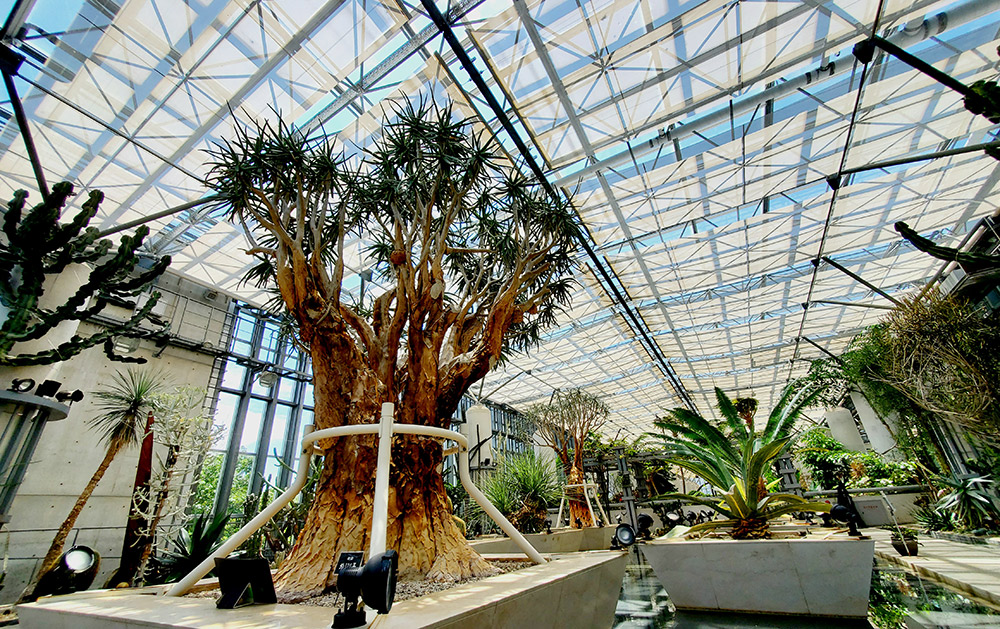
Reopened in September 2021 after extensive renovations, the Hyogo Prefectural Awaji Yumebutai Park Greenhouse—known as Awaji Greenhouse— offers a rich, immersive botanical experience.The greenhouse showcases a wide variety of plants, from sculptural succulents with striking forms and tropical species that evoke an exotic feel, to plants believed to have existed for over 100 million years, as well as species long cultivated and cherished in Japan.As visitors move through the space, a succession of distinct scenes unfolds, making the greenhouse a pleasure to explore at every step.
Explore One of Japan’s Largest Greenhouses
Home to Unique Plants from Around the World
Awaji Greenhouse is a botanical garden greenhouse designed in 2000 by world-renowned architect Tadao Ando. The site was once a vast area shaped by large-scale land excavation for major construction projects such as Kansai International Airport. With a vision of creating a place where people and nature could coexist, the land was transformed into a lush, green botanical park. The greenhouse has long been a beloved place of relaxation.
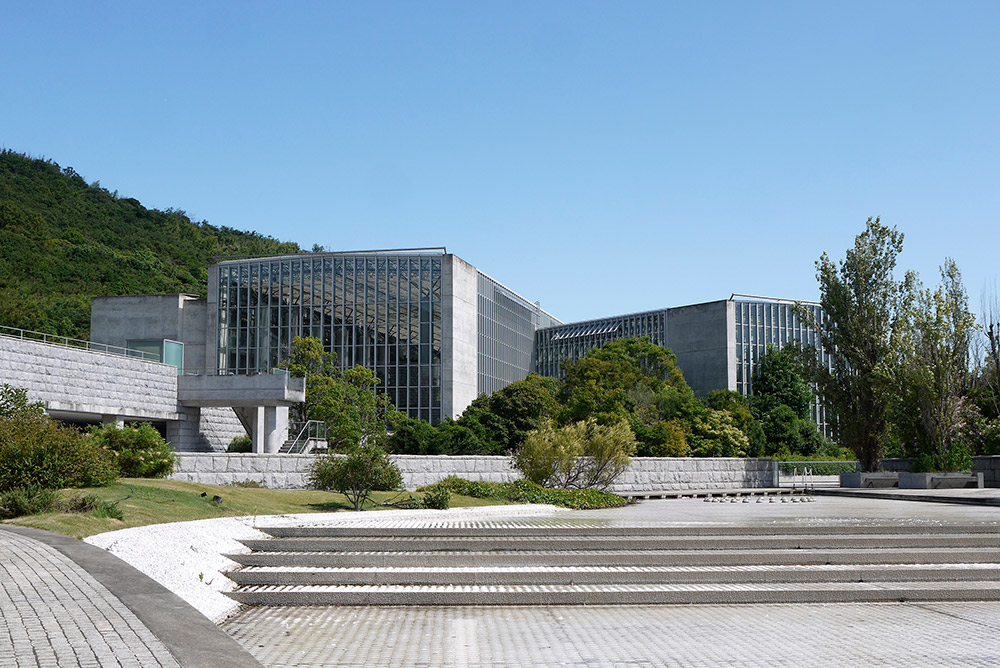
After two decades, the greenhouse underwent a major interior renovation and reopened in September 2021.
The renovation was led by Junichi Inada, the current director, who joined the project as its new creative leader. He is also well known for his work on the Singapore Botanic Gardens, a UNESCO World Heritage site.
Today, visitors can enjoy world-class displays, including the dramatic Garden Castle, created as a new symbol of the renewed greenhouse.
The interior is designed as a circuit-style layout, allowing visitors to stroll through and enjoy each exhibition room in sequence.
It is divided into five distinct zones — Green Sculpture, Garden of Color, Greenery in Daily Life, Garden of Evolution, and Lively Garden — each featuring plant displays curated around its own theme.
The facility also includes, areas such as the Garden of Shade, Atrium, and Special Exhibition Room, and the entire space is filled with a diverse array of plants. With its circuit-style layout, a leisurely visit through all the displays takes about 40 minutes at an adult’s walking pace.
New additions like a baby room and a children’s play area called the Kids’ Space make the greenhouse even more enjoyable for families.
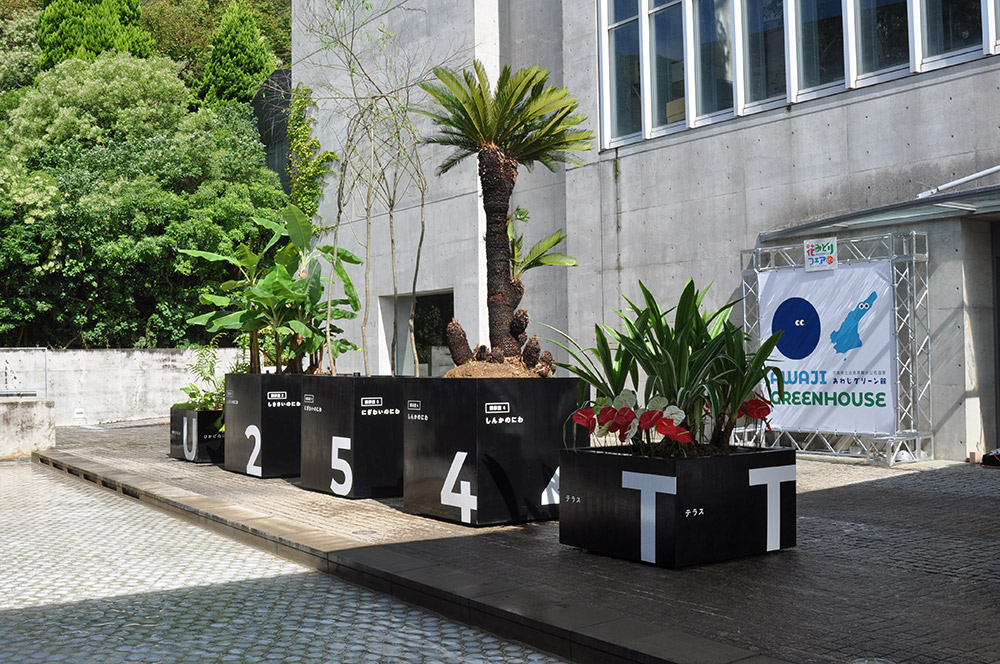
The displays change in line with seasonal events such as summer vacation, Halloween, and Christmas.
The greenhouse also hosts a variety of workshops, including New Year’s decorative kokedama making, succulent arrangements, aromatherapy, and preserved flower arranging.
In the future, regular guided tours of the greenhouse are also planned.
So far, we have introduced the highlights and overall concept of Awaji Greenhouse.
in the followind sections, we will guide you through the main exhibition rooms and facilities in detail, accompanied by photographs.
Exhibition Room 1: Green Sculpture
— Breathtaking Forms and Sculptural Beauty
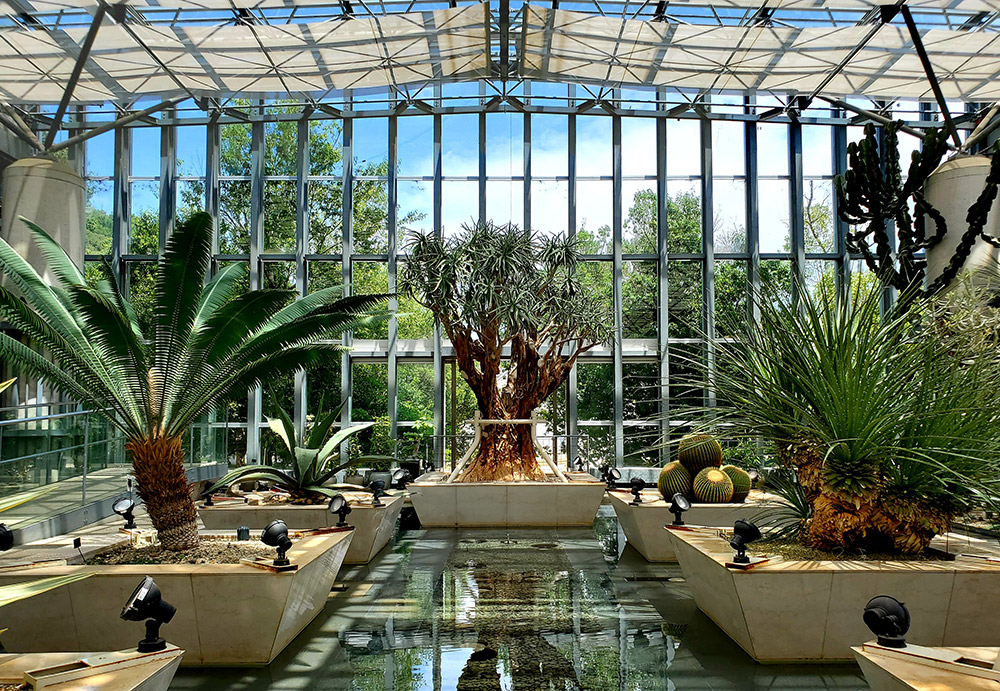
At the back of the photograph stands a 320-year-old Aloe dichotoma, whose remarkable vitality leaves a lasting impression.
Arranged on either side are striking plants: on the left, from the foreground, Furcraea gigantea, Dioon spinulosum, and Agave salmiana; on the right, again from the foreground, Aloe dichotoma, Puya chilensis, and Echinocactus grusonii.
All are plants of striking sculptural beauty, quietly capturing the viewer’s attention.
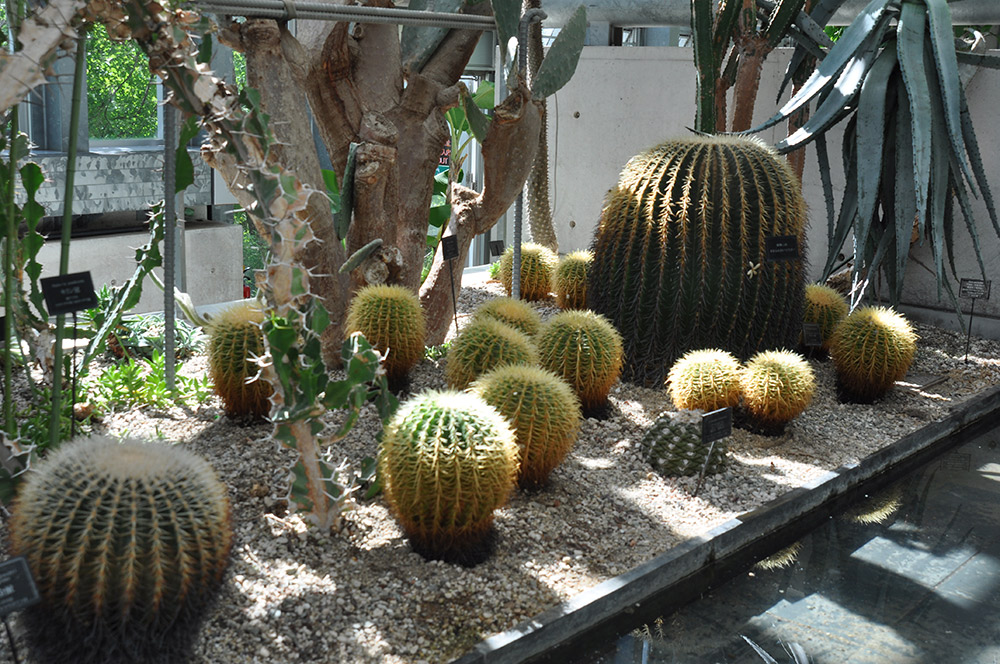
In Exhibition Room 1, “Midori no Choukoku” (Green Sculpture), as many as 152 varieties of succulents—including cacti and euphorbias—are on display. It’s fascinating to see how dramatically their shapes change depending on the climate of their native habitats, showcasing their unique survival strategies. The Echinocactus in the photo, with its charming ball-like form, is especially delightful!
Exhibition Room 2: Garden of Color
— Tropical & Subtropical Plants
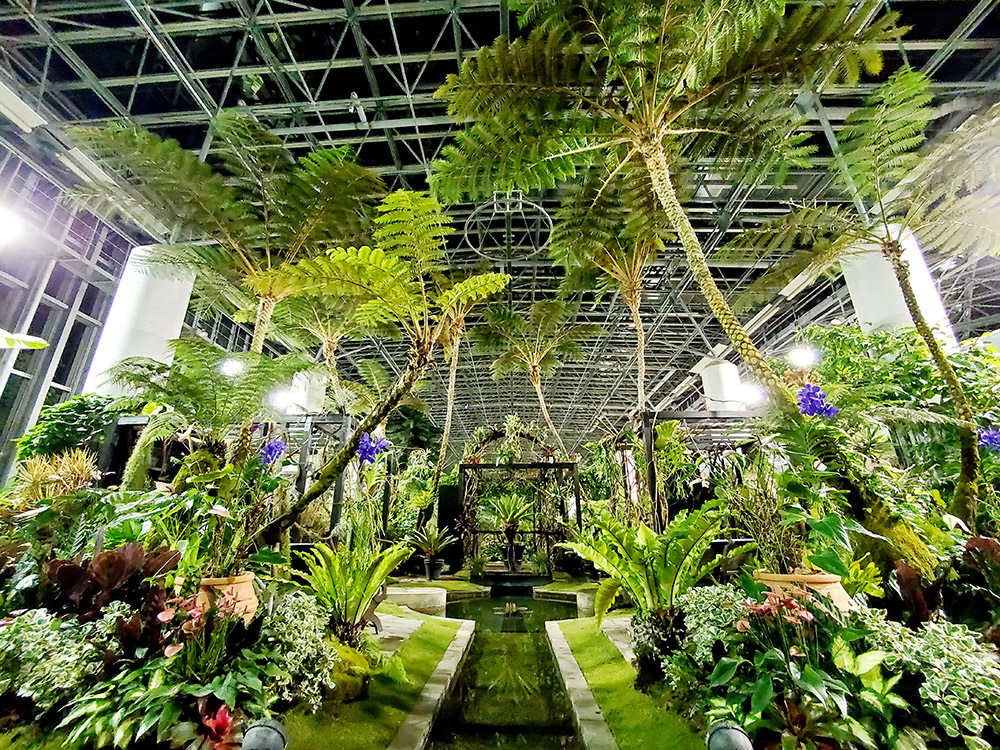
Exhibition Room 2, “Shikisai no Niwa” (Garden of Color), brings together plants native to tropical and subtropical regions. Towering overhead, the Hikage-hego, a type of tree fern, stretches its fronds all the way to the ceiling. Believed to have existed for around 100 million years ago, it invites visitors to imagine an era when dinosaurs once roamed the Earth.
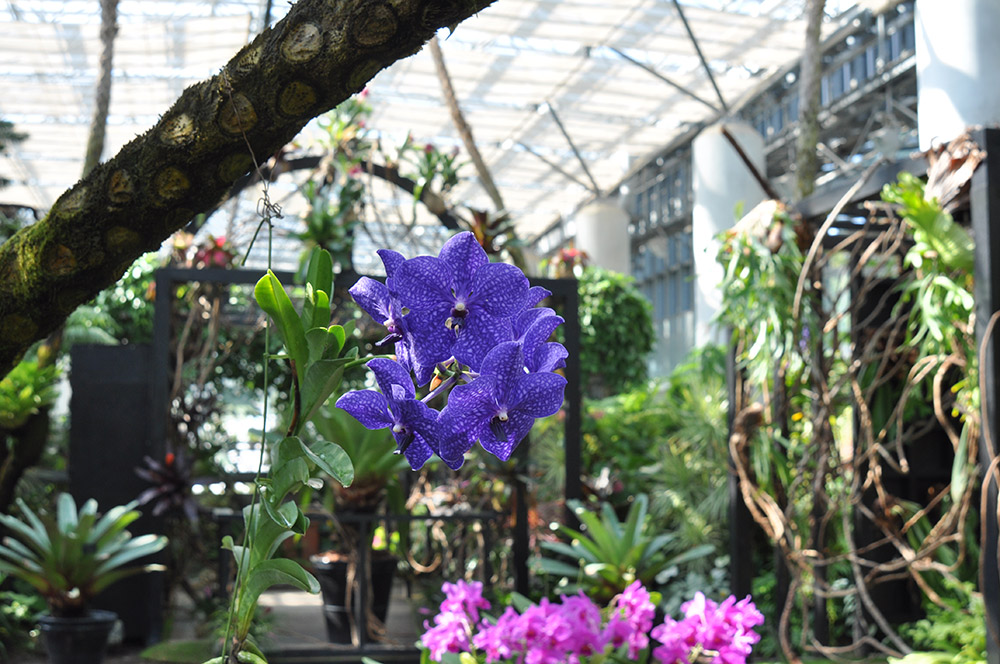
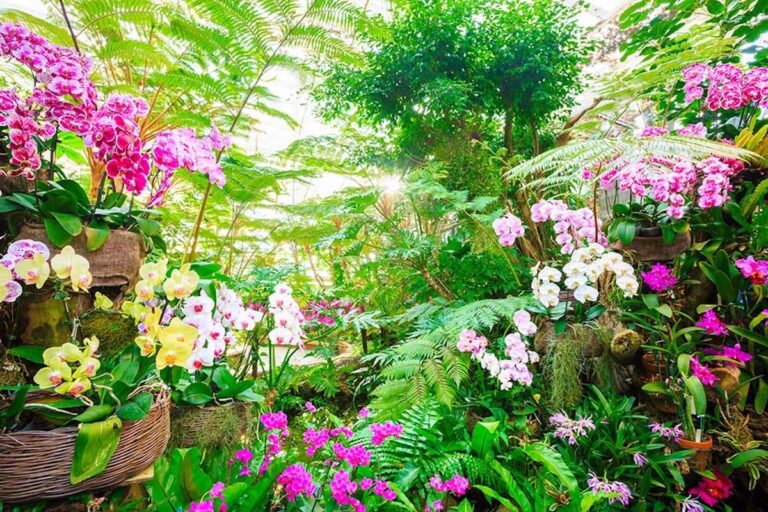
As its name “Shikisai no Niwa” (Garden of Color) suggests, this space features a collection of plants from tropical and subtropical regions that produce a rich variety of vibrant blooms. Orchids make up a large part of the display, and the purple flower in the photo is a Vanda.
The temperature is carefully controlled to ensure blooms throughout the year, so visitors can enjoy beautiful tropical flowers whenever they visit.
Another highlight is the striking contrast between the lush, deep-green foliage—typical of subtropical plants with their large, expansive leaves—and the vivid colors of the blossoms.
Exhibition Room 3: “Greenery in Daily Life”
—Everyday Plants in Daily Life
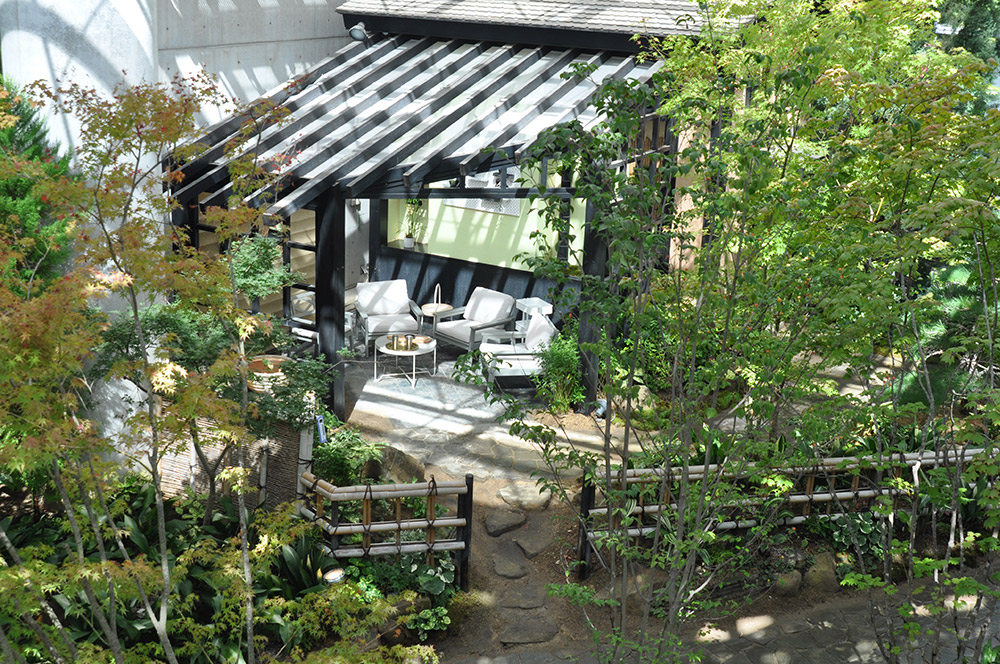
Exhibition Room 3, “Kurashi no Midori” (Everyday Greenery), is an area that expresses the essence of Japanese garden culture. It features abundant plantings of deciduous trees that change their appearance with the seasons—fresh greenery, blossoms, fruit, and autumn foliage—along with groundcover plants that add color at their base.
In Japan, horticultural culture flourished during the Edo period, leading to a growing appreciation for variegated plants and the creation of many diverse varieties. In this display, the groundcover plants include numerous long-loved variegated species such as Leopard Plant, Cast-iron Plant and Hosta, creating a nostalgic and calming atmosphere.
Visitors can also relax on the terrace seating shown in the photo, where they may even find inspiration for their own garden design.
Exhibition Room 4: “Garden of Evolution”
—Tracing the Evolutionary History of Plants
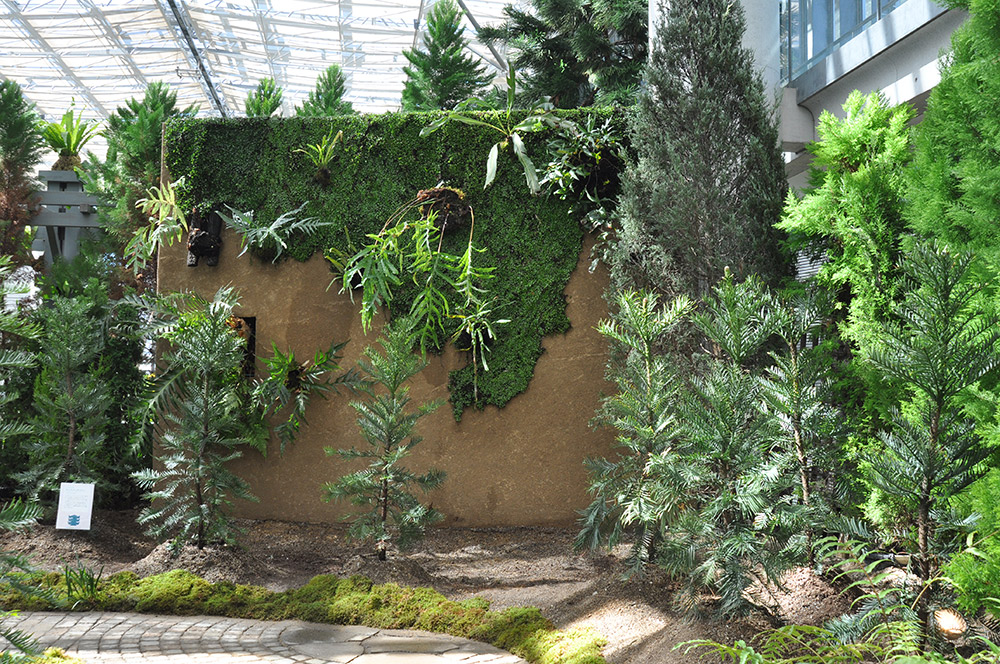
In Exhibition Room 4, “Shinka no Mori” (Garden of Evolution), you can see plants known as “living fossils,” just as the name suggests. The display includes species that trace back to ancient eras: plants related to early lineages that appeared in the Silurian period of the late Paleozoic, as well as species such as Angiopteris and horsetails, which are thought to have emerged around the Carboniferous period, and cycads that appeared from the Triassic to Jurassic periods.
Also on display is petrified wood excavated in Yokaichi, Hyogo Prefecture. While the evolution of life is often discussed in terms of dinosaurs or humans, this exhibition reveals that plants, too, have undergone a long and remarkable evolutionary journey over vast spans of time.
Exhibition Room 5: “Lively Garden”
— Featuring the Garden Castle and Arches!
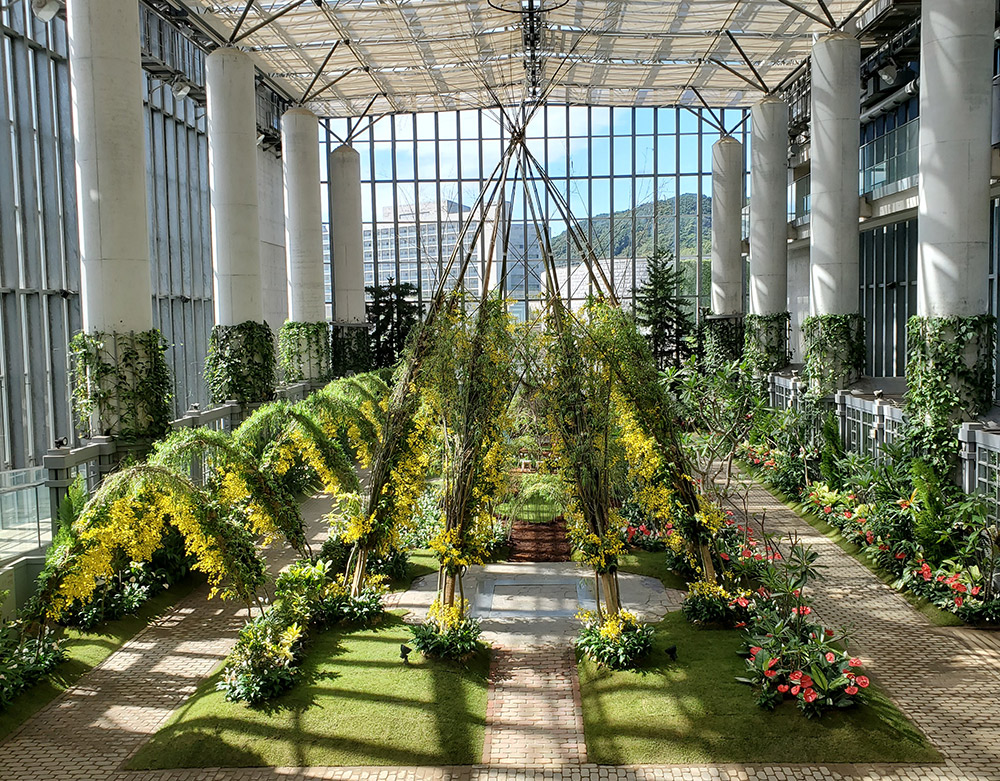
The symbol of Exhibition Room 5, “Nigiwai no Niwa” (Lively Garden), is the approximately 8-meter-tall Garden Castle seen at the center of the photo. The yellow-flowered Oncidium orchids are in full bloom, creating a truly spectacular scene. As the floral displays on the Garden Castle change with the seasons, it is a place visitors will want to revisit again and again.
The framework of the Garden Castle is made from madake bamboo from Awaji Island. Each bamboo pole is paired with three willow branches, and as the willow leaves grow thicker, the overall impression of the structure gradually changes. Be sure to notice the castle’s elegant curves, which make use of the natural flexibility of bamboo.
“Nigiwai no Niwa” (Lively Garden) is composed of four garden paths. Along a roughly 30-meter walkway lined with six arches adorned with Oncidium orchids, as well as areas featuring bird-of-paradise, plumeria, and anthuriums, visitors can enjoy a variety of ever-changing scenery as they stroll through the space.
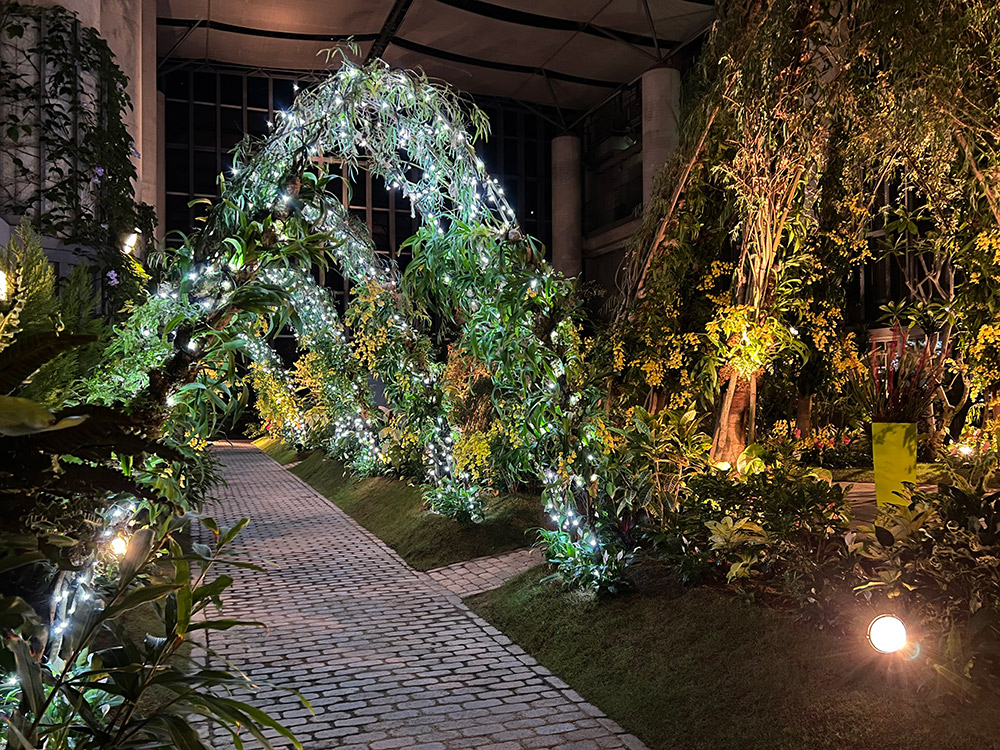
In winter, all exhibition rooms in the facility are illuminated. The lights come on as soon as the greenhouse opens, and they really stand out when it’s dark outside—especially on cloudy or rainy days.
The best time to visit is around sunset. As daylight fades, you can enjoy watching the exhibits gradually emerge and glow under the illumination.
Take a Break at the
Rest Area & café Stand!
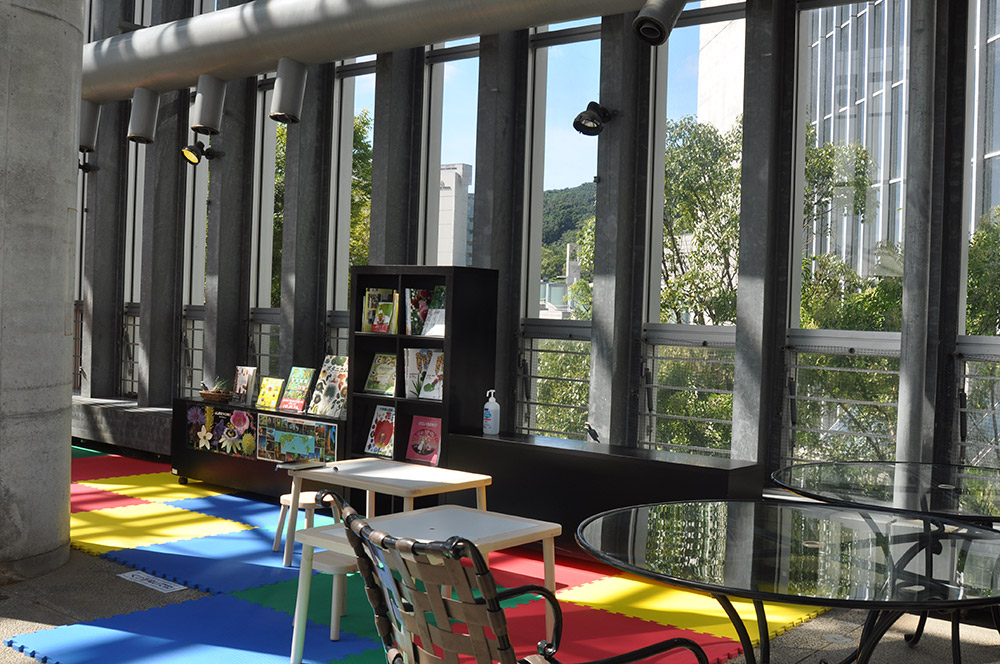
The photo shows the rest area located on the mezzanine level. From the best seats at the back, you can enjoy a view of Osaka Bay on clear days!
There is also a reading corner stocked with plant-related books, including illustrated guides for children.
For adults, the selection includes books on succulent arrangements, lei-making, garden design ideas, and even gardening books from abroad. If you start to feel a bit tired from walking, taking a break with a good book is the perfect way to relax.
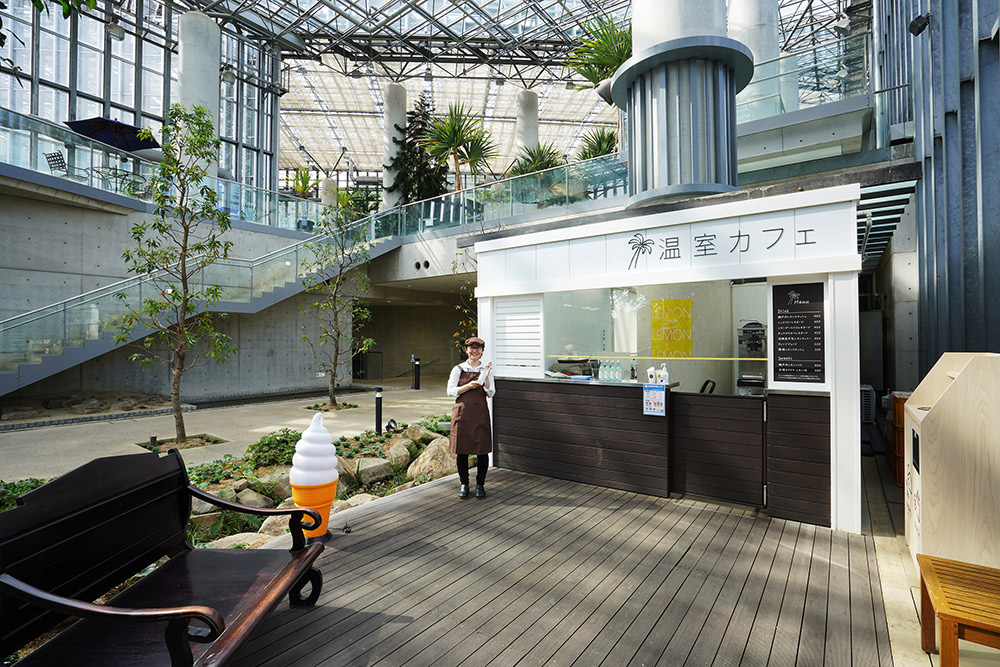
There is also a café stand inside the greenhouse! It is open from 11:00 a.m. to 5:00 p.m. (last order at 4:30 p.m.). The menu includes iced and hot coffee, tea, herbal tea, orange juice, and soft-serve ice cream.
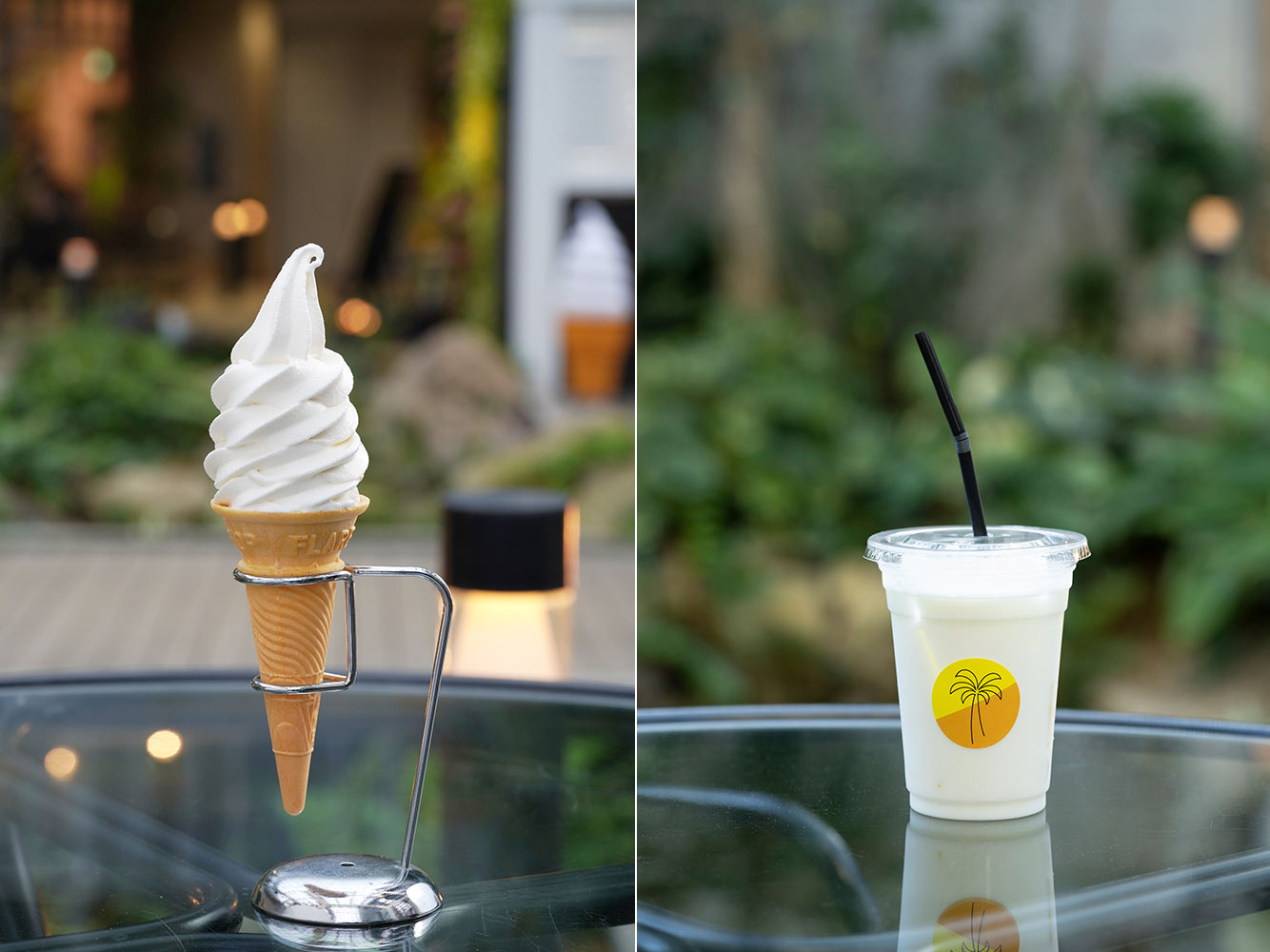
Popular items at the café stand include the Awaji Island milk soft-serve ice cream shown on the left in the photo, as well as the Awaji Island milk lemon lassi and Setouchi lemon squash on the right. These drinks are made using lemons from Hiraoka Farm, which are grown without fungicides, pesticides, or wax coatings.
Information
Hyogo Prefectural Awaji Yumebutai Greenhouse: Awaji Greenhouse
Address: 4 Yumebutai, Awaji-shi, Hyogo/ Japan
Call: +81-(0) 799-74-1200
Official Website:
https://awaji-botanicalgarden.com/english/
Access:
・From JR Sannomiya or JR Shin-Kobe Sta. to ‘Awaji Yumebutai-mae’ (approx. 50mins)
・From JR Maiko Sta. or Sanyo Dentetsu Maikokoen Sta. to ‘Awaji Yumebutai-mae’ (approx. 20mins)
Opening Hours:
・10:00–18:00 (Last admission 17:30)
Hours may vary depending on events.
Admission:
・Adults : 750 yen
・Seniors(70+) : 370 yen
・Up to high school graduation : Free
Parking:
Please use underground parking at the Grand Nikko Awaji (600 yen/per entry/per day)
※700 yen/per entry/per day from 1st April 2026
For further information, click below:
https://awaji-botanicalgarden.com/wp-content/uploads/2022/10/Awaji-Greenhouse_EN.pdf
Along with
- ・Awaji Island Akashi Kaikyo National Government Park―A Treasure Trove of Instagrammable Scenery
- ・Hitachi Seaside National Government Park - Famous for its breathtaking view of nemophila flowers
- ・Kiso Sansen Park Center: A Landmark Facility in Japan’s Largest National Government Park, Spanning Three Prefectures
Credit
Interview & Text / Osada Setsuko

Writer&Editor.
Specializes in lifestyle topics, focusing on gardening, interior design, and housing.
Became independent and started working as a freelancer after working for an editorial production company for about 10 years from 1994.
Enjoying gardening with balcony garden.
Translation / Garden Story Editorial Team
Follow our official SNS accounts
to receive the latest information!






Latest Articles
-
garden
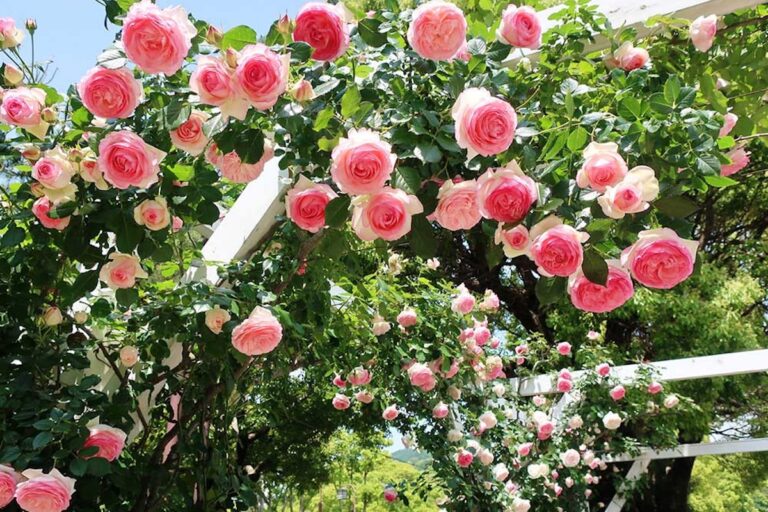
Discover the Stunning European-Style Fountain Garden at Suma Rikyu Park
The Suma area has long been known as a place of relaxation and is home to historical sites dating back to the Heian period. Kobe Municipal Suma Rikyu Park (hereafter “Suma Rikyu Park”) was created on…
-
free garden
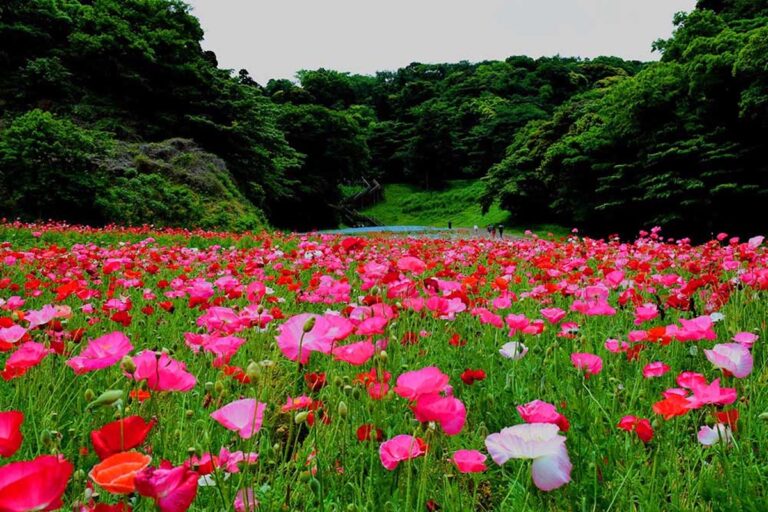
Discover the Stunning Flower Fields of Kurihama Flower Park
Kurihama Flower Park was developed by the City of Yokosuka as a relaxing retreat for local residents. In spring, its vast flower fields burst into bloom with one million poppies, while autumn brings …
-
garden
Discover Tropical Blooms at Okinawa Ocean Expo Park Tropical Dream Center
Located within Okinawa Ocean Expo Park, the orchid greenhouse at the Tropical Dream Center was renovated and reopened in February 2020. In addition to the orchid greenhouse, the center features two m…
Follow us


