
Gardens & Shops
Word Search
- Hokkaido
- Aomori
- Iwate
- Miyagi
- Akita
- Yamagata
- Fukushima
- Ibaraki
- Tochigi
- Gunma
- Saitama
- Chiba
- Tokyo
- Kanagawa
- Niigata
- Toyama
- Ishikawa
- Fukui
- Yamanashi
- Nagano
- Gifu
- Shizuoka
- Aichi
- Mie
- Shiga
- Kyoto
- Osaka
- Hyogo
- Nara
- Wakayama
- Tottori
- Shimane
- Okayama
- Hiroshima
- Yamaguchi
- Tokushima
- Kagawa
- Ehime
- Kochi
- Fukuoka
- Saga
- Nagasaki
- Kumamoto
- Oita
- Miyazaki
- Kagoshima
- Okinawa
- Abroad
Gardens & Shops
-
hyogo
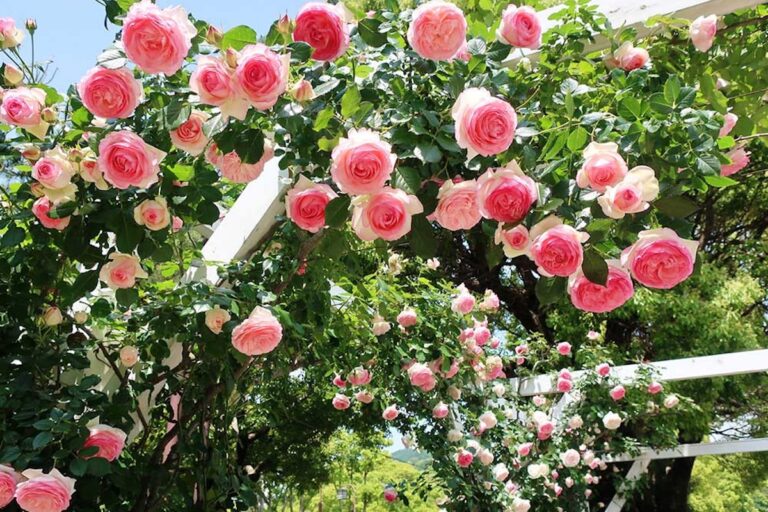
Discover the Stunning European-Style Fountain Garden at Suma Rikyu Park
The “Rose Garden of Royalty” A Garden Developed to Commemorate an Imperial Wedding Suma Rikyu Park is an urban park built on the former site of Muko Rikyu, once an imperial villa for the Japanese Imperial Family. Development of the park began in 1958 as a commemorative project celebrating the wedding of the then Crown Prince, now His Majesty the Emperor Emeritus, and it officially opened to the public in 1967. The park consists of the Main Garden, featuring its iconic fountain plaza and covering 17.8 hectares (44.0 ac), and the Botanical Garden, spanning 5.2 hectares (12.8 ac). Together, the grounds are large enough to enjoy a leisurely stroll of around two hours. The Main Garden was designed by the Faculty of Engineering at Kobe University and features a beautifully landscaped European-style fountain garden inspired by the theme of water. Water flowing from the Rest House cascades down the Main Falls, continues through a series of cascading channels, and runs along a straight watercourse through the center of the park before reaching the impressive Grand Fountain. Lining both sides of this waterway in perfect symmetry is the Rose Garden of Royalty, the park's signature attraction. Around 4,000 rose bushes representing approximately 180 varieties create a magnificent display in spring and autumn. In addition to the rose garden, the Main Garden also includes a Camellia Garden and an Iris Garden. Meanwhile, the Botanical Garden offers a diverse collection of landscapes, including a greenhouse, a traditional Japanese garden, the Flower Garden, Plum Garden, Peony Garden, Hydrangea Garden, and the Maple Walk. Designed around a year-round succession of blooms, the garden ensures that something is always in season whenever you visit. This continuous floral display is one of its greatest attractions, inspiring many visitors to return again and again throughout the year. At Suma Rikyu Park, a wide variety of events are held throughout the year. Visitors can enjoy guided park tours, butterfly observation sessions, craft workshops, tree climbing, yoga classes, concerts, and many other activities. Be sure to check the park's website before your visit to see what's on. One highly recommended program is the "Rose Grower" Annual Rose Care Course. Designed for anyone interested in learning how to grow beautiful roses, the course includes two classroom lectures and ten outdoor practical training sessions spread over the course of a year. Advance registration is required, and participation is limited to the first 20 applicants. The fee is ¥1,000 per session. Learning directly from professional rose growers is a great way to improve your gardening skills, and you may even make new friends who share your passion for gardening. We encourage you to join this rewarding program! Best Time to Visit the Rose Garden of Royalty: Mid–Late May & Late Oct.–Nov. The highlight of the Main Garden is the Rose Garden of Royalty. The roses are at their peak in mid-May, when around 4,000 rose bushes representing approximately 180 varieties burst into bloom. Reflecting the site's history as the former location of an imperial villa, the garden features a collection of roses named after members of the Japanese Imperial Family, European royalty and nobility, and renowned artists. The garden is laid out in a perfectly symmetrical design on either side of a long central fountain canal. In the foreground, the vibrant red 'Cin Cin' roses—named after the Italian toast meaning "cheers"—create a striking display, while the obelisk-trained 'Dortmund' roses at the far end complete this beautiful cornershowcasing red roses. The park is also home to the World Hall of Fame Rose Garden, featuring all 17 rose varieties inducted into the World Federation of Rose Societies Hall of Fame, as well as the Rose History and Culture Garden, where visitors can trace the evolution of roses from wild species and Old Roses to modern hybrids. Don't miss the collection of historically significant roses that played a key role in rose breeding, including Rosa chinensis, the ancestor of repeat-flowering roses, and Rosa foetida, the species that brought yellow roses into modern rose breeding. The photo shows one of the Rose Garden Guided Tours, held on Sundays during the Rose Festival. No reservation is required. The tours are offered twice daily, at 10:30 a.m. and 1:30 p.m., and last approximately 30 minutes, providing visitors with an informative introduction to the Rose Garden. More Than Just Roses!Experience the Colorful Beauty of the Four Seasons at Suma Rikyu Park At the Plum Grove in Suma Rikyu Park, the early-blooming varieties 'Tamabotan' and 'Yaekan-ko' begin flowering in early January. The 1,500-square-meter grove is home to approximately 160 plum trees representing around 20 varieties, with the best viewing season lasting from February to early March. During this time, bright yellow rapeseed blossoms also bloom at the trees' feet, creating a cheerful scene that signals the arrival of spring. From early to late February, the park hosts Plum Blossom Viewing events and traditional tea ceremonies. In early March, visitors can also enjoy the popular variety 'Omoi no Mama', whose blossoms appear in both red and white on a single tree, making it one of the grove's most distinctive attractions. The photo shows the Flower Garden area, where roses, perennials, and annuals are planted together to create vibrant seasonal displays throughout the year. Each year, the flower beds are designed around a different theme. This photo, taken in 2019, features the theme "Three Eyes (Three 'Ai')"—a playful concept based on the Japanese pronunciation of the word “ai”. It combines "Eye," represented by striking, eye-catching flowers; "Love" (ai), expressed through charming and cheerful blooms; and "Indigo" (also pronounced “ai” in Japanese), symbolized by blue flowers that evoke the nearby sea of Suma. Taken in May, the scene showcases one of the park's most colorful and visually captivating floral displays. The Peony Garden in the Botanical Garden is at its best from mid to late April. It features approximately 200 peony plants representing around 40 varieties. Although each individual flower blooms for only about a week, the garden has been carefully planted with a balanced selection of early-, mid-, and late-season varieties, allowing visitors to enjoy a continuous succession of blossoms over an extended period. With their large, lavish blooms and layers of luxurious petals, the peonies create an elegant display that is sure to captivate every visitor. Located in the southeastern part of the Main Garden, the Japanese Iris Garden is home to approximately 4,000 iris plants representing around 60 varieties. The irises are at their peak in mid-May. The collection includes many historic cultivars and is arranged by traditional horticultural groups, such as the Ise, Edo, and Higo lineages. Visitors can also admire yellow interspecific hybrids and varieties introduced from overseas. Because this area has been celebrated as a moon-viewing spot since the Heian period (794–1185), the garden also features irises named after characters and places from The Tale of Genji, including 'Akashi', 'Aoi no Ue', and 'Hikaru Genji'. From late November to early December, the park is transformed by the vibrant colors of autumn foliage. This is the perfect time to explore scenic spots in the Botanical Garden, including Momiji Path, Momiji Waterfall, and the Japanese Garden. Around 600 deciduous trees, primarily Japanese maples (Acer palmatum), create a stunning display of brilliant autumn colors throughout the park. During the same period, the greenhouse hosts the Autumn Orchid Exhibition, which is also well worth a visit. Approximately 200 potted orchids are on display, filling the greenhouse with their elegant beauty and sweet fragrance. Scenic DiningEnjoy a Luxurious Lunch or Afternoon Tea Overlooking the park, Garden Potager Suma Rikyu is the perfect place to enjoy lunch or afternoon tea while taking in beautiful garden views. Lunch is served from 11:00 a.m. (last order 2:00 p.m.), while the café is open from 2:00 p.m. to 4:00 p.m. (last order 3:00 p.m.). The restaurant is closed on Thursdays. The lunch menu offers a wide variety of dishes, including stewed hamburg steak, spare ribs, and butter chicken curry, as well as a children's menu, making it an excellent choice for families. The photo shows one of the most popular menu items at Garden Potager Suma Rikyu: the Plain Bubble Waffle (with butter and honey), made with dough using Tokachi-grown wheat flour and fermented rice malt (koji). The honey used is Rikyu Honey, produced from beehives within the park. A variety of toppings are also available, including Banana Chocolate, Matcha Japonais, Sunshine Orange, and Berry Berry Berry, so you can choose your favorite flavor. Information Kobe Municipal Suma Rikyu Park Address: 1-1 Higashi-Suma, Suma-ku, Kobe, Hyogo/ Japan Call: +81-78-732-6688Domestic (Japan): 078-732-6688 Official Website:https://www.kobe-park.or.jp/rikyu/ Access: 【By Public Transportation】・About a 10-minute walk from Tsukimiyama Station, Sumadera Station, or Higashi-Suma Station on the Sanyo Railway.・From JR Suma Station or Sanyo Suma Station, take Kobe City Bus Route 75 bound for Myohoji Station and get off at Rikyu Koen-mae; the park is just a short walk away.・From Myohoji Station on the Kobe Municipal Subway, take Kobe City Bus Route 75 bound for Suma Ichinotani and get off at Takakuradai Minamiguchi; the park is a short walk to the south.【By Car】・From the Himeji area: Exit the Daini Shinmei Expressway at Suma Interchange; the park is nearby.・From the Osaka area: Exit the Hanshin Expressway at Tsukimiyama Interchange; the park is approximately 1.2 km away. Closed: Thursdays (or the following day if Thursday is a national holiday), and December 29 – January 3.*Please note that the park may open on normally closed days or extend its opening hours during special events. Opening Hours:9:00 a.m. – 5:00 p.m. (Last admission: 4:30 p.m.) Admission:・Ages 15 and over (excluding junior high school students): ¥400・Elementary and junior high school students: ¥200 Parking:294 spaces available.・Cars: ¥700 per visit・Motorcycles: ¥100 per visit *Please note: Parking for cars is ¥900 per visit (per day) on Saturdays, Sundays, and national holidays in May.
-
hyogo
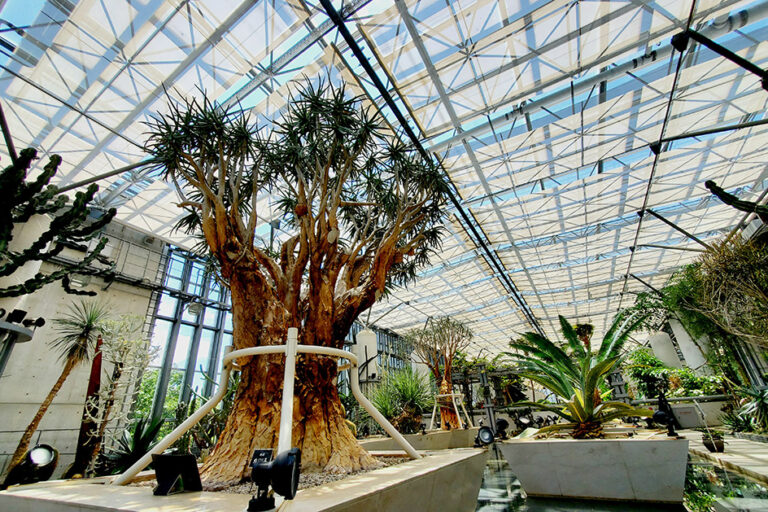
Awaji Greenhouse at Awaji Yumebutai: Home to a World-Class Tropical Plant Collection
Explore One of Japan’s Largest GreenhousesHome to Unique Plants from Around the World Awaji Greenhouse is a botanical garden greenhouse designed in 2000 by world-renowned architect Tadao Ando. The site was once a vast area shaped by large-scale land excavation for major construction projects such as Kansai International Airport. With a vision of creating a place where people and nature could coexist, the land was transformed into a lush, green botanical park. The greenhouse has long been a beloved place of relaxation. Exterior view of Hyogo Prefectural Awaji Yumebutai Park Greenhouse (Awaji Greenhouse) After two decades, the greenhouse underwent a major interior renovation and reopened in September 2021.The renovation was led by Junichi Inada, the current director, who joined the project as its new creative leader. He is also well known for his work on the Singapore Botanic Gardens, a UNESCO World Heritage site.Today, visitors can enjoy world-class displays, including the dramatic Garden Castle, created as a new symbol of the renewed greenhouse. The interior is designed as a circuit-style layout, allowing visitors to stroll through and enjoy each exhibition room in sequence.It is divided into five distinct zones — Green Sculpture, Garden of Color, Greenery in Daily Life, Garden of Evolution, and Lively Garden — each featuring plant displays curated around its own theme. The facility also includes, areas such as the Garden of Shade, Atrium, and Special Exhibition Room, and the entire space is filled with a diverse array of plants. With its circuit-style layout, a leisurely visit through all the displays takes about 40 minutes at an adult’s walking pace.New additions like a baby room and a children’s play area called the Kids’ Space make the greenhouse even more enjoyable for families. Plants symbolizing each exhibition room welcome visitors at the entrance. From left to right: U (Underground) – Phlebodium aureum; 2 – Musa basjoo; 5 – weeping willow; 4 – cycad; T – variegated Crinum asiaticum. The displays change in line with seasonal events such as summer vacation, Halloween, and Christmas.The greenhouse also hosts a variety of workshops, including New Year’s decorative kokedama making, succulent arrangements, aromatherapy, and preserved flower arranging.In the future, regular guided tours of the greenhouse are also planned. So far, we have introduced the highlights and overall concept of Awaji Greenhouse.in the followind sections, we will guide you through the main exhibition rooms and facilities in detail, accompanied by photographs. Exhibition Room 1: Green Sculpture— Breathtaking Forms and Sculptural Beauty At the back of the photograph stands a 320-year-old Aloe dichotoma, whose remarkable vitality leaves a lasting impression.Arranged on either side are striking plants: on the left, from the foreground, Furcraea gigantea, Dioon spinulosum, and Agave salmiana; on the right, again from the foreground, Aloe dichotoma, Puya chilensis, and Echinocactus grusonii. All are plants of striking sculptural beauty, quietly capturing the viewer’s attention. In Exhibition Room 1, “Midori no Choukoku” (Green Sculpture), as many as 152 varieties of succulents—including cacti and euphorbias—are on display. It’s fascinating to see how dramatically their shapes change depending on the climate of their native habitats, showcasing their unique survival strategies. The Echinocactus in the photo, with its charming ball-like form, is especially delightful! Exhibition Room 2: Garden of Color— Tropical & Subtropical Plants Exhibition Room 2, “Shikisai no Niwa” (Garden of Color), brings together plants native to tropical and subtropical regions. Towering overhead, the Hikage-hego, a type of tree fern, stretches its fronds all the way to the ceiling. Believed to have existed for around 100 million years ago, it invites visitors to imagine an era when dinosaurs once roamed the Earth. As its name “Shikisai no Niwa” (Garden of Color) suggests, this space features a collection of plants from tropical and subtropical regions that produce a rich variety of vibrant blooms. Orchids make up a large part of the display, and the purple flower in the photo is a Vanda. The temperature is carefully controlled to ensure blooms throughout the year, so visitors can enjoy beautiful tropical flowers whenever they visit. Another highlight is the striking contrast between the lush, deep-green foliage—typical of subtropical plants with their large, expansive leaves—and the vivid colors of the blossoms. Exhibition Room 3: “Greenery in Daily Life” —Everyday Plants in Daily Life Exhibition Room 3, “Kurashi no Midori” (Everyday Greenery), is an area that expresses the essence of Japanese garden culture. It features abundant plantings of deciduous trees that change their appearance with the seasons—fresh greenery, blossoms, fruit, and autumn foliage—along with groundcover plants that add color at their base. In Japan, horticultural culture flourished during the Edo period, leading to a growing appreciation for variegated plants and the creation of many diverse varieties. In this display, the groundcover plants include numerous long-loved variegated species such as Leopard Plant, Cast-iron Plant and Hosta, creating a nostalgic and calming atmosphere. Visitors can also relax on the terrace seating shown in the photo, where they may even find inspiration for their own garden design. Exhibition Room 4: “Garden of Evolution”—Tracing the Evolutionary History of Plants In Exhibition Room 4, “Shinka no Mori” (Garden of Evolution), you can see plants known as “living fossils,” just as the name suggests. The display includes species that trace back to ancient eras: plants related to early lineages that appeared in the Silurian period of the late Paleozoic, as well as species such as Angiopteris and horsetails, which are thought to have emerged around the Carboniferous period, and cycads that appeared from the Triassic to Jurassic periods. Also on display is petrified wood excavated in Yokaichi, Hyogo Prefecture. While the evolution of life is often discussed in terms of dinosaurs or humans, this exhibition reveals that plants, too, have undergone a long and remarkable evolutionary journey over vast spans of time. Exhibition Room 5: “Lively Garden”— Featuring the Garden Castle and Arches! The symbol of Exhibition Room 5, “Nigiwai no Niwa” (Lively Garden), is the approximately 8-meter-tall Garden Castle seen at the center of the photo. The yellow-flowered Oncidium orchids are in full bloom, creating a truly spectacular scene. As the floral displays on the Garden Castle change with the seasons, it is a place visitors will want to revisit again and again. The framework of the Garden Castle is made from madake bamboo from Awaji Island. Each bamboo pole is paired with three willow branches, and as the willow leaves grow thicker, the overall impression of the structure gradually changes. Be sure to notice the castle’s elegant curves, which make use of the natural flexibility of bamboo. “Nigiwai no Niwa” (Lively Garden) is composed of four garden paths. Along a roughly 30-meter walkway lined with six arches adorned with Oncidium orchids, as well as areas featuring bird-of-paradise, plumeria, and anthuriums, visitors can enjoy a variety of ever-changing scenery as they stroll through the space. In winter, all exhibition rooms in the facility are illuminated. The lights come on as soon as the greenhouse opens, and they really stand out when it’s dark outside—especially on cloudy or rainy days. The best time to visit is around sunset. As daylight fades, you can enjoy watching the exhibits gradually emerge and glow under the illumination. Take a Break at the Rest Area & café Stand! The photo shows the rest area located on the mezzanine level. From the best seats at the back, you can enjoy a view of Osaka Bay on clear days! There is also a reading corner stocked with plant-related books, including illustrated guides for children. For adults, the selection includes books on succulent arrangements, lei-making, garden design ideas, and even gardening books from abroad. If you start to feel a bit tired from walking, taking a break with a good book is the perfect way to relax. There is also a café stand inside the greenhouse! It is open from 11:00 a.m. to 5:00 p.m. (last order at 4:30 p.m.). The menu includes iced and hot coffee, tea, herbal tea, orange juice, and soft-serve ice cream. Popular items at the café stand include the Awaji Island milk soft-serve ice cream shown on the left in the photo, as well as the Awaji Island milk lemon lassi and Setouchi lemon squash on the right. These drinks are made using lemons from Hiraoka Farm, which are grown without fungicides, pesticides, or wax coatings. Information Hyogo Prefectural Awaji Yumebutai Greenhouse: Awaji Greenhouse Address: 4 Yumebutai, Awaji-shi, Hyogo/ Japan Call: +81-(0) 799-74-1200 Official Website:https://awaji-botanicalgarden.com/english/ Access: ・From JR Sannomiya or JR Shin-Kobe Sta. to 'Awaji Yumebutai-mae' (approx. 50mins)・From JR Maiko Sta. or Sanyo Dentetsu Maikokoen Sta. to 'Awaji Yumebutai-mae' (approx. 20mins) Opening Hours:・10:00–18:00 (Last admission 17:30)Hours may vary depending on events. Admission:・Adults : 750 yen・Seniors(70+) : 370 yen・Up to high school graduation : Free Parking:Please use underground parking at the Grand Nikko Awaji (600 yen/per entry/per day)※700 yen/per entry/per day from 1st April 2026 For further information, click below: https://awaji-botanicalgarden.com/wp-content/uploads/2022/10/Awaji-Greenhouse_EN.pdf
-
osaka
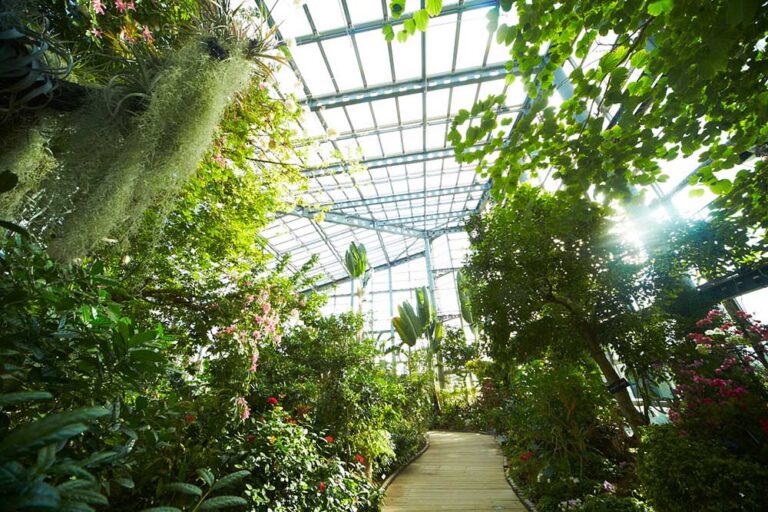
Sakuya Konohana Kan―A Greenhouse Botanical Garden Full of Hands-On Experiences
A Collection of Diverse Plantsfrom Climate Zones Around the World Opened in 1990, Sakuya Konohana Kan spans a building area of about 4,750 square meters (approx.1.2ac.) with a total floor area of around 6,890 square meters (approx.1.7ac.) —large enough that a leisurely walk through its exhibits takes over an hour. It was originally built as the main pavilion for the International Garden and Greenery Exposition held in Osaka. Today, the garden houses a collection of 5,500 species and 15,000 plants, with 300 to 400 varieties always kept in bloom. Inside the facility, the space is divided into zones: the Tropical Rainforest Room, Tropical Flowering Trees Room, Arid Zone Plants Room, and Alpine Plants Room, allowing visitors to explore plant life from a variety of climate zones around the world. Highlights include rare species such as the Himalayan blue poppy (Meconopsis) and the funny baobab. Behind the scenes, temperature and flowering adjustments are carefully managed to showcase a variety of blooms year-round. Remarkably, the garden even demonstrates techniques that allow the night-blooming queen of the night (Epiphyllum oxypetalum) to flower during the day. In addition, outdoor gardens have been developed, and these are also well worth a visit. Highlights include the Lotus Garden, designed to resemble a tropical waterside; the Tropical Garden, featuring cold-hardy tropical plants; the Blossom Garden, with jacaranda as its symbolic tree; the Mediterranean Garden, showcasing plants that thrive in Mediterranean climates; the Petit English Garden, a sample garden in the British style; the Desert Garden, home to plants adapted to arid regions; and the Rock Garden, created with arranged stones to provide an ideal environment for wildflowers. Visitors can enjoy a wide variety of garden styles. One of the highlights of Sakuya Konohana Kan is its year-round lineup of special exhibitions and events. Under the title “Sakuya Juku,” visitors can attend talks on important topics related to plants and other living things, as well as lectures tied to the themes of current exhibitions. In addition, the garden offers a variety of hands-on programs, including workshops on container gardening, dried and preserved flower arrangements, harvest experiences, and craft-making sessions. The facility has a restaurant, making it a nice spot to enjoy lunch. Opening hours are 11:00 a.m. to 3:30 p.m. (last order at 3:00 p.m.), and it is closed on Mondays. The menu mainly features light meals such as bento boxes, curry, and noodles. In addition, a café occasionally opens in the atrium-style Flower Hall. Visitors are also allowed to bring their own food and drinks into the facility, with designated areas available for eating. The museum shop is also very popular, offering a wide variety of items such as plant-themed goods, original products unique to Sakuya Konohana Kan, books, food, plants, and flower seedlings. It’s a great place to enjoy shopping for souvenirs or mementos. With around 230,000 visitors annually, Sakuya Konohana Kan is a must-see botanical garden full of attractions. In Sunlit Glass GreenhousesPlants Grow as They Do in the Wild The Tropical Flower and Tree Room primarily features tropical fruit trees, palms, and tropical flowering plants with beautiful blooms. The variety of tropical fruits includes starfruit, bananas, mangoes, papayas, lychees, wax apples, jaboticabas, dragon fruit, acerola, pineapples, and more. Since most of these plants cannot grow naturally in Japan, observing their tree forms and how they bear fruit can be a fun and educational experience for children, offering a unique opportunity for food education. The Tropical Rainforest Plant Room features plantings designed to evoke the atmosphere of a jungle. A wide variety of orchids that grow epiphytically on jungle plants are displayed in forms close to their natural state. Visitors can also see the sagaribana, well-known as a native species of Okinawa and Southeast Asia; the giant water lily, famous for having the world’s widest leaves; and colorful tropical water lilies. Plants of the same family are generally grouped together, making it easy to observe and compare variations in form and color within the same genus—another distinctive feature of the exhibits. Sakuya Konohana Kan offers daily flower tours. Individual participants can sign up on the day of the tour (groups require reservations). Participation is free, and the 30-minute guided tour introduces the highlights of the plants in the facility as well as upcoming events. Applications can be made at the information desk inside the building. For details, please inquire directly. Seasonal Exhibitions Year-RoundJoin Hands-On Workshops Too! At Sakuya Konohana Kan, seasonal special exhibitions are held throughout the year, which is one reason it attracts many repeat visitors. Every March, the Spring Orchid Exhibition showcases around 200 varieties. Centered on the main stage in the first-floor Flower Hall, visitors can admire numerous orchids lovingly cultivated by members of the Osaka Orchid Society. Alongside this exhibition, cultivation workshops and guided tours are offered, and approximately 2,000 orchid plants are available for purchase. The Tropical Fruit Exhibition is held during Golden Week (a major series of holidays in early May in Japan). Visitors can see around 20 varieties of tropical fruits, along with displays showing how the fruits actually grow on trees. To add to the atmosphere, the venue is decorated with colorful Thai umbrellas like those in the photo, and stage shows are held, creating a vibrant tropical ambiance throughout the space. From July to September, the Carnivorous Plant Exhibition is held, featuring around 50 species of insect-eating plants. This exhibition is especially popular with children, and its theme changes each year. Visitors can enjoy live demonstrations showing how carnivorous plants capture their prey, lectures on how to grow them, as well as hands-on workshops where participants can create carnivorous plant-themed crafts—making it a diverse and engaging event. Beautiful Christmas Decorations!The Annual Music Concerts Are Super Popular During the Christmas season, the decorations change each year with a different theme. Highlights include displays of Christmas trees from around the world, vibrant poinsettias, festive wreaths, and sparkling illuminations. Special photo spots also appear, so don’t miss the chance to snap some Instagram-worthy shots as a keepsake of your visit! In the Grand Greenhouse, local junior and high school brass bands hold a Christmas concert, performing classic holiday songs and music that everyone can enjoy across generations. Packed with Events All YearEnjoy Every Corner of Sakuya Konohana Kan! At Sakuya Konohana Kan, a variety of fun events are held throughout the year, including mushroom festivals, pressed flower exhibitions, rose contests, cactus and succulent exhibitions, and various workshops. Why not spend a relaxing and enjoyable time surrounded by lush greenery in the greenhouse? Check the official website for the event schedule and more details. Information Sakuya Konohana Kan Address: 2-163 Ryokuchikoen, Tsurumi-ku, Osaka/ Japan Call: +81-(0)6-6912-0055 Official Website: https://www.sakuyakonohana.jp/english/ Access:About a ten-minute walk from Tsurumiryokuchi Station on the subway Nagahori Tsurumiryokuchi Line. Closed Days:Monday (or closed on the following day if Monday comes on a holiday) and the year-end and New Year holiday (from December 28 to January 4) Opening Hours: 10:00-17:00 (Please enter by 16:30) Admission:・Adults (High School Students and older) 500 yen・Junior High School Students and younger Free Parking:The nearest parking lot is Central Parking Lot No. 2 at Tsurumi Ryokuchi Park (Flower Expo ’90 Commemorative Park).Please note that Sakuya Konohana Kan does not have its own dedicated parking lot.
-
hyogo
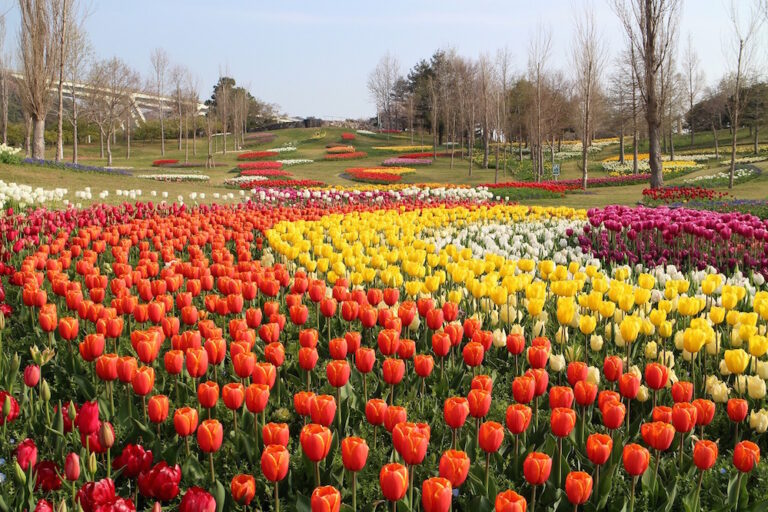
Awaji Island Akashi Kaikyo National Government Park―A Treasure Trove of Instagrammable Scenery
Akashi Kaikyo ParkA Park of Ever-Changing Scenery Throughout the Year Opened in its first phase in 2002, the Akashi Kaikyo Park was developed with the goal of restoring the natural environment of a large-scale, 100-hectare(247ac) former soil excavation site and creating an international, resort-like seaside recreational space. As of July 2022, 43.1 hectares(107ac)—approximately 45% of the planned area—have been opened to the public. The gardens within the park take full advantage of the vast grounds, showcasing dynamic displays through mass plantings of seasonal flowers. The impressive flower beds create stunning scenes, beginning with daffodils in spring, followed by tulips, Livingstone daisies, hydrangeas, sunflowers, cosmos, and finally Christmas roses in winter—offering a spectacular view throughout the year. The planting plan is changed every year to give the gardens a new look, attracts many repeat visitors. Aiming to be a “garden perfect for Instagram-worthy photos,” it offers a variety of creative photo spots, making it an ideal place to capture plenty of memorable pictures. In addition to the garden, there is a barbecue area and “Yumekko Land,” a large playground complex with 150 different play structures, making it a place where families can spend an entire day without getting bored. A Stunning Display of Synchronized BloomsDon't Overlook the Striking Tulip Beds in Full Color! On Awaji Island, blessed with the mild climate of the Seto Inland Sea, the best time to see early-blooming Nanohana (rapeseed flowers) is from January to early February. Standing in front of the floral scenery of the “Utsuroi-no-niwa Garden (Garden of Transitions),” which features lawns and flowing water, makes one's heart leap with the feeling that “Spring is just around the corner!” From the gazebo perched on a gentle hill, you can enjoy a stunning view of the ocean beyond a perfect backdrop where the blue sea and yellow flowers create a vivid contrast. Visitors are welcome to bring their own food into the park, so it’s also a perfect place to relax and enjoy a picnic lunch. From late March to mid-April, tulips reach their peak bloom. In 2025, a total of 168,000 tulips from 100 different varieties blossomed across flower beds spanning approximately 4,600 square meters (1.14ac) in the combined areas of “Hill of Cottonwood” and “Daichi-no-niji Garden (Rainbow of the Earth Garden).” The colorful garden, backed by a meticulous planting plan that aligns bloom times and plant heights by variety, offers a truly impressive sight. Each year, a new theme is chosen and the color scheme is changed, creating dynamic, large-scale displays that attract many repeat visitors. During the peak season, the Spring Carnival is held. Various hands-on activities are held each year, including a photo session where visitors can try on traditional Dutch costumes. The windmill seen in the background of the photo is inspired by Netherlands and is set at about human height, making it a popular photo spot. The best time to see the Livingstone daisies is from mid-April to early May. Approximately 15,000 plants are planted on 600 square meters (0.15ac). Taking advantage of their ground-hugging growth habit that creates a carpet-like effect, a mix of vibrant colors is used to create a stunning display. Sparkling in the sunlight like precious gems, Livingstone daisies create a mesmerizing sight. Since they bloom in response to light, it's best to visit on a sunny day to fully enjoy their beauty. Within Akashi Kaikyo Park, the "Yume Hatchi Tram Car" runs every 30 to 60 minutes. A guide staff member rides along, introducing visitors to the park’s blooming spots during a one-way 10-minute ride. Unlimited rides are available for 300 yen per day.Please Note: The Yume Hatchi Tram Car is currently out of service due to a vehicle malfunction. Pets are welcome in the park (except inside buildings and on park vehicles). Enjoy a walk while viewing the Livingstone daisies from above. Please note that leashes are required at all times, and be sure to follow proper etiquette, such as cleaning up after your pet. Smoking is prohibited in the park. However, designated smoking areas are available, so smokers are asked to use those locations when taking a break. Seas of Hydrangeas, Lilies, and Sunflowers in SummerEnjoy the Breathtaking Scenery of Vibrant Flowers in Full Bloom! From early June to early July, hydrangeas reach their peak bloom, with around 14,000 plants from approximately 16 varieties beautifully coloring the park. In the foreground, the American hydrangea Annabelle is especially popular for its elegant transformation—from a fresh lime green at the start of blooming to a pure white as it matures. The best time to see lilies is from early June to mid-July. About 12,000 plants of about 35 varieties are planted throughout the park. In sunny areas, you'll find brightly colored Thunberg Lily, while in partially shaded spots like under trees, varieties such as the Brilliant Lily and Regal Lily are planted to suit their growing conditions. In the north and south areas of "Daichi-no-niji Garden (Rainbow of the Earth)", sunflowers reach their peak bloom from early July to mid-August. Around 36,000 plants of approximately 40 varieties—each with different flower colors and shapes—are planted. Winding walking paths follow the gentle slopes of the hills, making it a popular spot each year for taking photogenic shots with the sunflower fields as a backdrop. To extend the blooming season, the sunflowers are planted in phases: the southern area begins to bloom in July, while the northern area starts flowering in August. Autumn Dahlias and Cosmos, Winter Christmas RosesA Garden You'll Want to Visit Again and Again, All Year Round Dahlia season is from late September to late October. In an area of about 600 square meters (0.15ac), 10,000 plants of about 6 varieties of dwarf species and 160 plants of about 40 varieties of large-flowered tall species are planted. With the tall varieties forming a backdrop, the foreground bursts with a vibrant mix of colorful dwarf dahlias, making this a popular and highly photogenic spot in autumn. From late September to late October, cosmos take center stage. A total of 50,000 cosmos flowers of about 20 varieties, including 16 varieties with different colors and shapes and 4 late-blooming varieties such as the “Campus Series,” will be at their best. In the “Hill of Cottonwood” area shown in the photo above, various flower colors are mixed together in the planting design. On the other hand, the “Daichi-no-niji Garden (Rainbow of the Earth Garden)” flower bed is designed to create a striped rainbow pattern by planting flowers in different colors, such as red, shades of pink, white, and yellow, allowing visitors to enjoy two different planting techniques. From late December to early April, Christmas roses are in full bloom, adding charm even in winter. Currently, around 1,500 plants from approximately 130 varieties—including species and interspecific hybrids—are planted, with new varieties added each year. The garden has become a beloved destination for Christmas rose enthusiasts. Each year in March, a workshop is held at the Christmas Rose Garden. During the one-hour session, participants are guided through the introduction of various varieties and basic care tips. The Christmas rose variety shown in the right photo is Helleborus x ericsmithii 'Snow Dance'. The Adorable Charm of Tako-san, the headband wearing Octopus!A Unique, Instagram-Worthy Photo Spot Let's introduce a unique corner featuring objects decorated with flowers. On the left is a topiary of Tako-san (Octopus), a local specialty of Akashi. With its twisted headband and goofy expression, it's simply adorable. Although not pictured, there's also a sea bream nearby. On the right is the “Hanahidori (Phoenix Firebird)”, a symbol of recovery from the Great Hanshin-Awaji Earthquake. Both topiaries stand around 3 meters tall and are truly impressive in scale. Depending on the season, they are decorated with flowers like violas, begonias, and achyranthes. This highly popular photo spot is known for its charming displays that are sure to bring a smile and make for Instagram-worthy shots. During the peak seasons of spring and autumn, free guided tours by expert staff are offered. The tour takes about an hour and allows visitors to leisurely explore the park—be sure to join if you have the chance! Please note: The number of plant varieties and the total number of plantings in the park may vary from year to year. Local Specialties at the Restaurant and Gift Shops Within Akashi Kaikyo Park, you'll find the restaurant “Hanayashiki”. If you’re tired from walking around the spacious grounds, it’s a perfect place to take a break. The restaurant is open from 10:00 am. until one hour before the park closes (hours vary by season). The last order is taken 30 minutes before closing. Lunch prices range around 1,000 yen, and a popular recommendation is the local specialty Awaji Nama-Kama Don—a fresh whitebait rice bowl available only from April to November. It comes with onion soup and costs 1,080 yen. There are 40 indoor seats and 40 terrace seats available. The park’s gift shops offer a wide selection of local specialties from Awaji Island—perfect for souvenirs. Recommended items include the island’s famous onion soup (540yen), onion rice crackers (540yen), and the park’s original sweet buns (700yen). Be sure to stop by! Information Akashi Kaikyo Park Address: 8-10 Yumebutai, Awaji City, Hyogo/Japan Call: 0799-72-2000 Official Website: https://awaji-kaikyopark.jp/en/index.html Access: 【By Train and Bus】 <From Kobe/Osaka> From Shin-Kobe and Sannomiya: About 60 minutes by express bus for "Higashiura Bus Terminal" Alight at Yumebutai-mae Bus Stop When alighting at JR Maiko Station: About 15 minutes from Kosoku Maiko Bus Stop by express bus for "Higashiura Bus Terminal" Alight at Yumebutai-mae Bus Stop Take a high speed boat from Akashi Port to Iwaya Port, and then take a bus from Iwaya Port Bus Stop for about 10 minutes Get off at Yumebutai-mae Bus Stop ※For a detailed map and further information, including directions for both public transport and driving, please click here. Days Closed: December 31, January 1, and the Second Monday to Friday of February Opening Hours: From April 1 to June 30 9:30-17:00 From July 1 to August 31 9:30-18:00 From September 1 to October 31 9:30-17:00 From November 1 to March 31 9:30-16:00 Admission: Adults(aged 15 to 64): 450 yen Seniors(65 and over): 210 yen *Free for children under 6 years old.
Follow us


