
Gardens & Shops
Word Search
- Hokkaido
- Aomori
- Iwate
- Miyagi
- Akita
- Yamagata
- Fukushima
- Ibaraki
- Tochigi
- Gunma
- Saitama
- Chiba
- Tokyo
- Kanagawa
- Niigata
- Toyama
- Ishikawa
- Fukui
- Yamanashi
- Nagano
- Gifu
- Shizuoka
- Aichi
- Mie
- Shiga
- Kyoto
- Osaka
- Hyogo
- Nara
- Wakayama
- Tottori
- Shimane
- Okayama
- Hiroshima
- Yamaguchi
- Tokushima
- Kagawa
- Ehime
- Kochi
- Fukuoka
- Saga
- Nagasaki
- Kumamoto
- Oita
- Miyazaki
- Kagoshima
- Okinawa
- Abroad
Gardens & Shops
-
kanagawa
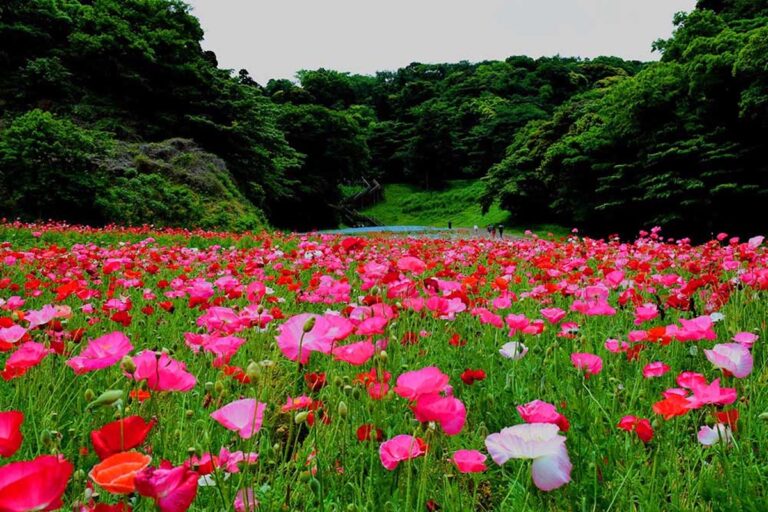
Discover the Stunning Flower Fields of Kurihama Flower Park
Breathtaking Flower Fields Against a Satoyama Backdrop Opened by the City of Yokosuka in 1984 as Kurihama Ryokuchi (Kurihama Green Space), the park was renamed Kurihama Flower Park in 1997. Since then, it has remained a beloved place of relaxation and recreation for local residents. Covering approximately 583,000 square meters (144.1 ac), the park is so expansive that it takes around two hours to explore on foot. Surrounded by lush “satoyama” woodlands, the park makes full use of its rolling terrain and vast grounds to create sweeping floral displays that blend harmoniously with nature. In spring, breathtaking flower fields burst into bloom with rapeseed flowers, nemophila, poppies, and agrostemma. With sunflowers in summer and cosmos in autumn, visitors can enjoy a carpet of flowers throughout the year. The park also features a greenhouse of more than 50 tsubo (1,778sq ft), where visitors can enjoy a variety of tropical plants, including flame vine (Pyrostegia venusta), bird of paradise (Strelitzia reginae), plumeria, shrimp plant (Justicia brandegeeana), and weeping fig (Ficus benjamina). In addition to its seasonal flower displays, the park also features a herb garden with approximately 80 species and 7,500 plants, as well as a camellia garden boasting a collection of 200 varieties, the garden offers plenty to see beyond its seasonal flower fields. Cosmos-kan, the park’s gift shop, is open daily from 10:00 a.m. to 4:00 p.m. (closed only during the New Year holiday period). Visitors can shop for local specialty sweets and souvenirs, as well as enjoy soft-serve ice cream. Kurihama Flower Park attracts about 500,000 visitors annually and is known for its many loyal visitors. Another highlight is that admission is completely free, making it an accessible destination for everyone. With its expansive seasonal flower displays, along with a variety of facilities including restaurants, playgrounds, and other attractions, the park offers plenty to enjoy throughout the day. Why not visit and spend a whole day enjoying this leisure spot? Seasonal Flower Fields from Early to Late SpringA Floral Destination Worth Visiting Again and Again Rapeseed flowers are at their best from April to May. Four different varieties are planted to provide blooms from around November, but the display reaches its peak in early spring. The park chose rapeseed flowers because they are widely regarded as one of the iconic yellow blooms that herald the arrival of spring. Planted in abundance along the pathways, they create a vibrant Flower Road that welcomes visitors with a sea of golden blossoms. Next to the rapeseed flower fields is a beautiful display of nemophila, with more than 30,000 plants in bloom. Their delicate blue flowers create a stunning contrast with the sky, making this one of the park’s most photogenic spots. Carefully grown from seed, the plants thrive in their surroundings and form a lush carpet of blue that is a delight to see in spring. Kurihama Flower Park is home to spectacular poppy fields featuring more than one million blooms. The season begins in April with vibrant Iceland poppies in shades of yellow and orange, followed by Shirley poppies in red, pink, and white that paint the landscape with brilliant color. Around the end of May each year, visitors can also enjoy a free poppy-picking event (subject to cancellation if the flowers have wilted due to weather conditions). In early summer—from early June to mid-July—the “Blue Flower Festival” is held, featuring cool blue blooms such as Endless Summer hydrangea and agapanthus. As the rainy season comes to an end, more than 60,000 sunflowers burst into bloom near the entrance to the herb garden. Varieties such as ‘Daisetsuzan’, known for producing multiple flowers on a single plant, create a spectacular display. Seeing thousands of sunflowers turn and bloom in the same direction is truly impressive. In autumn, the park is filled with one million cosmos flowers. The season begins in early September, when the yellow-flowered cosmos cultivar ‘Lemon Bright’ starts to bloom. At this time of year, the summer sunlight is still strong, bringing out the fresh green foliage and creating a beautiful contrast with the bright yellow flowers. In October, Cosmos ‘Sensation’ comes into full bloom, creating a colorful display of pink, white, and deep red flowers. Visitors can also enjoy ‘Yellow Campus’, a unique variety whose flowers open white and gradually turn yellow as they mature. Every year, a free cosmos-picking event is held for two days—the Saturday and Sunday of the last week of November(subject to cancellation if the flowers have wilted due to weather conditions)! Ride the Flower Train Through the Expansive ParkUnwind in a Fragrant Herbal Footbath To get around the park’s expansive grounds, visitors can ride the Flower Train, a charming bus modeled after a steam locomotive. It travels the approximately 2-kilometer route between the First and Second Parking Areas, taking about 30 minutes at a leisurely pace. The route passes scenic viewpoints overlooking the flower fields, and there are several stops along the way. The Flower Train operates from 10:00 a.m. to 4:00 p.m. and is closed on Mondays (or the following day if Monday is a public holiday; schedules vary by season). One-way fares are ¥500 for junior high school students and adults and ¥300 for children aged 3 through elementary school age. The herb garden, home to around 7,500 plants representing about 80 species, features a free footbath called Yuttari. The footbath is infused with herbs harvested from the garden, allowing visitors to enjoy their soothing fragrance while relaxing. A single herb is used at a time, chosen from plants such as lemongrass, rosemary, lavender, thyme, bay laurel, and pine. The featured herb changes every two weeks. After exploring the park, it’s the perfect place to rest your feet and unwind. Relax Over Lunch While Taking in the ViewTerrace Seating Overlooking Tokyo Bay The photo shows the exterior of Garden Restaurant Rosmarinus. Garden Restaurant Rosmarinus features a terrace with panoramic views of Tokyo Bay. Visitors can also enjoy a barbecue by reservation. A variety of barbecue set menus are available, including seafood and Shonan pork options.(Bringing your own food is not permitted.) Information Kurihama Flower ParkAddress: 1 Shinmei-cho, Yokosuka, Kanagawa/ Japan Call: +81-46-833-8282Domestic (Japan): 046-833-8282 Official Website:https://www.kanagawaparks.com/kurihama/ Access: 【By Train】About a 15-minute walk from Keikyu Kurihama Station or JR Kurihama Station.【By Ferry】About a 10-minute walk from Kurihama Port (Tokyo Wan Ferry) to the Second Parking Area【By Car】Approximately 4 km from Sahara Interchange on the Yokohama-Yokosuka Expressway Opening Seasons:Year-round Closed: None (individual facilities may have their own operating hours and closing days) Opening Hours:Open 24 hours Herbal Footbath Opening Hours: 10:00 a.m.–4:00 p.m.Closed: Mondays (or the following day if Monday is a public holiday), except during festival periods and the year-end/New Year holidays (December 29–January 3). Admission:Free (some facilities charge a fee) Parking:427 spacesStandard vehicles: ¥630 per entryLarge buses: ¥2,100 per entry
-
kanagawa
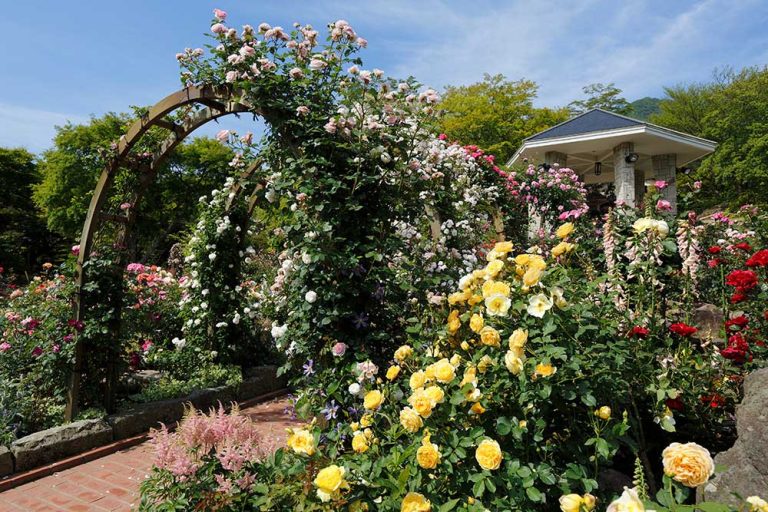
Hakone Gora Park – A Floral Paradise in Hakone!
A Tranquil Garden Framed by Hakone’s Mountains, Awash with Blossoms Beneath Clear Blue Skies Opened in 1914, Hakone Gora Park has been welcoming visitors for over a century. The garden was designed and supervised by Mr. Shichigorō Isshiki, who had previously created a Japanese garden for the Japan-Britain Exhibition held in London in 1910. There are both Western-style and Japanese-style gardens, and the use of numerous giant rocks to blend in with the landscape, taking advantage of the geological features, provides a glimpse of the advanced landscaping techniques of the time. Hakone Gora Park covers an area of 26,500 square meters and can be leisurely explored in about 30 to 40 minutes on foot. The park is currently divided into several main zones: the Rose Garden, the Fountain Area, the Craft House (hands-on experience facility), the Greenhouse, and Tea Room. At the center of the park lies a fountain plaza, offering a particularly stunning view of the surrounding Hakone mountains. Be sure to stop by.The flower beds in this view spot consist mainly of annual plants and are replanted four times a year. In spring, they are unified in refreshing white tones; in summer, blue and yellow flowers create a vivid contrast; in autumn, the beds take on a festive Halloween theme; while winter features colorful ornamental cabbages. Hakone Gora Park is located at an elevation of around 600 meters (nearly 2,000 feet), so the difference in temperature between day and night makes the colors of the flowers vivid and striking. Another highlight is the park’s three greenhouses, which can be enjoyed also in winter. These include the Tropical Plant Pavilion (approximately 211 species and 3,000 plants), the Bougainvillea Pavilion (48 species of bougainvillea), the Tropical Herb Pavilion (approximately 70 species and 125 plants), and the Event Pavilion, which can be visited in about 30 minutes for a thorough viewing of the plants. The Tropical Plant Pavilion is designed to evoke a jungle atmosphere. Visitors can see a variety of tropical fruits such as bananas, papayas, and pineapples, as well as more unusual plants like rose apples and the sausage tree. The Bougainvillea Pavilion in the photo above allows visitors to enjoy the spectacular blooms throughout the year. Bougainvillea is often thought of as a summer bloomer, but it is actually a short-day plant native to Colombia, with its peak blooming season from autumn through early spring (November to March). Because it blooms less during the long days of summer, other plants such as hibiscus (a long-day plant) are cultivated to bloom during that time, ensuring the pavilion is filled with vibrant flowers all year round. On the other hand, the Tropical Herb Pavilion displays plants that are the source of spices. To make it easier to compare temperate and tropical herbs, a temperate herb garden has been created near the Tropical Herb Pavilion, so it's a great idea to compare their fragrances as well. Hakone Gora Park is a scenic garden that is adorned with a rich variety of flowers throughout the year, and still retains the nickname “Garden of Dreams”, which it has been affectionately called since the park's opening. In addition, there are plenty of attractions such as cafes, restaurants, boutiques, and craft experiences, making it a wonderful leisure spot. Why not take a day to relax and spend some time there? Vibrant Flowers in Every Season, Glowing at 2,000 feet Above Sea Level Azaleas reach their peak from mid to late May, with about 1,000 plants bursting into bloom in shades of red, purple, white, and more around the fountain pond. In the park, you can also see the Akayashio (late March), Shiroyashio (late March), and Amagi azaleas (early April), which are only found at highlands. During their full bloom, when the branches and leaves are covered in blossoms, creating a mass of color, the sight is extremely vibrant and spectacular. The best time to see the roses is from late May to late June. Approximately 1,000 roses of 200 varieties will be in full bloom. There are also themed displays, including a section featuring fragrant roses, a section dedicated to old roses, and a section with roses named after the imperial family, which are also highlights of the exhibition.To make the most of the roses’ beauty, the rose garden features a tunnel of roses supported by wooden arches and dynamic flowerbeds combined with perennials, making it a delightful place to explore as you walk along. The best time to see hydrangeas is from mid-June to early July. The many mountain hydrangeas and western hydrangeas blooming throughout the garden greet visitors with their elegant and serene beauty. Especially eye-catching are the clusters of ‘Annabelle’, which are popular for their elegant white flowers, and large specimens of ‘Iwagarami’. During the “Hydrangea Exhibition,” approximately 80 varieties of hydrangeas will be on display, and seedlings of mountain hydrangea and western hydrangea will be on sale. In the fall, when the leaves begin to change color, offers the most breathtaking scenery of the year. The best time to view the foliage is from early to late November, when the garden is filled with large Iroha momiji and Yama momiji maple trees, turning the entire park a vivid shade of crimson. In October, visitors can also enjoy autumn roses, which bloom in deeper, richer colors compared to spring. Their stunning combination with the feathery plumes of pampas grass creates a truly beautiful scene. From December through March, around 100 Christmas rose plants throughout the garden come into full bloom. The blooming season begins in late December with the Helleborus niger species, followed by H. niger hybrids from late December to late January, the upright-stemmed varieties in mid-February, the narrow-leaved varieties in late February, and finally, the Lenten roses from mid-February to mid-March, blooming one after another in succession. Two Stylish Eateries! Featuring Menus Made with Handpicked Ingredients There are two stylish eateries in the garden. Pictured above is a sandwich shop called“Isshikido Tea House”, specializing in gourmet sandwiches made with finest ingredients. Popular menu items are the “Japanese rolled omelete sandwich made from naturally fertilized eggs” (1,320 yen, tax included) and the “Roast Japanese beef sandwich” (1,980 yen, tax included), which is generously filled with roast beef and lettuce.Open from 10:00 to 16:00 (last order 15:30), and takeout is also available. The French toast shown in the above photo (990 yen, tax included) is a popular item at Isshikido Tea House.Made by soaking bread in a mixture of milk, fresh cream, and naturally fertilized eggs, then letting it rest overnight before carefully baking, it has a moist and tender texture. It is served with seasonal fruits and fresh cream. At the other eatery, Café PIC, the limited daily specials“Gora Park Curry (40 servings per day) and Poached Egg Curry (20 servings per day)are also popular choices. Herbal Tea (630yen, tax included), with five varieties to choose from: Lavender Mix, Hibiscus Lemon, Rose Blend, Lemony Mint, and Chamomile Blend is highly recommended as well. Open from 10:00 to 16:00 (last call is at 15:30). Don’t Miss boutiques Filled with Local Handicrafts! Enjoy Seven types of Craft Experiences The park has a Souvenir Shop that offers a wide variety of Hakone souvenirs, including miscellaneous goods and sweets. One highlight is Komamonoya Hakone, a boutiques that opened in the summer of 2019. Under the theme of “Arts & Crafts,” the shop features traditional Hakone handicrafts and works by renowned Japanese craft artists. Be sure to stop by and enjoy some memorable shopping to mark your visit. Within the park, you'll find the Hakone Crafthouse, where visitors can enjoy seven different hands-on craft experiences. Prices and estimated time required are as follows. ■Glass Blowing (from 4,400 yen, approx.15 minutes)■Ceramics (from 4,290 yen, approx. 40 minutes)■Sandblasting (from 3,520 yen, approx. 60 minutes)■Tombo-dama – Lampwork Bead (from 2,750 yen, approx. 15 minutes)■Pottery Painting (3,850 yen, approx. 60 minutes)■Kiriko Glass (3,850 yen, approx. 60 minutes)■Laser Engraving (2,420 yen, approx. 30 minutes) Each session is held one-on-one, with patient and thorough guidance from skilled instructors. Information Hakone Gora Park Official Site: https://www.hakonenavi.jp/gorapark/en/ Address:1300Gora,Hakone-machi,Ashigarashimo-gun,Kanagawa/Japan Call: 0460-82-2825 Access: 5-minute walk from Gora Station of Hakone Tozan Railway. Opening Hours: 9:00-17:00 (Open daily except otherwise noticed)※Last admission at 16:30 Admission: Adults: 560 yen Free for under 12 years old Free admission with Hakone Freepass, Hakone TozanTrain 1-Day Pass,Owakudani 2-Day Pass, Hakone Public Transports Single-Way Pass Parking Fees: Cars (up to 43 vehicles) (¥300/hr)
Follow us


