
Discover the Stunning Flower Fields of Kurihama Flower Park


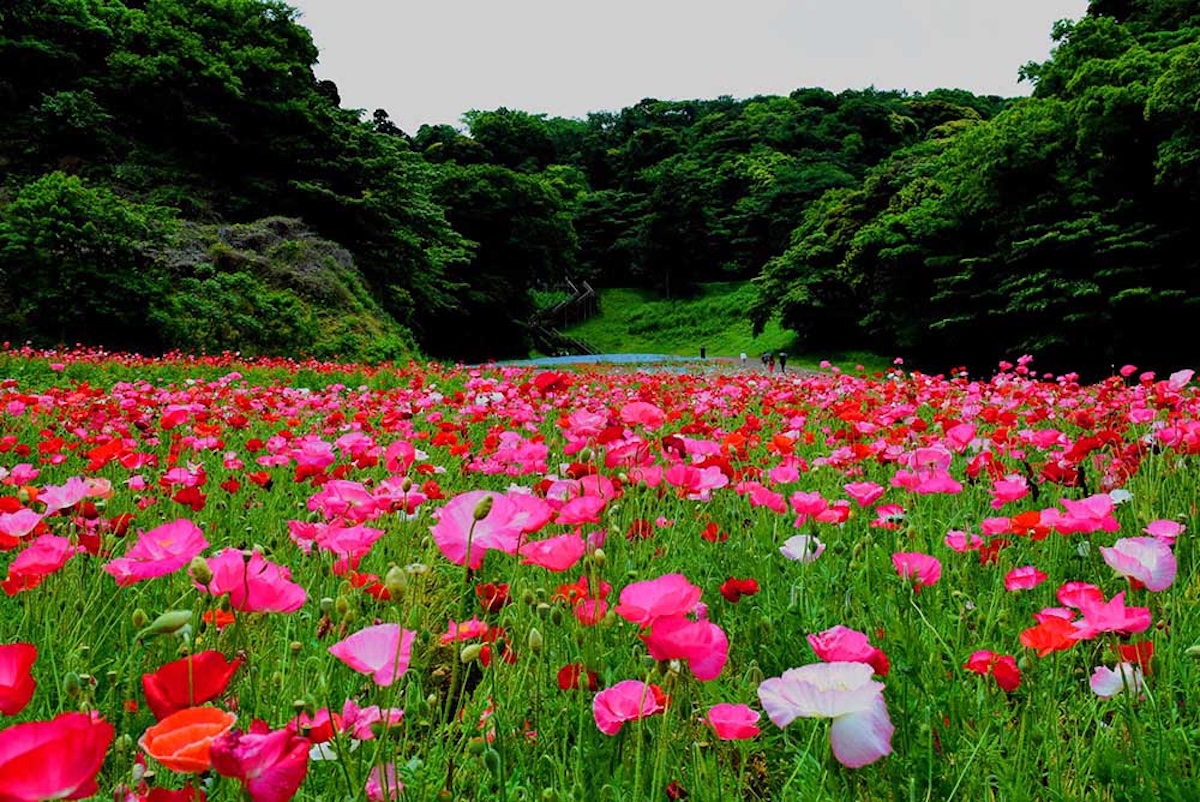
Kurihama Flower Park was developed by the City of Yokosuka as a relaxing retreat for local residents. In spring, its vast flower fields burst into bloom with one million poppies, while autumn brings a breathtaking display of one million cosmos. The spectacular scenery alone is worth the visit. With a restaurant, playgrounds, and even a footbath, this flower-filled leisure destination offers plenty of ways to enjoy a full day outdoors.
Breathtaking Flower Fields
Against a Satoyama Backdrop
Opened by the City of Yokosuka in 1984 as Kurihama Ryokuchi (Kurihama Green Space), the park was renamed Kurihama Flower Park in 1997. Since then, it has remained a beloved place of relaxation and recreation for local residents. Covering approximately 583,000 square meters (144.1 ac), the park is so expansive that it takes around two hours to explore on foot.
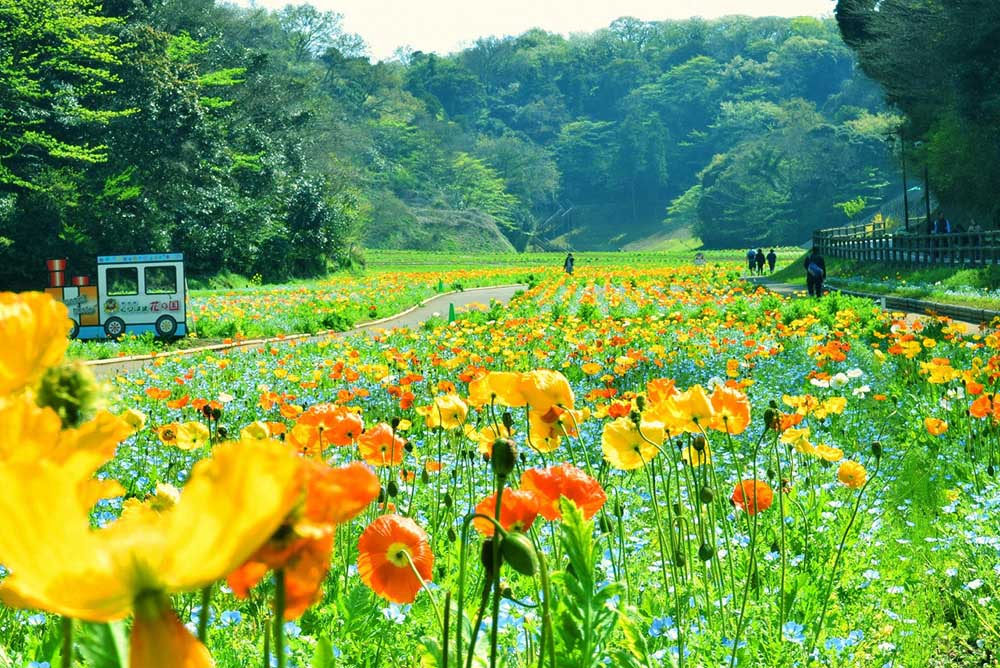
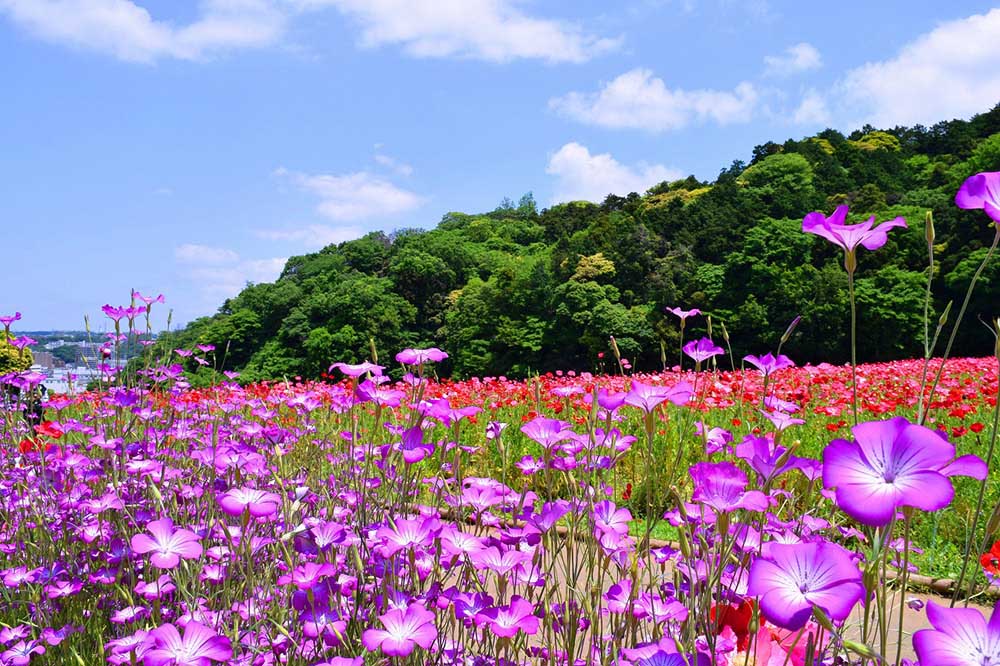
Surrounded by lush “satoyama” woodlands, the park makes full use of its rolling terrain and vast grounds to create sweeping floral displays that blend harmoniously with nature. In spring, breathtaking flower fields burst into bloom with rapeseed flowers, nemophila, poppies, and agrostemma. With sunflowers in summer and cosmos in autumn, visitors can enjoy a carpet of flowers throughout the year.
The park also features a greenhouse of more than 50 tsubo (1,778sq ft), where visitors can enjoy a variety of tropical plants, including flame vine (Pyrostegia venusta), bird of paradise (Strelitzia reginae), plumeria, shrimp plant (Justicia brandegeeana), and weeping fig (Ficus benjamina).
In addition to its seasonal flower displays, the park also features a herb garden with approximately 80 species and 7,500 plants, as well as a camellia garden boasting a collection of 200 varieties, the garden offers plenty to see beyond its seasonal flower fields.
Cosmos-kan, the park’s gift shop, is open daily from 10:00 a.m. to 4:00 p.m. (closed only during the New Year holiday period). Visitors can shop for local specialty sweets and souvenirs, as well as enjoy soft-serve ice cream.
Kurihama Flower Park attracts about 500,000 visitors annually and is known for its many loyal visitors. Another highlight is that admission is completely free, making it an accessible destination for everyone.
With its expansive seasonal flower displays, along with a variety of facilities including restaurants, playgrounds, and other attractions, the park offers plenty to enjoy throughout the day. Why not visit and spend a whole day enjoying this leisure spot?
Seasonal Flower Fields from Early to Late Spring
A Floral Destination Worth Visiting Again and Again
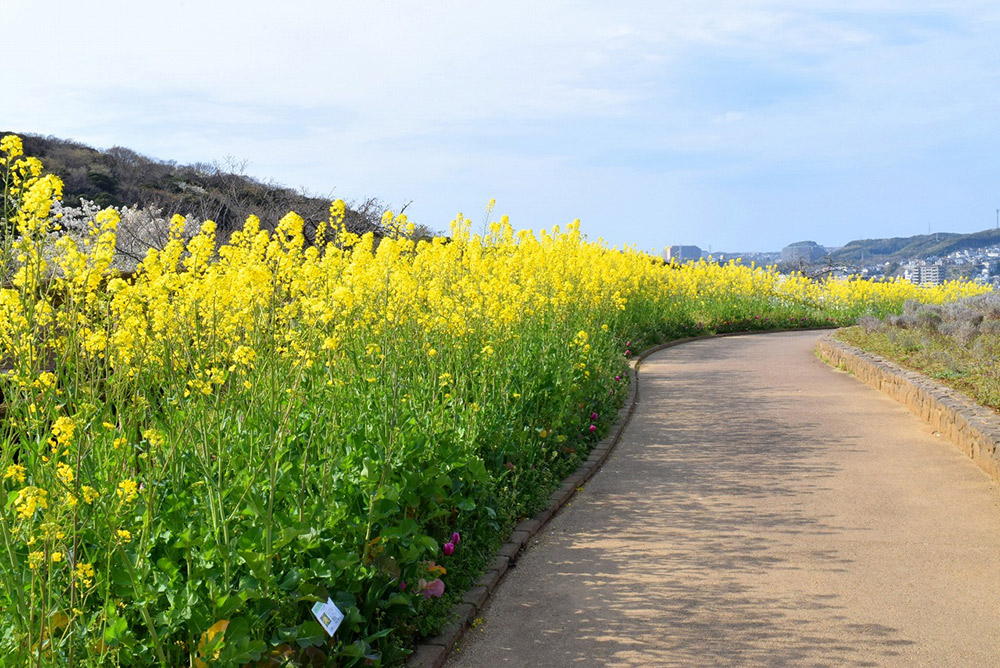
Rapeseed flowers are at their best from April to May. Four different varieties are planted to provide blooms from around November, but the display reaches its peak in early spring. The park chose rapeseed flowers because they are widely regarded as one of the iconic yellow blooms that herald the arrival of spring. Planted in abundance along the pathways, they create a vibrant Flower Road that welcomes visitors with a sea of golden blossoms.
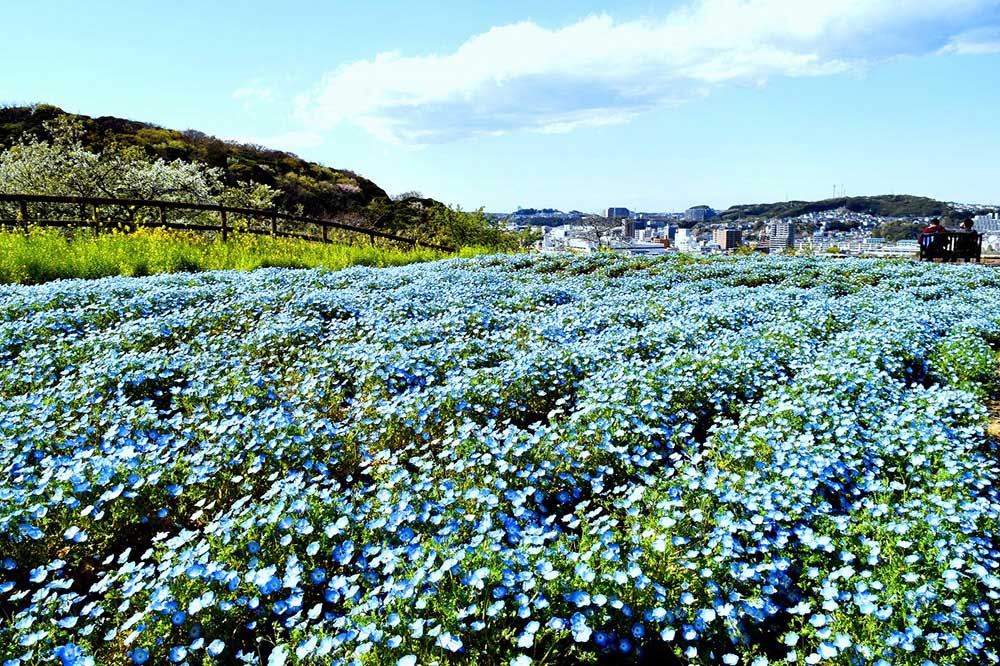
Next to the rapeseed flower fields is a beautiful display of nemophila, with more than 30,000 plants in bloom. Their delicate blue flowers create a stunning contrast with the sky, making this one of the park’s most photogenic spots.
Carefully grown from seed, the plants thrive in their surroundings and form a lush carpet of blue that is a delight to see in spring.
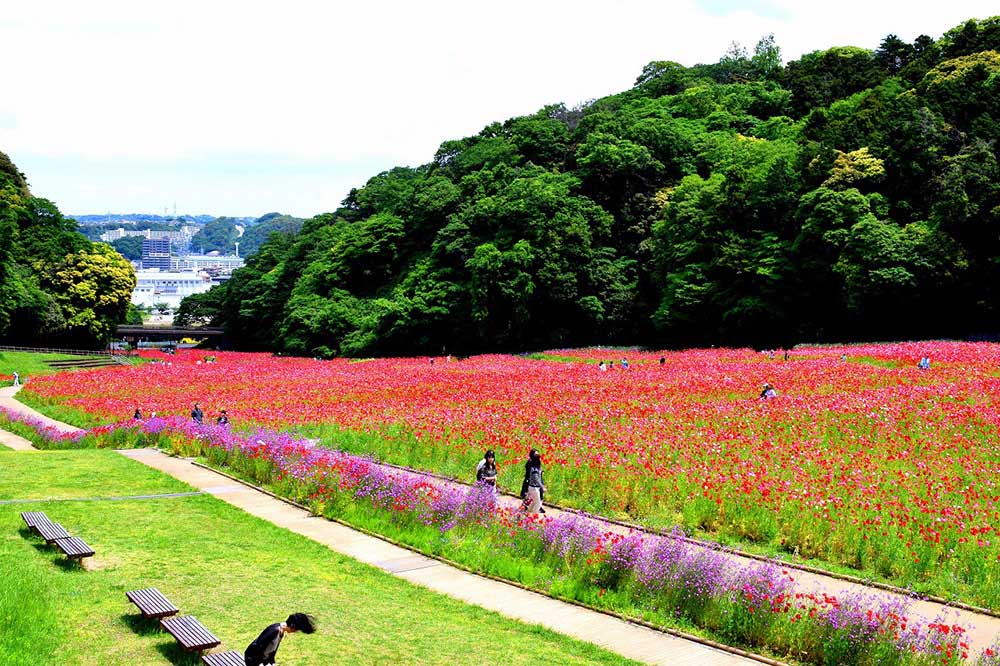
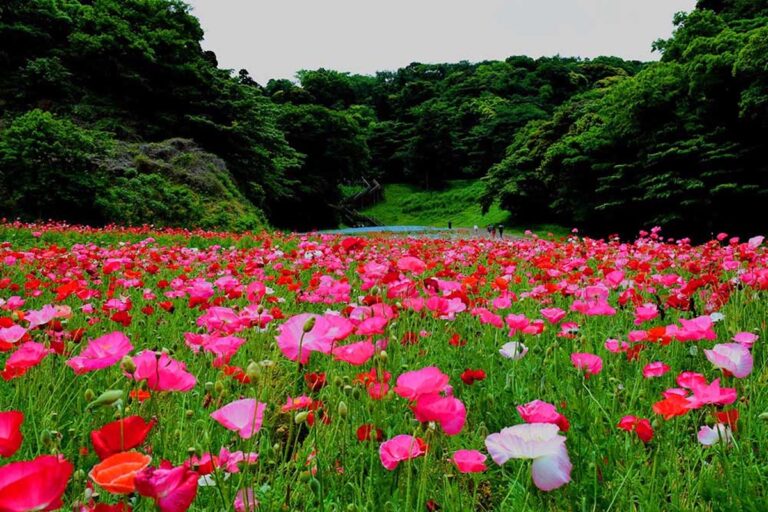
Kurihama Flower Park is home to spectacular poppy fields featuring more than one million blooms.
The season begins in April with vibrant Iceland poppies in shades of yellow and orange, followed by Shirley poppies in red, pink, and white that paint the landscape with brilliant color.
Around the end of May each year, visitors can also enjoy a free poppy-picking event (subject to cancellation if the flowers have wilted due to weather conditions).
In early summer—from early June to mid-July—the “Blue Flower Festival” is held, featuring cool blue blooms such as Endless Summer hydrangea and agapanthus.
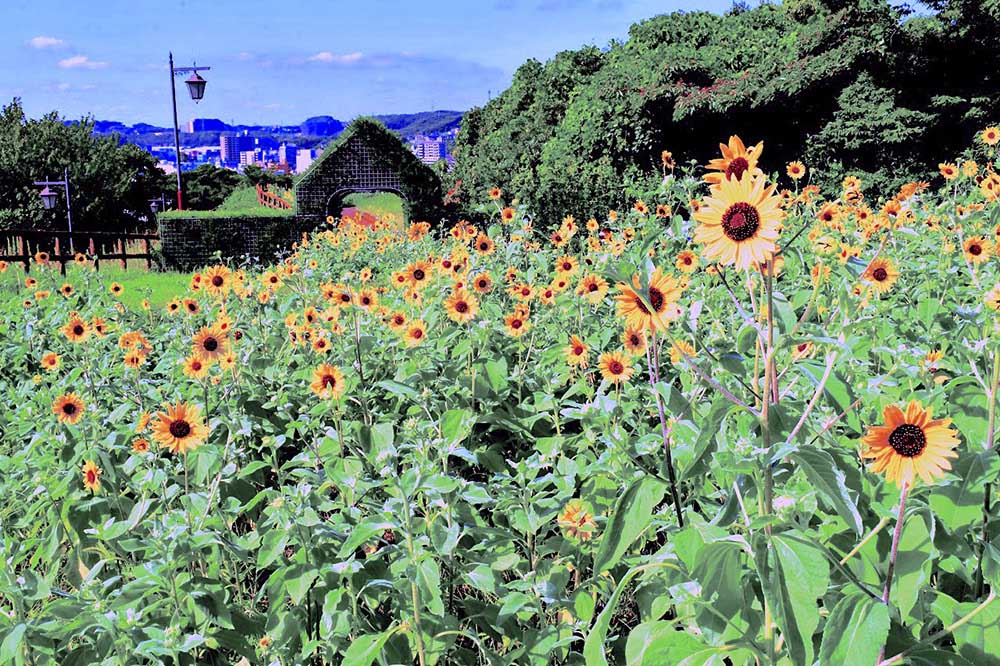
As the rainy season comes to an end, more than 60,000 sunflowers burst into bloom near the entrance to the herb garden. Varieties such as ‘Daisetsuzan’, known for producing multiple flowers on a single plant, create a spectacular display. Seeing thousands of sunflowers turn and bloom in the same direction is truly impressive.
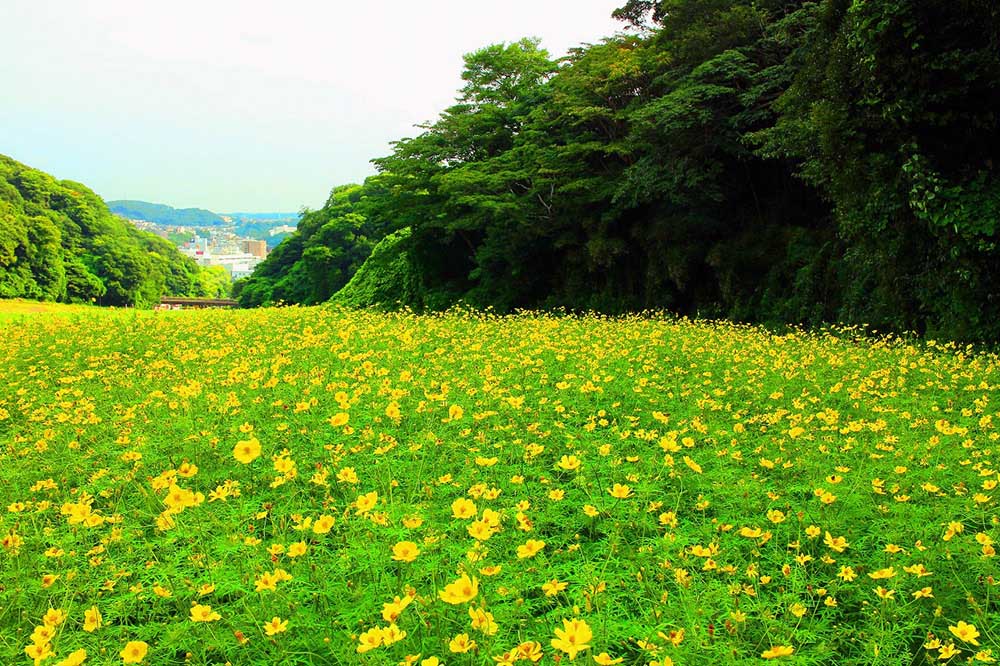
In autumn, the park is filled with one million cosmos flowers. The season begins in early September, when the yellow-flowered cosmos cultivar ‘Lemon Bright’ starts to bloom. At this time of year, the summer sunlight is still strong, bringing out the fresh green foliage and creating a beautiful contrast with the bright yellow flowers.
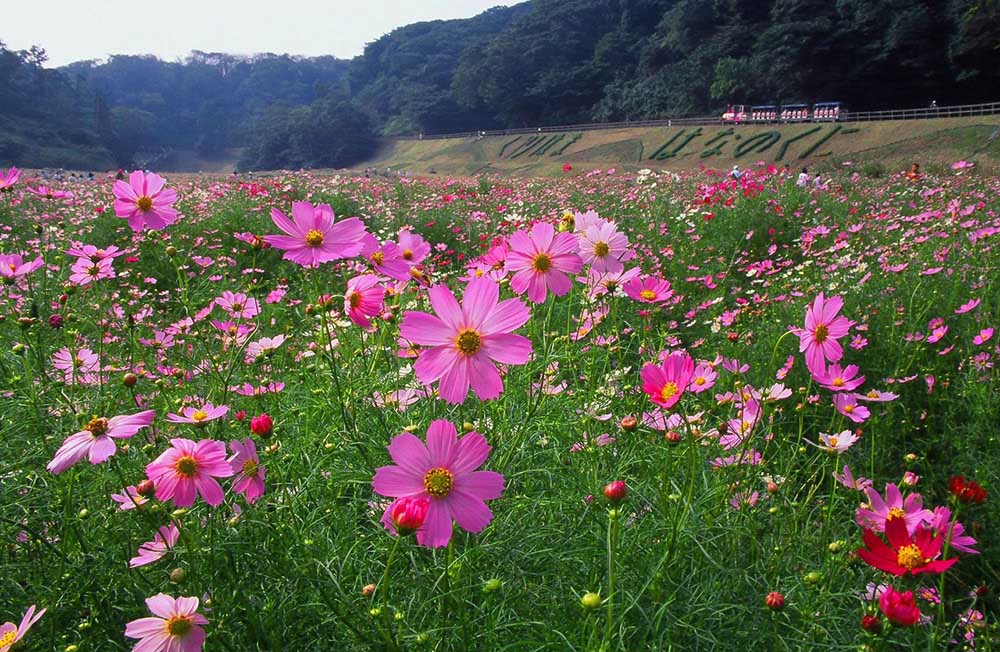
In October, Cosmos ‘Sensation’ comes into full bloom, creating a colorful display of pink, white, and deep red flowers. Visitors can also enjoy ‘Yellow Campus’, a unique variety whose flowers open white and gradually turn yellow as they mature.
Every year, a free cosmos-picking event is held for two days—the Saturday and Sunday of the last week of November(subject to cancellation if the flowers have wilted due to weather conditions)!
Ride the Flower Train Through the Expansive Park
Unwind in a Fragrant Herbal Footbath
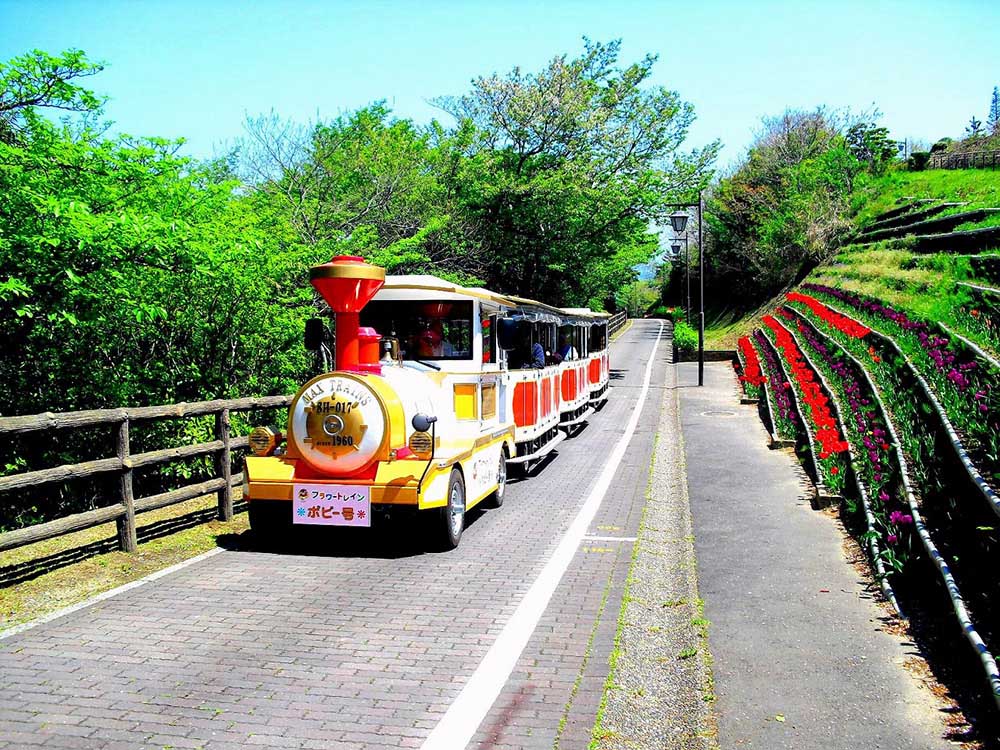
To get around the park’s expansive grounds, visitors can ride the Flower Train, a charming bus modeled after a steam locomotive. It travels the approximately 2-kilometer route between the First and Second Parking Areas, taking about 30 minutes at a leisurely pace.
The route passes scenic viewpoints overlooking the flower fields, and there are several stops along the way.
The Flower Train operates from 10:00 a.m. to 4:00 p.m. and is closed on Mondays (or the following day if Monday is a public holiday; schedules vary by season).
One-way fares are ¥500 for junior high school students and adults and ¥300 for children aged 3 through elementary school age.
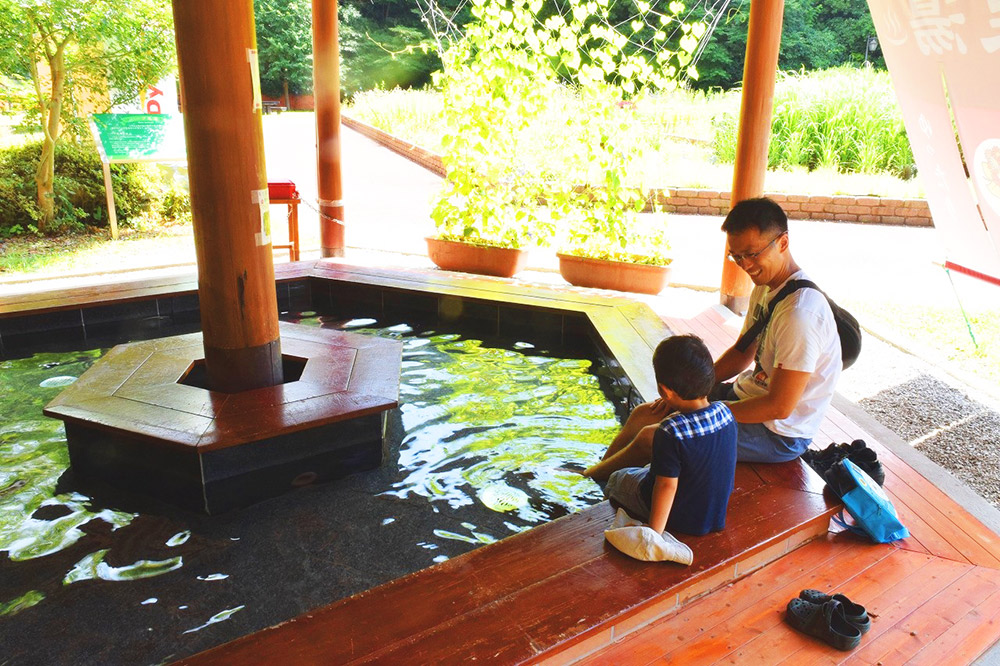
The herb garden, home to around 7,500 plants representing about 80 species, features a free footbath called Yuttari. The footbath is infused with herbs harvested from the garden, allowing visitors to enjoy their soothing fragrance while relaxing.
A single herb is used at a time, chosen from plants such as lemongrass, rosemary, lavender, thyme, bay laurel, and pine. The featured herb changes every two weeks.
After exploring the park, it’s the perfect place to rest your feet and unwind.
Relax Over Lunch While Taking in the View
Terrace Seating Overlooking Tokyo Bay
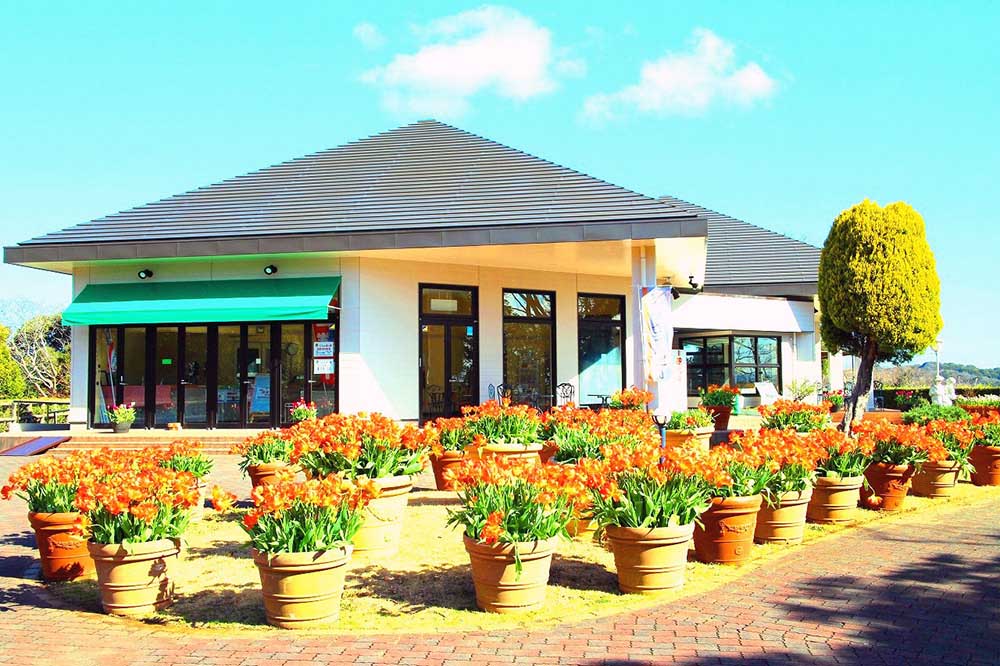
The photo shows the exterior of Garden Restaurant Rosmarinus.
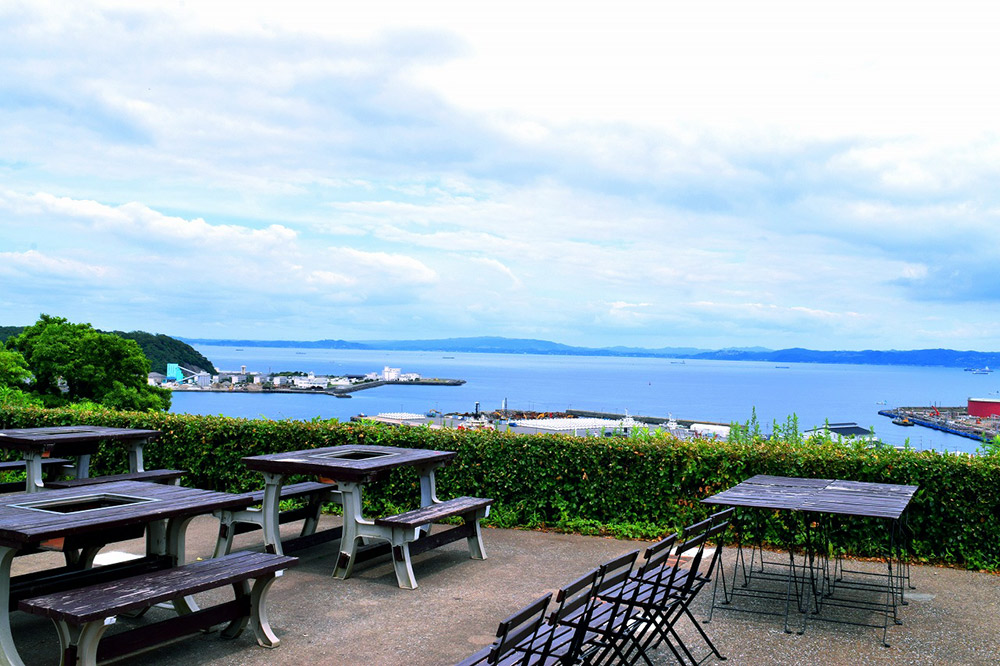
Garden Restaurant Rosmarinus features a terrace with panoramic views of Tokyo Bay.
Visitors can also enjoy a barbecue by reservation. A variety of barbecue set menus are available, including seafood and Shonan pork options.
(Bringing your own food is not permitted.)
Information
Kurihama Flower Park
Address: 1 Shinmei-cho, Yokosuka, Kanagawa/ Japan
Call: +81-46-833-8282
Domestic (Japan): 046-833-8282
Official Website:
https://www.kanagawaparks.com/kurihama/
Access:
【By Train】
About a 15-minute walk from Keikyu Kurihama Station or JR Kurihama Station.
【By Ferry】
About a 10-minute walk from Kurihama Port (Tokyo Wan Ferry) to the Second Parking Area
【By Car】
Approximately 4 km from Sahara Interchange on the Yokohama-Yokosuka Expressway
Opening Seasons:
Year-round
Closed:
None (individual facilities may have their own operating hours and closing days)
Opening Hours:
Open 24 hours
Herbal Footbath Opening Hours: 10:00 a.m.–4:00 p.m.
Closed: Mondays (or the following day if Monday is a public holiday), except during festival periods and the year-end/New Year holidays (December 29–January 3).
Admission:
Free (some facilities charge a fee)
Parking:
427 spaces
Standard vehicles: ¥630 per entry
Large buses: ¥2,100 per entry
Credit
Interview & Text / Osada Setsuko

Writer&Editor.
Specializes in lifestyle topics, focusing on gardening, interior design, and housing.
Became independent and started working as a freelancer after working for an editorial production company for about 10 years from 1994.
Enjoying gardening with balcony garden.
Translation / Garden Story Editorial Team
Follow our official SNS accounts
to receive the latest information!






Latest Articles
-
Gardens & Shops
Love Houseplants? Discover the Appeal of Miniature Bonsai
Discover the appeal of miniature bonsai, especially for houseplant lovers. Learn how to enjoy and care for these tiny trees, plus recommended species for beginners, with insights from Masa Koike of K…
-
garden
Discover the Stunning European-Style Fountain Garden at Suma Rikyu Park
The Suma area has long been known as a place of relaxation and is home to historical sites dating back to the Heian period. Kobe Municipal Suma Rikyu Park (hereafter “Suma Rikyu Park”) was created on…
-
free garden
Discover the Stunning Flower Fields of Kurihama Flower Park
Kurihama Flower Park was developed by the City of Yokosuka as a relaxing retreat for local residents. In spring, its vast flower fields burst into bloom with one million poppies, while autumn brings …
Follow us


