
Omoto (Rohdea japonica): Exploring the Winter Beauty of a Traditional Japanese Foliage Plant


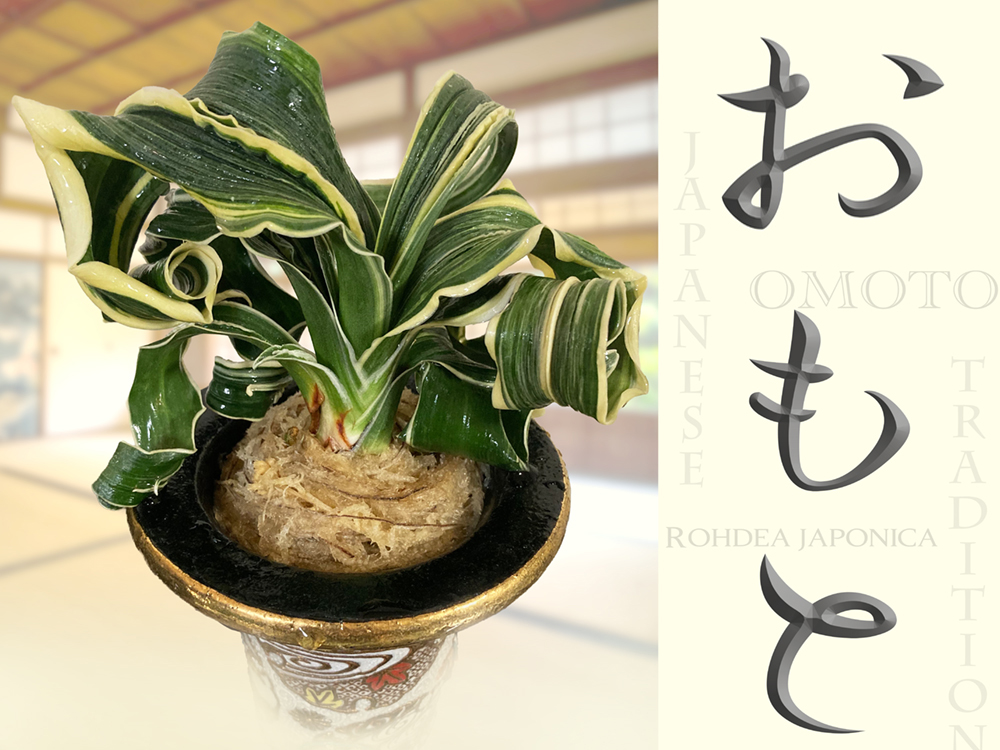
Learn about Omoto (Rohdea japonica), a traditional Japanese foliage plant that brings greenery to indoor spaces even in winter. Featuring expert commentary from the Japan Omoto Association, this article highlights winter berries, classic leaf artistry, elegant pots, modern interior ideas, and easy care tips for beginners.
Introducing the Timeless Appeal of Omoto (Rohdea japonica), a Traditional Japanese Foliage Plant
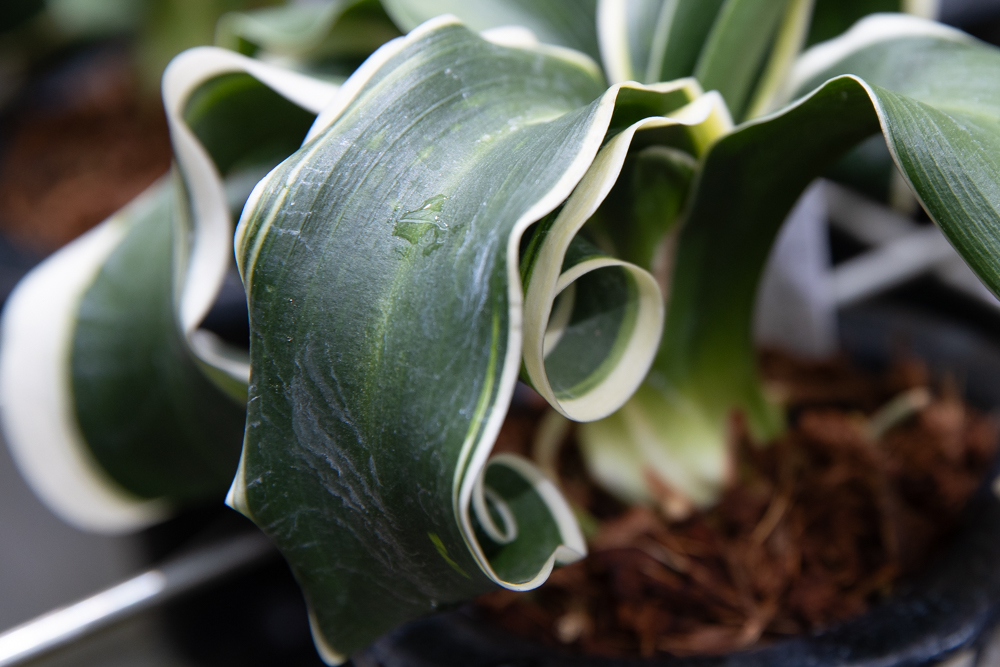
Among Japan’s traditional plants, Omoto (Rohdea japonica) stands out for its long history and rich symbolism.
With its evergreen foliage and auspicious associations, Omoto has long been cherished as a “plant that brings good fortune.”
In recent years, it has also gained attention as an interior greenery that adds a subtle sense of Japanese aesthetics to modern living spaces, attracting growing interest from overseas plant enthusiasts.
More recently, collectors of so-called “bizarre plants” such as staghorn ferns, agaves, and caudiciform plants have begun turning their attention to Omoto as their next collecting target.
In this houseplant guide, we take a closer look at Omoto (Rohdea japonica) and explore its unique appeal in depth.
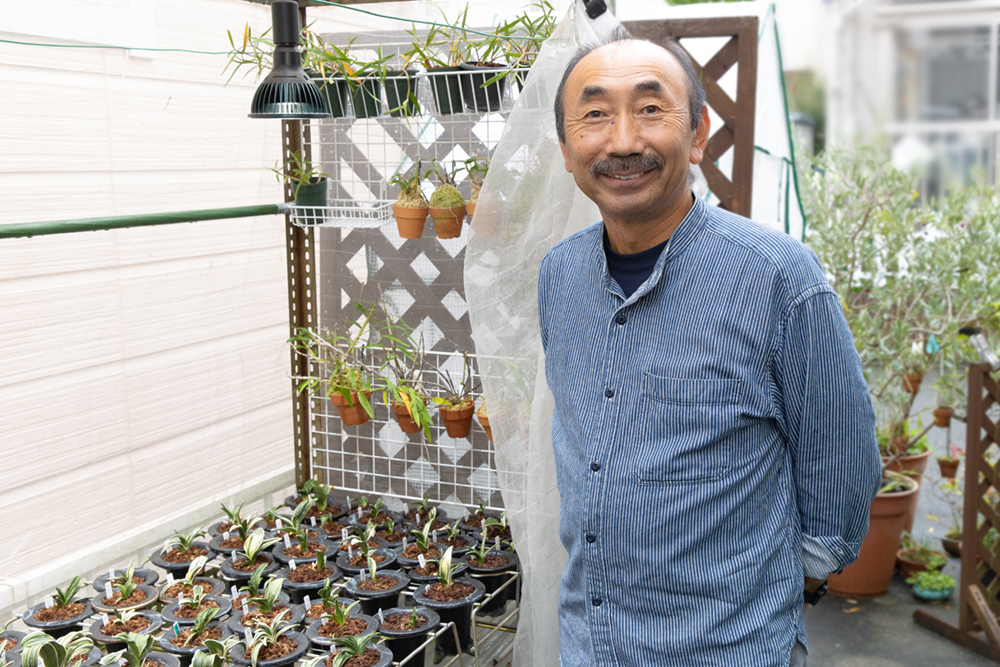
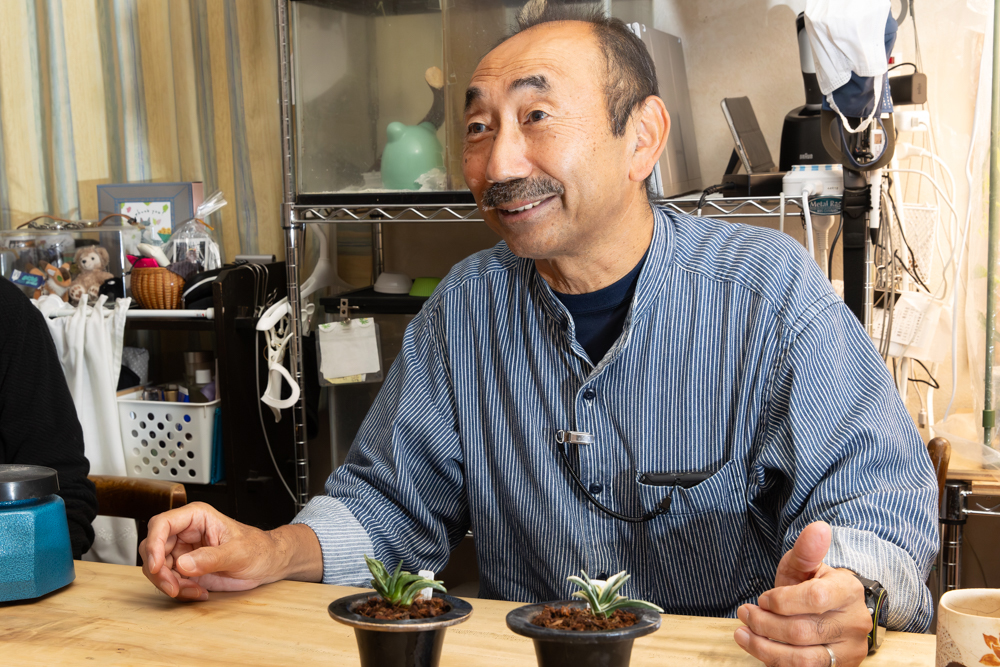
For this feature, we spoke with Mr. Toshihito Kondo(hereafter, “Kondo-san”), a board member of the Japan Omoto Association, whose extensive knowledge and experience offer invaluable insights into this remarkable plant.
What Is Omoto (Rohdea japonica)?
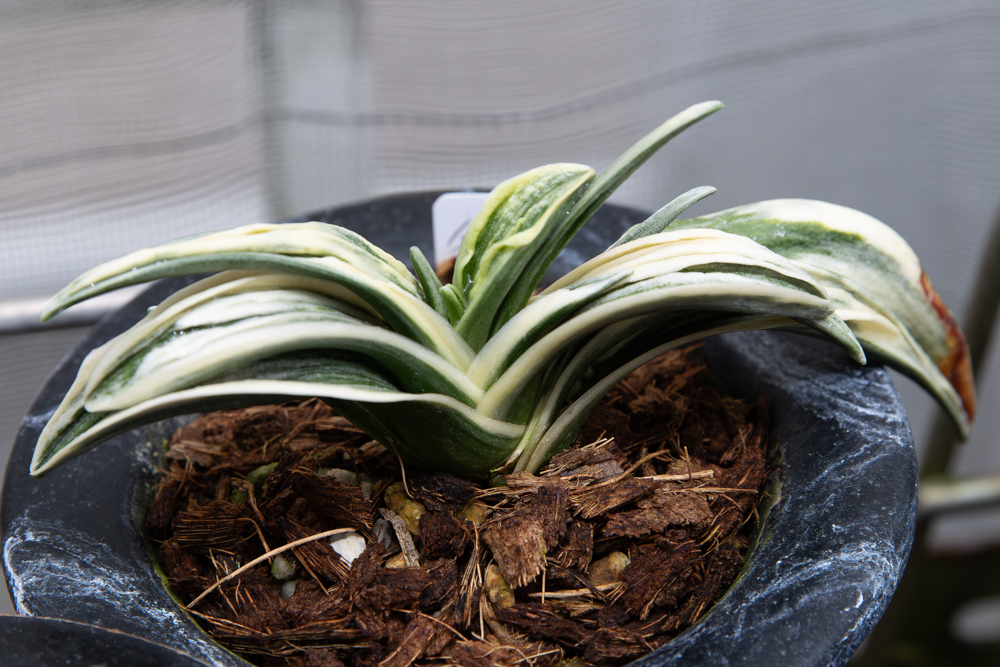
Omoto (Rohdea japonica) is a traditional Japanese foliage plant that has been carefully cultivated and cherished in Japan for centuries.
The correct pronunciation places the emphasis on “moto,” rather than on the prefix “o.”
True to its name, written with the characters meaning “ten thousand years of green,” Omoto retains its lush green leaves throughout the year and has long been regarded as a symbol of longevity and prosperity.
Simply placing it indoors gives the space a dignified presence, allowing it to blend beautifully not only with traditional Japanese interiors but also with modern, contemporary spaces.
Basic Information About Omoto
Family, Genus, Origin, and More

- Family / Genus: Asparagaceae / Rohdea
- Japanese Name: Omoto, 万年青 (Omoto)
- Scientific Name: Rohdea japonica Roth
- Native Range: Japan (central to southern Honshu), China, Southeast Asia
- Type: Evergreen perennial
- Growing Season: Spring and autumn (growth slows in summer and winter)
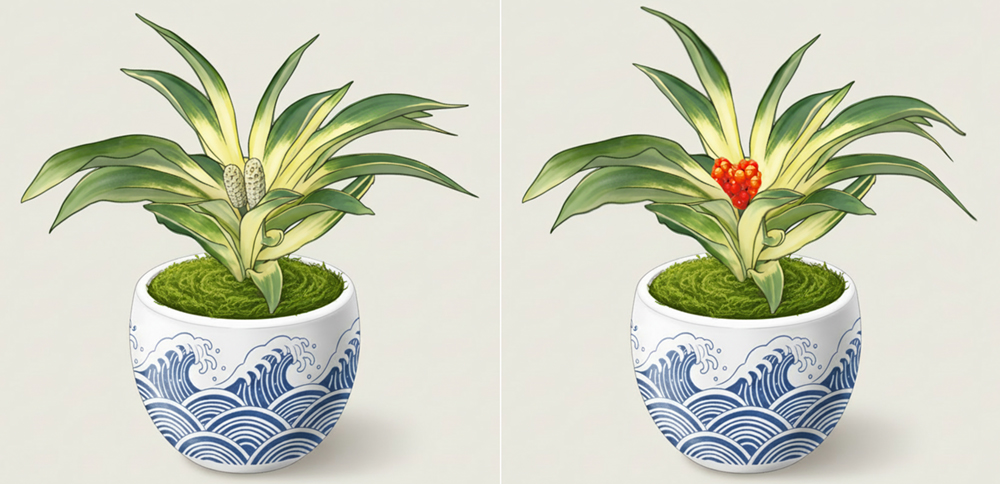
- Flowers & Fruit: Flowers bloom in summer as dense, pale yellow cylindrical clusters; berries turn red around October and remain through winter.
- Flower Language / Symbolism: Longevity, eternal prosperity, long life, noble spirit, maternal love
- Pet Safety: Rhizomes and leaves are toxic; keep out of reach of pets
- Other Notes: Roots and rhizomes were historically used in traditional Chinese medicine and Edo-period Japanese herbal medicine for heart-strengthening, anti-inflammatory, and diuretic effects.
⚠️Note: It is extremely dangerous to consume Omoto purchased for gardening purposes.
【Reference Source (Other Notes)】
Houmeien (specializing in Omoto)
What Makes Omoto Special?
Omoto is an evergreen plant that retains its lush green leaves throughout the year.
In Japan, extensive horticultural breeding over centuries has produced a wide variety of cultivars, including plants with curled leaves, rolled foliage, and intricate variegation patterns.
All Omoto cultivars have thick, glossy leaves and excellent cold tolerance.
Their evergreen, resilient appearance brings life and vibrancy to indoor spaces even in winter.
Omoto is hardy and adaptable, making it suitable for indoor cultivation and easy for beginners to grow.In addition, the bright red berries that appear from autumn to winter are one of the plant’s most striking features, adding a splash of color to winter gardens or potted displays.
Its Traditional Role in Japanese Culture
Omoto has long been cherished as an auspicious plant, symbolizing good fortune and protection against misfortune.
One of the most well-known stories associated with Omoto is connected to Tokugawa Ieyasu.
Ieyasu was ordered by Toyotomi Hideyoshi, the most powerful figure of the time, to relocate his domain from the Mikawa–Suruga region (present-day eastern Aichi Prefecture to Shizuoka) to Edo, which was then an undeveloped and remote area.
Although the order could be seen as unreasonable, Ieyasu accepted it in the hope that doing so would prevent unnecessary conflict and help ensure lasting peace.
It is said that when he entered Edo Castle, he carried three pots of Omoto with him, symbolizing his wish for prosperity and protection.
Incidentally, many of the iconic structures of Edo Castle were lost to major fires and earthquakes between the 17th and 19th centuries.
However, because the site later became the Imperial Palace, visitors can still see historical remains and traces of the former castle today.
These sites have become popular destinations for tourists visiting Japan.
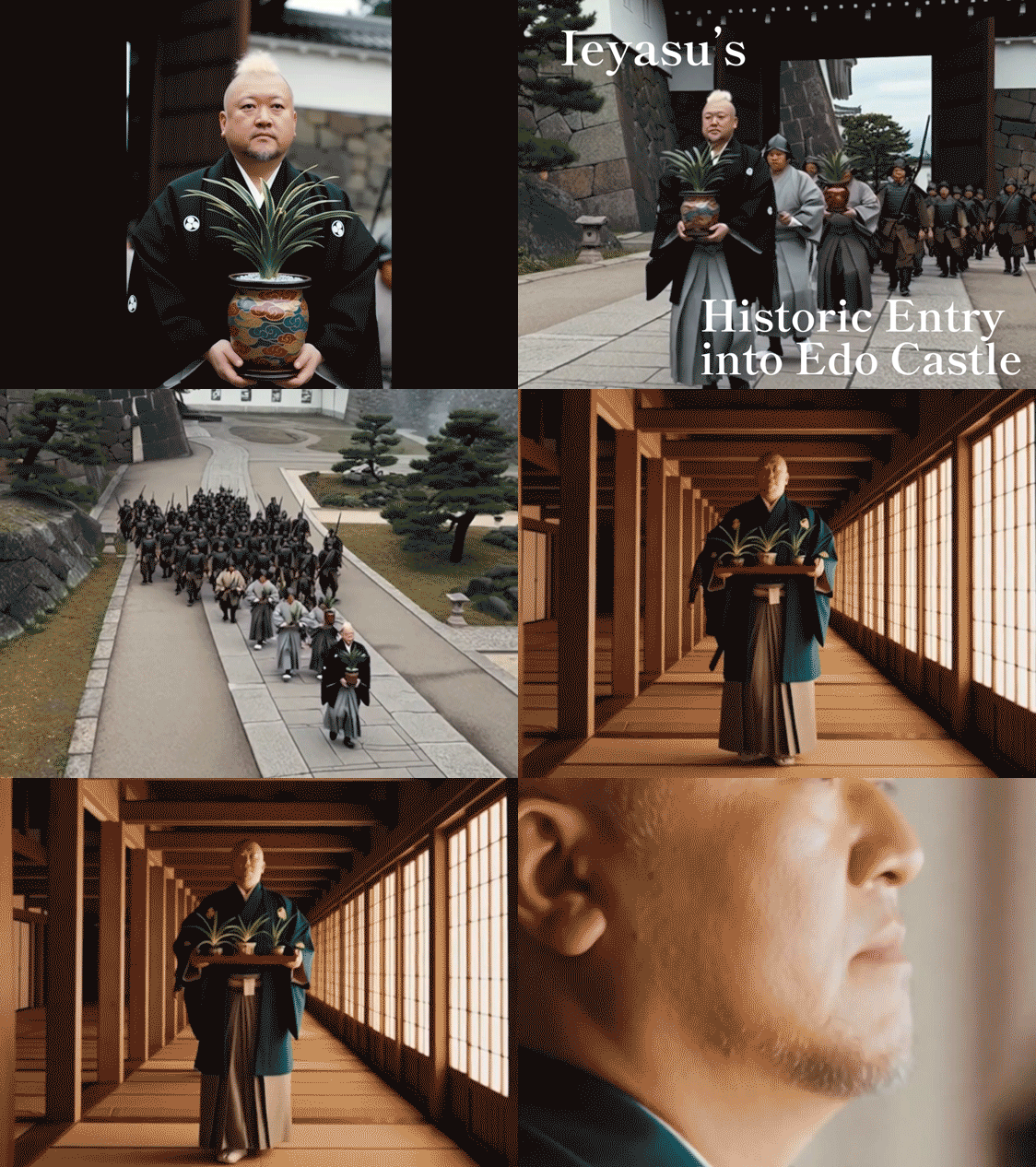
As a result, the Tokugawa shogunate endured for nearly 300 years, and Ieyasu’s decision came to be regarded as one of the foundations of modern Tokyo’s prosperity.
From this episode, Omoto spread as a symbol of family prosperity and longevity.
Moreover, carvings of Omoto can be found on the beams of the Ishi-no-ma hall at Kunozan Toshogu Shrine in Shizuoka, where Tokugawa Ieyasu is enshrined, as well as on the beams of Ueno Toshogu Shrine in Tokyo. These carvings continue to convey the depth of the faith placed in Omoto to this day.
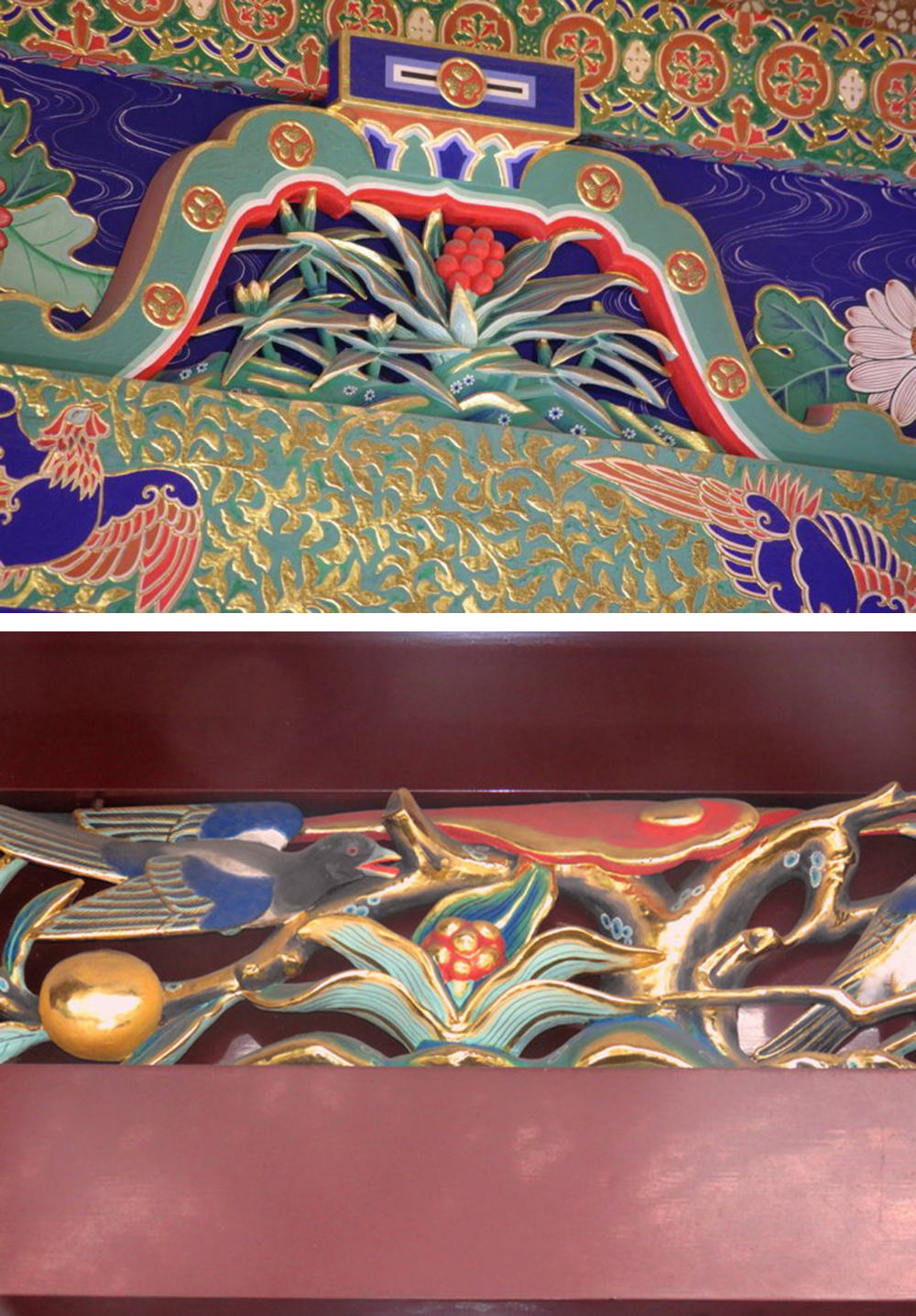
Photos courtesy of Houmeien, Toyotaka Mizuno.
Houmeien, a long-established grower in Aichi Prefecture that has been cultivating Omoto for over 100 years, also recognizes this historical background and describes Omoto as an auspicious plant believed to bring good fortune and ward off misfortune.
Inspired by Tokugawa Ieyasu, Omoto became extremely popular among high-ranking retainers, known as hatamoto, during the Edo period. This enthusiasm occasionally led to what could be described as an “Omoto bubble,” prompting the shogunate to issue repeated bans on its trade.
Over time, the fervor subsided, and Omoto came to be cherished by the general public as a refined expression of Edo culture.
It is also said that passionate booms resurfaced during later periods, including the Meiji era.
Moving-in Omoto
“Moving-in Omoto” refers to the custom of bringing or gifting Omoto when moving into a new home or celebrating a newly built residence.
This tradition traces its origins to the story of Tokugawa Ieyasu’s entry into Edo Castle, and over time it became established as an auspicious gesture to mark a move or the beginning of a new chapter in life.
Even today, Omoto is often chosen for placement in new homes and offices or as a housewarming gift, symbolizing a living tradition that continues to connect daily life with cultural heritage.

Expert Insights: The Deep Appeal of Omoto
The Beauty of Leaf Art (Hagei)
In the world of Omoto, the term hagei, or “leaf art,” refers to a unique aesthetic sensibility that appreciates every expression displayed by the leaves as a form of art.
This includes not only the patterns and coloration of variegation, but also the overall posture of the leaves—their curves, twists, and stance—as well as thickness, surface texture, gloss, and the roundness of the leaf margins.
What distinguishes hagei is its holistic evaluation of all these elements as a single, integrated expression.
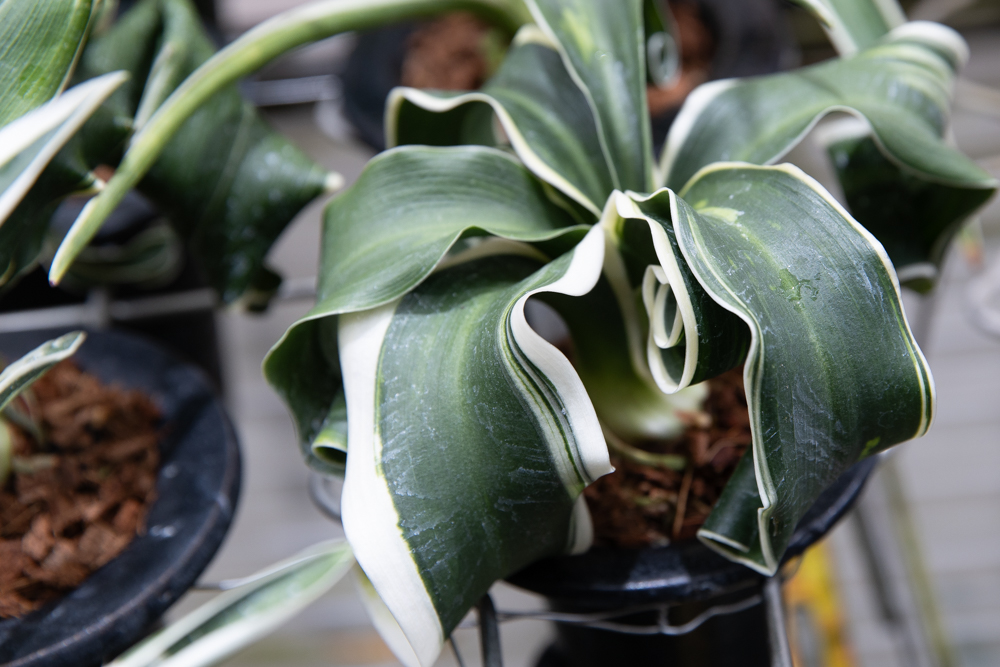
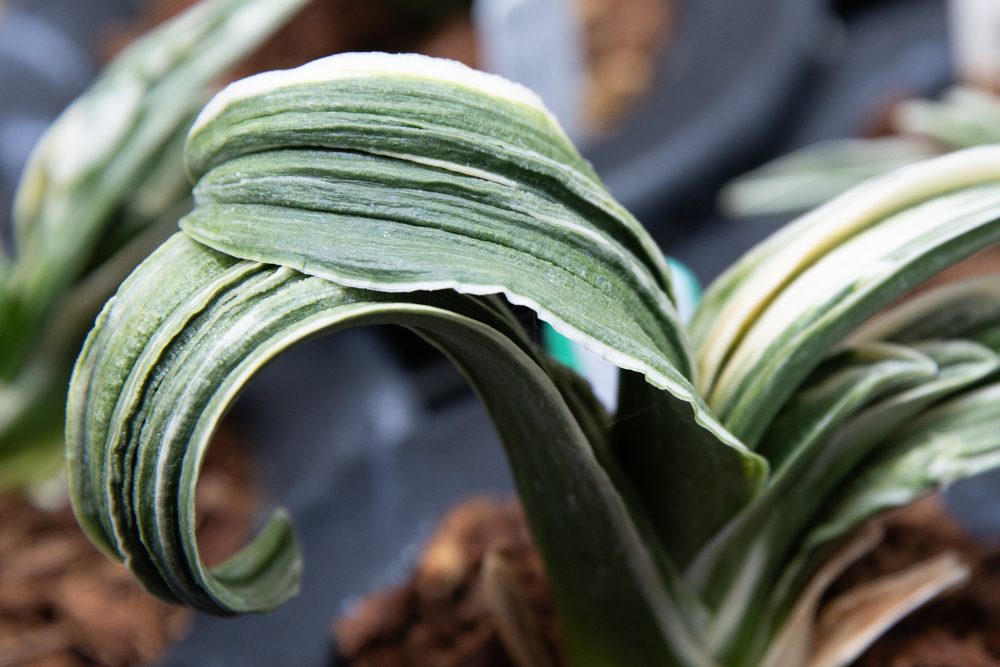
Unlike the general houseplant culture, where variegated plants such as pothos or monstera are often appreciated primarily for their rarity caused by mutation, hagei is a cultural concept rooted in established aesthetic standards that date back to the Edo period.
The value of an Omoto plant is determined by reading not only the “dignity” inherent to each cultivar, but also the depth of character a single plant reveals over the course of its lifetime.
In this sense, savoring the finest details of the leaves through hagei can be described as the very essence of Omoto culture.
Omoto is a plant whose leaves themselves transform like works of art, and it is precisely this depth and subtlety that have captivated people across generations.
Among the many types, compact, thick-leaved varieties known as the Rasha group are where this appeal is most vividly concentrated.
When young, their leaves are smooth and relatively thin, but as the plant matures, the leaves grow thicker and the veins rise in folds across the surface.
This transformation is known in Omoto terminology as ryu (“dragon”), and it is regarded as a crucial element of leaf art that creates a sense of weight and presence.
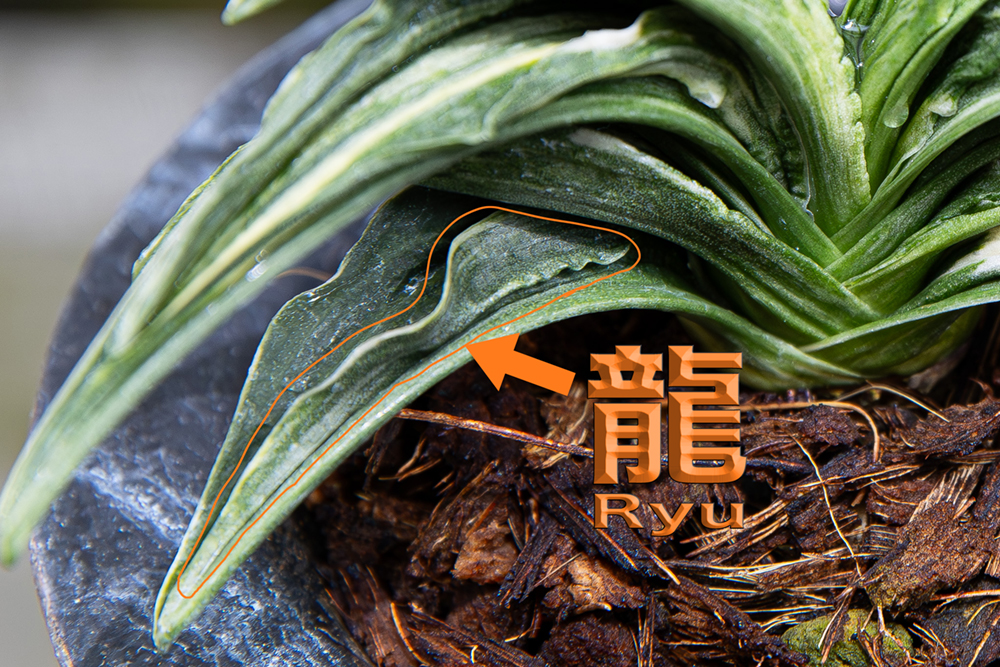
What was once flat gradually becomes three-dimensional.
This process embodies the distinctive fascination of the Rasha group and represents one of the most iconic expressions of Omoto’s beauty.
Nishikibachi Pots: A Traditional Way to Appreciate Omoto
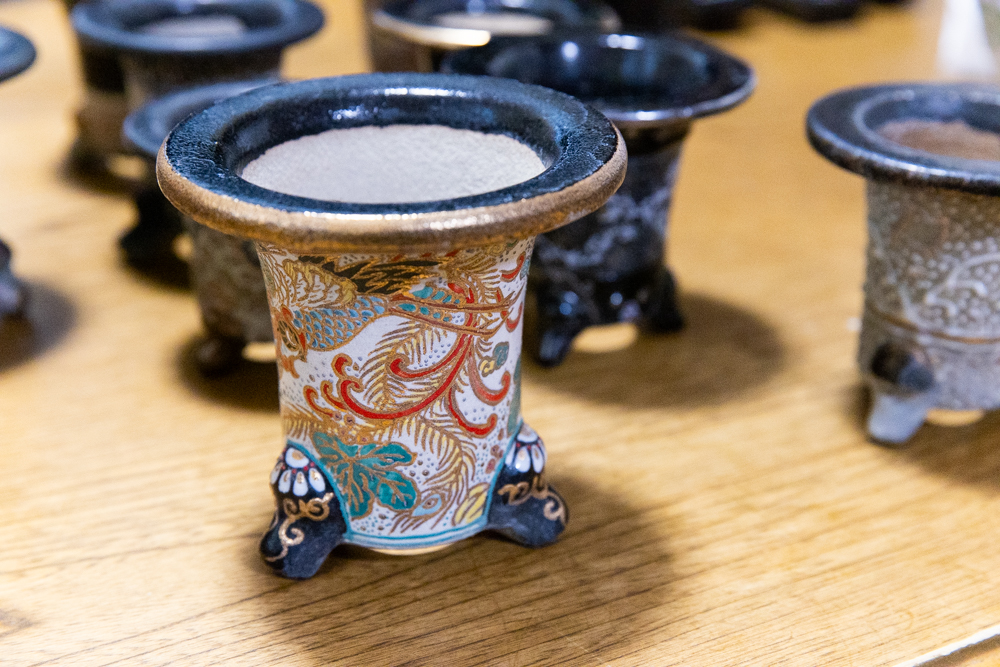
Essential to understanding Omoto culture is the existence of nishikibachi—specialized pots created specifically for its display.
Nishikibachi are ornamental vessels in which aesthetic consideration is given to every detail of the pot itself, including the color and patterns of the glaze, the fullness of the body, and the angle of the base.
They are not merely plant containers, but vessels designed for appreciation in their own right.
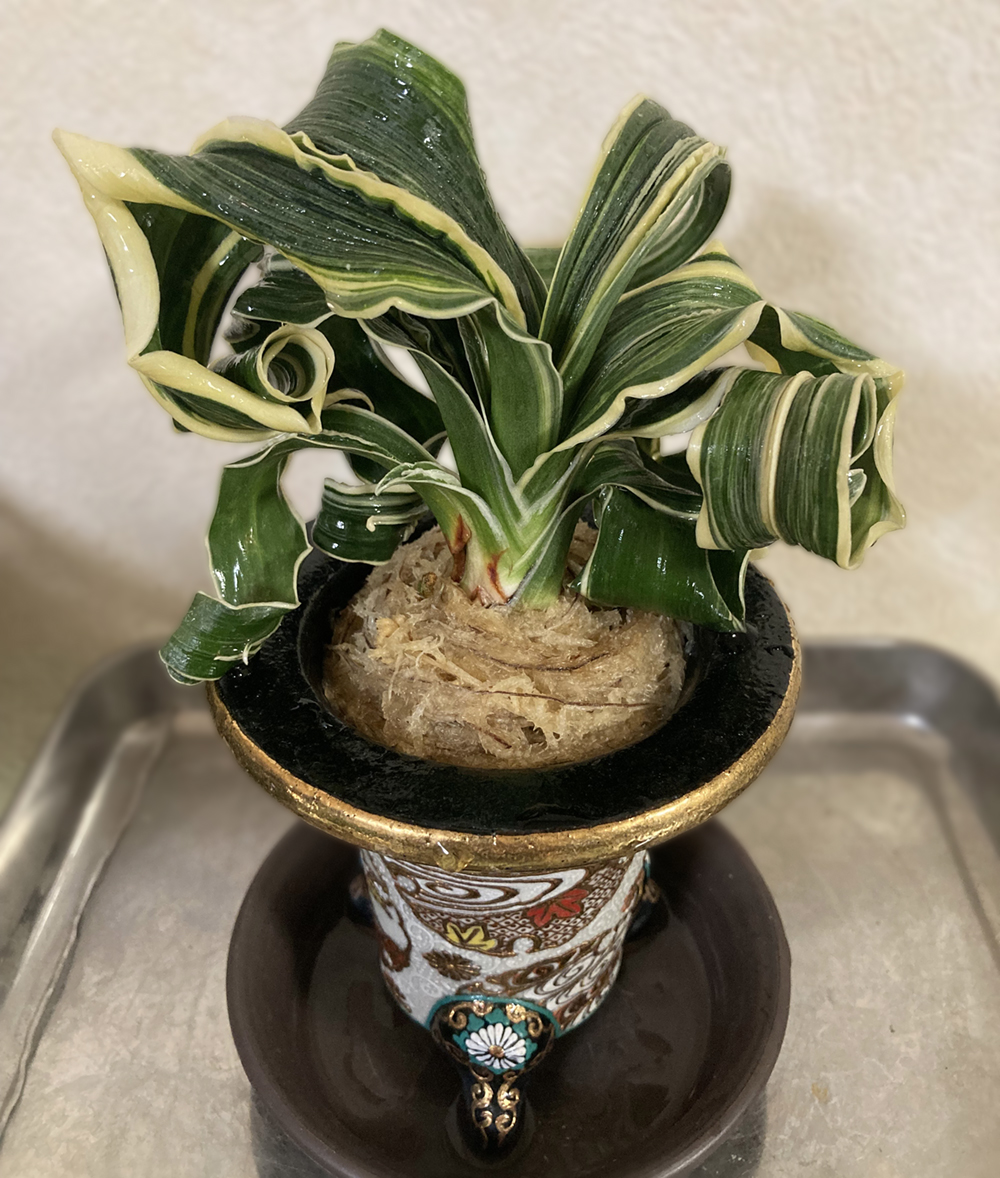
Rather than treating the pot as secondary, Omoto culture developed around the idea of enjoying the harmony between plant and vessel, regarding both as integral parts of a single work.
This distinctive approach sets Omoto apart from other forms of ornamental horticulture.
Omoto also shares a spiritual sensibility with ikebana. Particularly during the Edo period, there existed an established practice of appreciating Omoto indoors, within the formal setting of a tatami room. The refined aesthetic of creating a complete “scene” through the harmony of plant and vessel has been passed down through generations.
Here, one finds a distinctly Japanese sensibility—not simply “decorating with plants,” but carefully training and presenting them for contemplation.
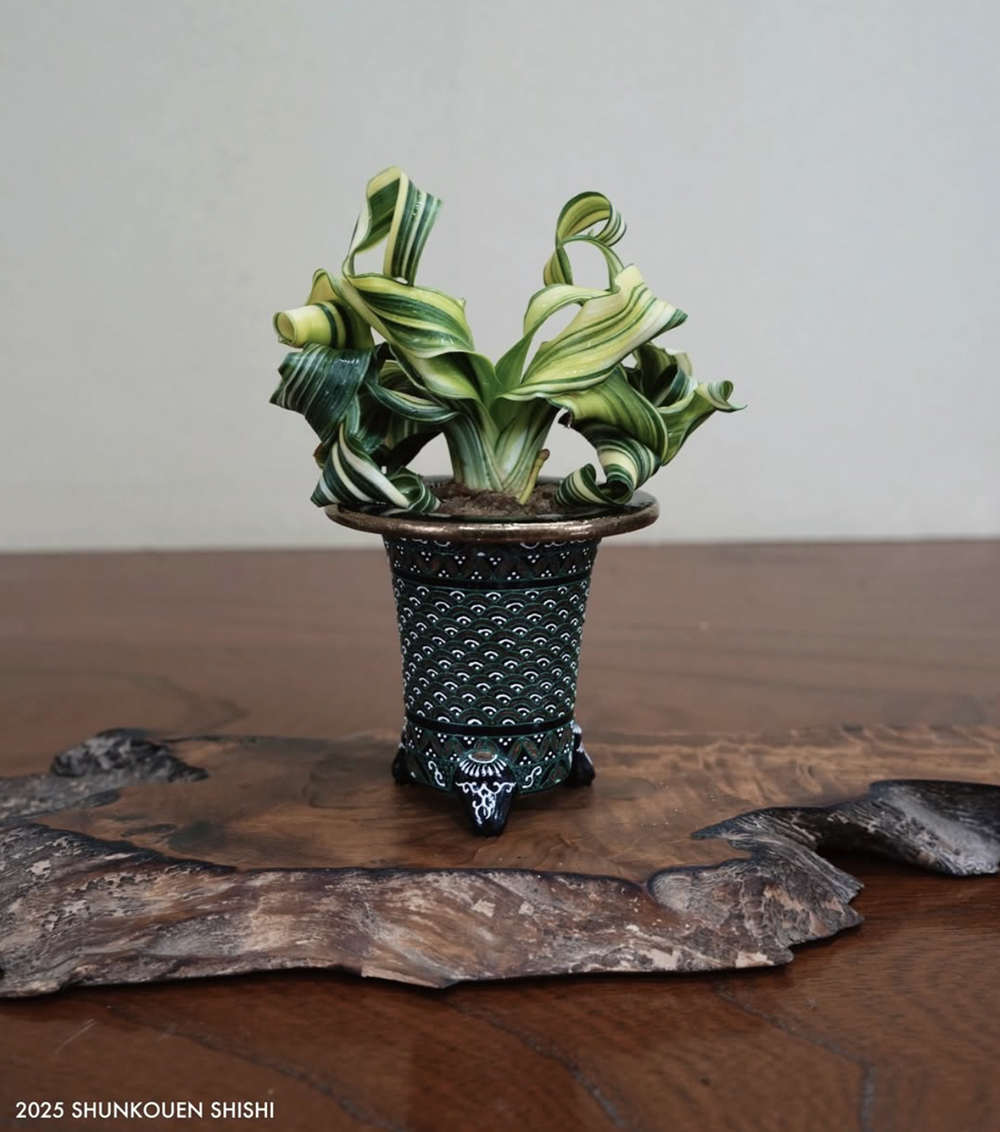
Photo courtesy of Shunkouen
The typical price of a nishikibachi ranges from around 6,000 to 10,000 yen, though some antique-quality pieces can cost several hundred thousand yen.
For this reason, many growers do not use nishikibachi for everyday cultivation. Instead, plants are often repotted into these special vessels only for exhibitions or other formal occasions.
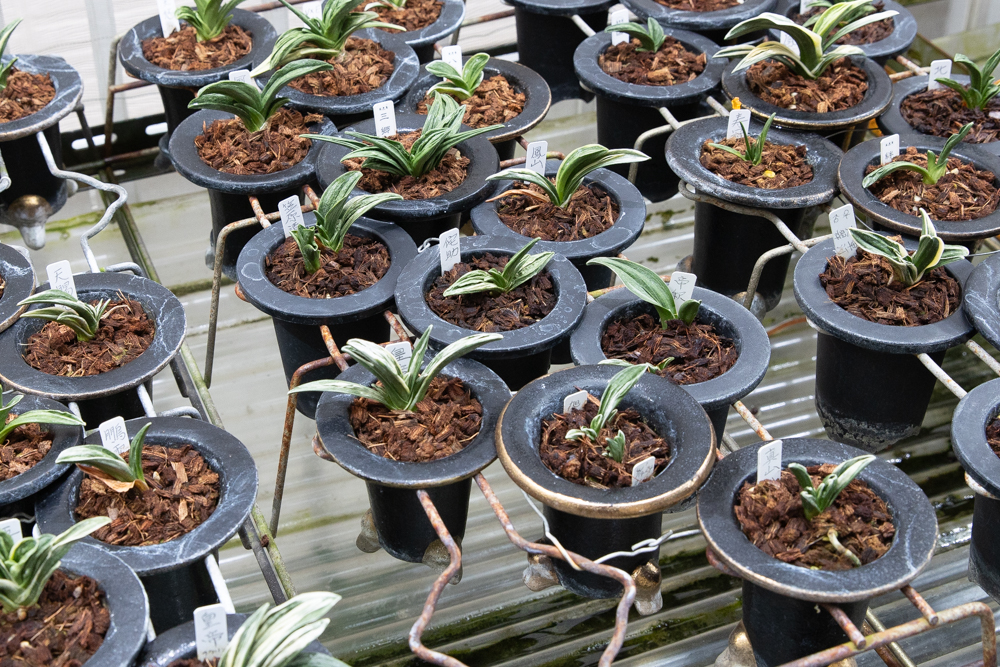
In daily care, most people use inexpensive plastic Omoto pots costing just a few hundred yen, or ceramic Omoto pots priced at around 1,500 yen.
In a sense, this practice is similar to choosing different attire for everyday wear and special occasions.
A nishikibachi is like a piece of formal clothing—a “dress outfit” that gives Omoto a particularly refined and distinguished expression.
The Charm of Omoto as a Foliage Plant for Autumn and Winter
For Omoto, autumn through winter is the season when its foliage reaches its peak.
After completing its growth period from spring to autumn, the plant enters a fully “finished” state, in which the firmness and luster of the leaves, as well as the definition of its hagei (leaf artistry), stand out most beautifully.
Exceptionally cold-hardy, Omoto continues to display a dignified, vibrant presence even in seasons when greenery tends to fade. This enduring beauty is one of the key reasons why Omoto has been cherished since ancient times.
Winter Highlight: Berries
Another winter pleasure of Omoto is its vivid red berries.
The appearance Omoto shows from autumn to winter is nothing short of dramatic.
Deep green leaves accented with yellowish variegation, crowned by striking red berries—the contrast of these colors is simply stunning.
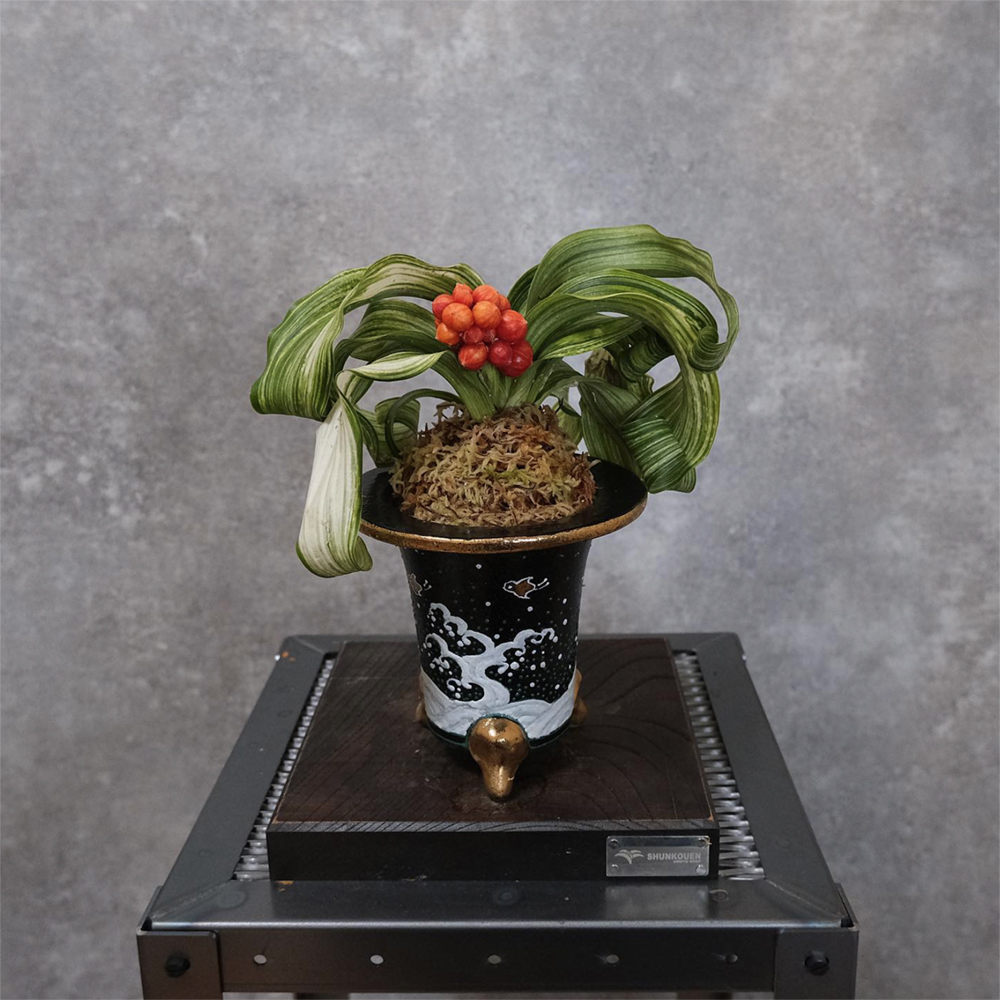
Photo courtesy of Shunkouen
That said, not all Omoto produce berries.
Only medium-sized and larger varieties bear berries, and even then, it usually takes around five years of stable cultivation before you can enjoy them.
Here, “stable” means that the plant has fully adapted to your home environment and settled into a consistent growth rhythm there.
Smaller varieties do not produce berries, so if enjoying berries is your goal, choosing a medium-sized or larger Omoto is key.
Omoto Culture Beyond Japan
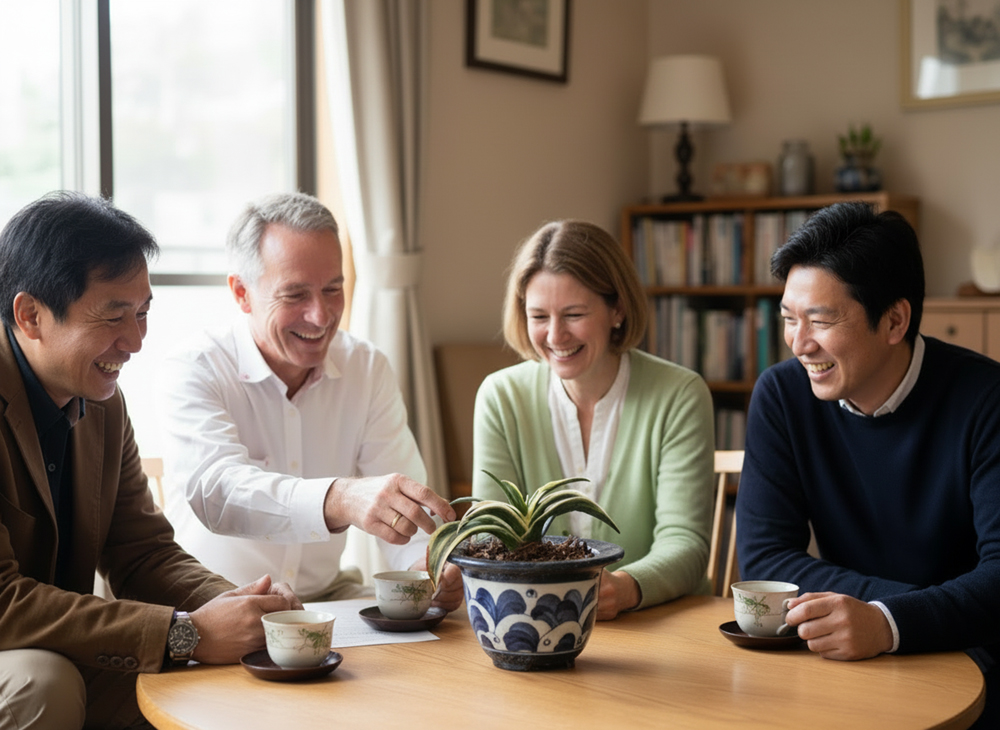
Omoto is now gaining popularity overseas as well.
This trend is closely linked to the growing interest in Japanese culture.
Bonsai and other Japanese art forms, imbued with unique aesthetic sensibilities, often appear exotic to international audiences, and along that same line, interest naturally extends to Omoto.
Moreover, gardeners are inherently drawn to the unknown. In this sense, the Omoto culture—which developed independently in a small Eastern country—is more than capable of capturing the curiosity and imagination of plant enthusiasts abroad.
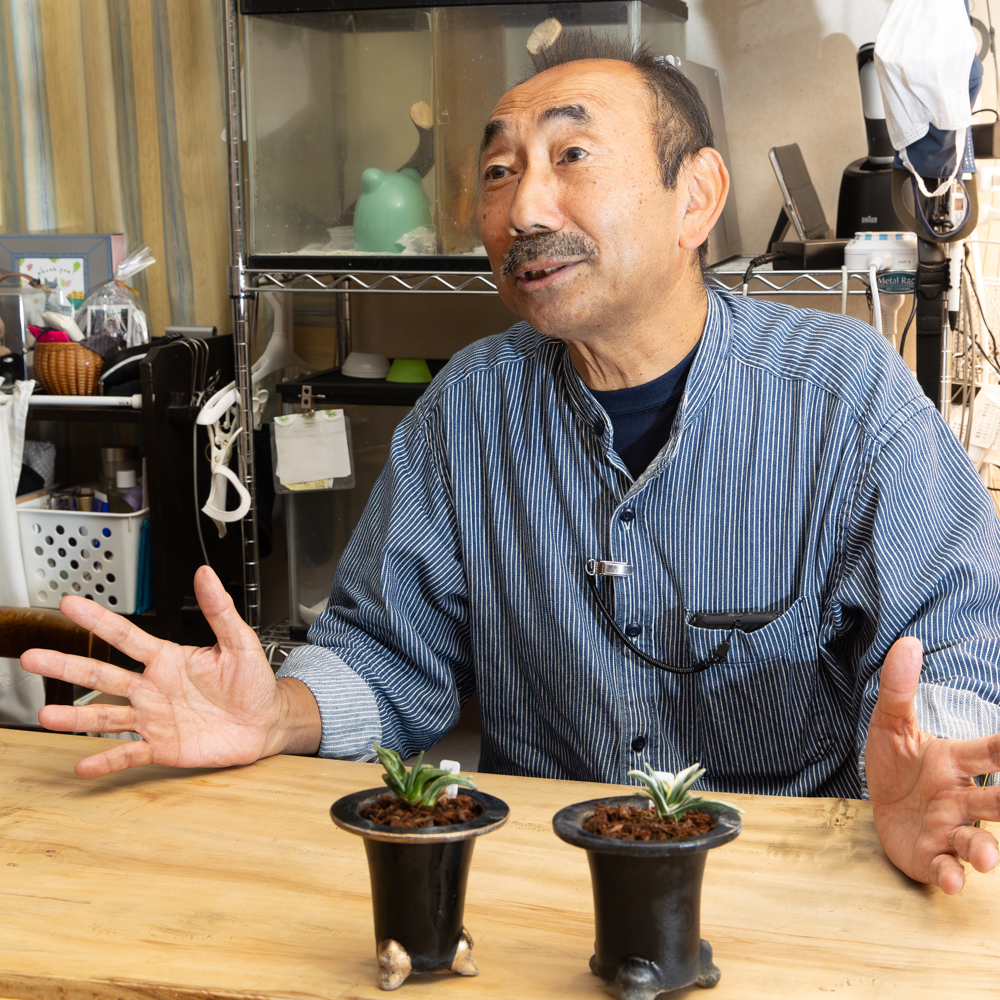
A major driving force behind the international promotion of Omoto culture is the work of talented young growers such as Mr. Mizuno of Houmeien and Mr. Sakai of Shunkouen.
They actively introduce Omoto not only through social media but also by expanding sales channels across Europe, North America, and Asia.
Against this backdrop, the Japan Omoto Association envisions holding a “World Omoto Championship” in the near future.
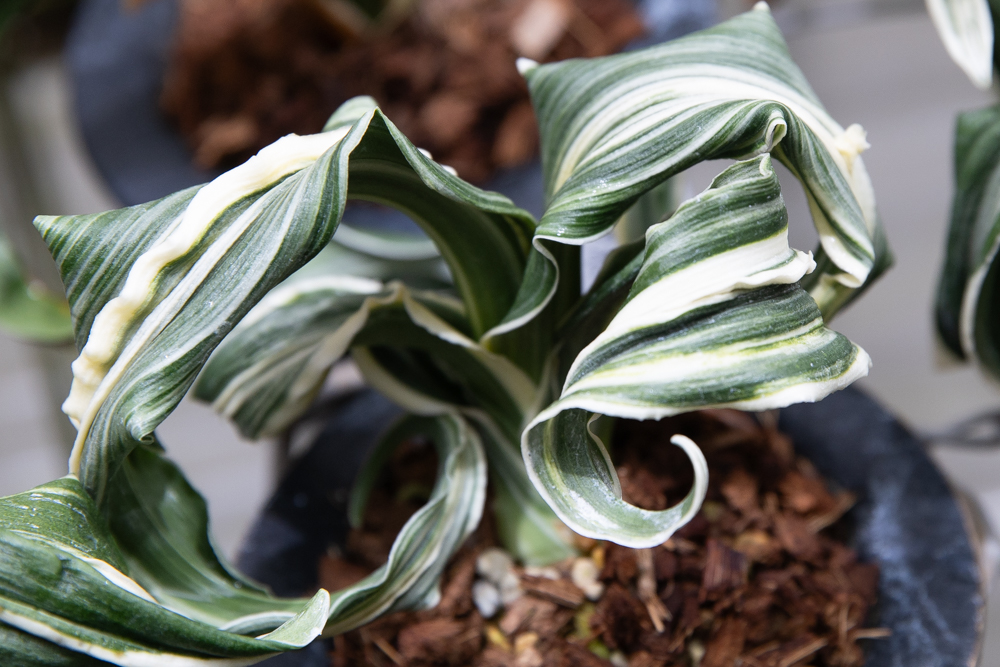
Among the many Omoto varieties, one of the most popular overseas is the Shishiba group, known for its dramatic leaf artistry.
These plants display a unique curl in the leaves, as if twisted by hand, a feature rarely seen in ornamental foliage abroad, which has drawn strong attention from international enthusiasts.
Learn from the Pros|Three Ways to Enjoy Omoto
① Immerse Yourself in Tradition
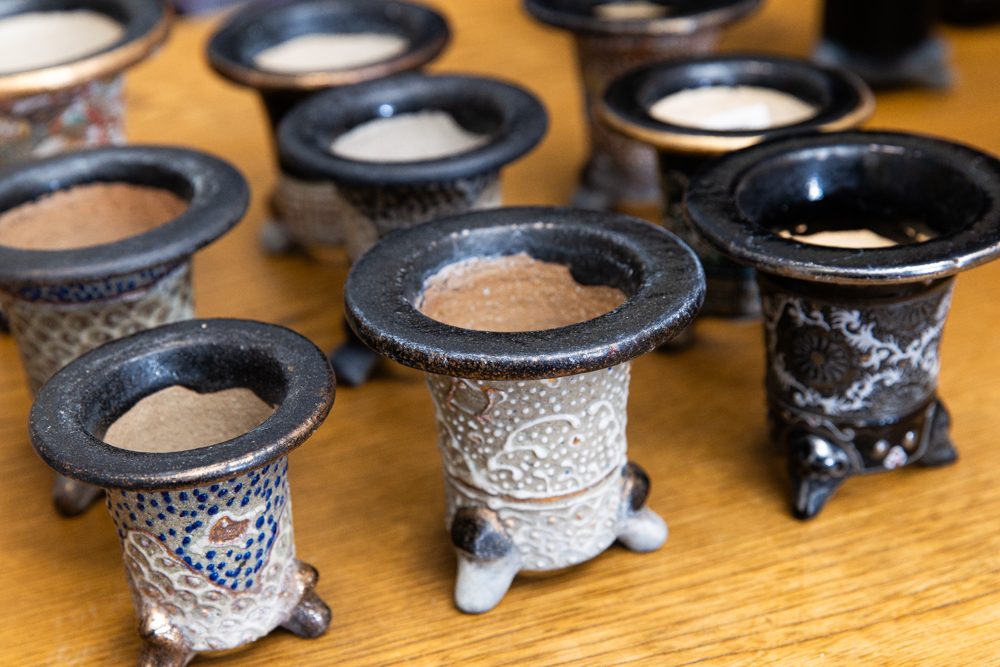
Enjoying Omoto goes beyond simply admiring the plant itself.
For centuries, a rich system of tools has been passed down to support not only how Omoto is grown, but also how it is displayed and appreciated.
These include ornamental ceramic pots (nishikibachi), traditional copper watering cans crafted by Japanese artisans, soot-bamboo baskets used for transporting plants, and even small knives forged by swordsmiths, designed specifically for cutting rhizomes.
Such tools are often treated like family heirlooms, handed down through generations. Occasionally, they resurface through unexpected encounters — found at online auctions or local markets, as if rediscovered by chance.
Collecting these antique items and retracing how growers of the past enjoyed Omoto allows us to experience their world firsthand. Time spent this way quietly reveals the depth and richness of one’s own passion.

For people who feel a deep urge to fully immerse themselves in a single pursuit, Omoto is, in many ways, the perfect subject — a plant that rewards dedication without limit.
② Enjoy It Freely
“Omoto is a plant meant to be enjoyed more freely,” says Kondo-san.
When viewed as a stylish houseplant, Omoto is released from the confines of tradition and reveals another side of itself — one that works beautifully as interior greenery, bringing refined character to modern living spaces.
For example, Omoto can be grown as a moss ball (called “kokedama”) and hung, much like staghorn ferns (see photo below), or even displayed as a wall-mounted plant.
Because sphagnum moss is often used in its cultivation, Omoto shares many similarities with staghorn ferns and orchids — and adapts far more flexibly than one might expect.
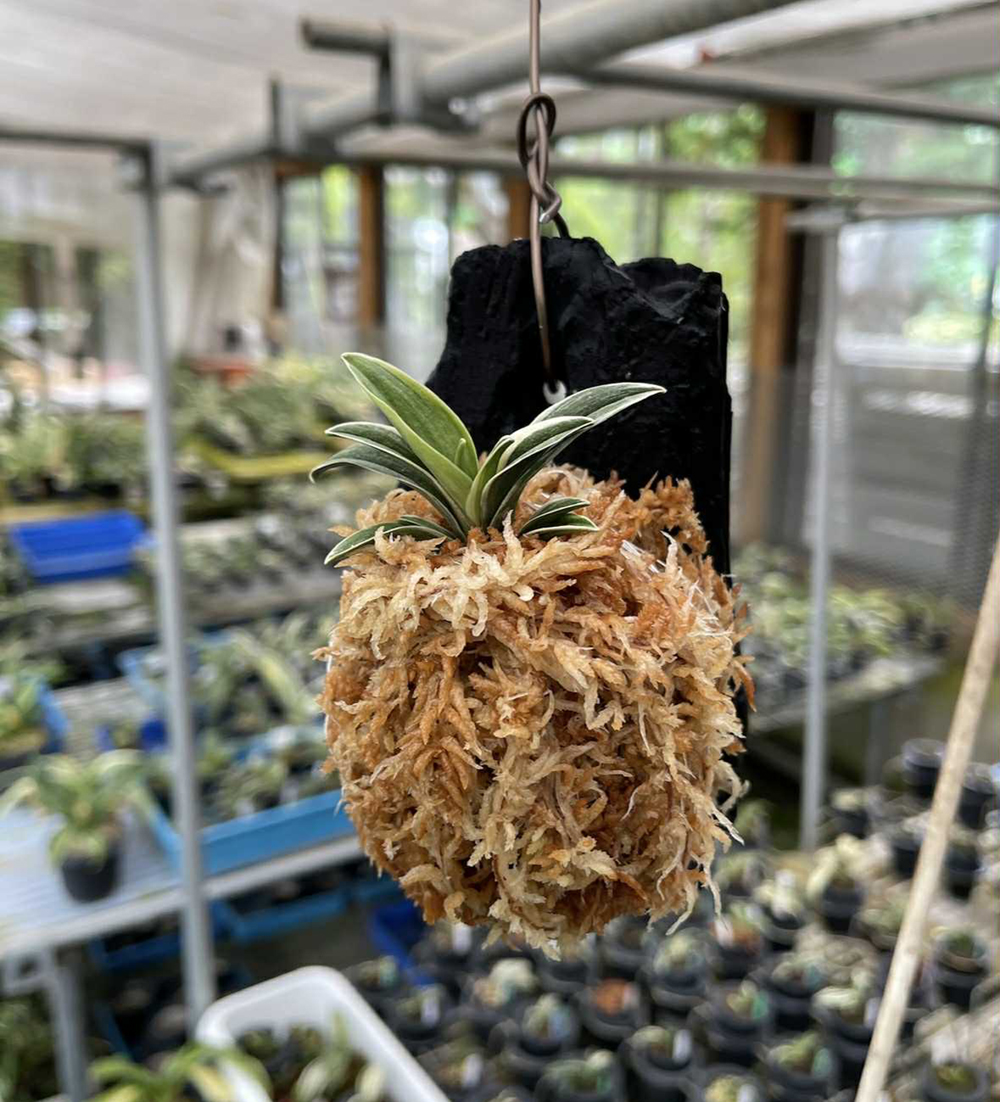
Photo courtesy of Yusuke Tanaka (Tatestuen).
Omoto is also well suited to in-ground planting.
When combined with other woodland plants, it can bring a quiet, natural character to a home’s facade and surrounding exterior spaces.
Beyond the plant itself, even the traditional nishikibachi pots can be enjoyed in a modern way.
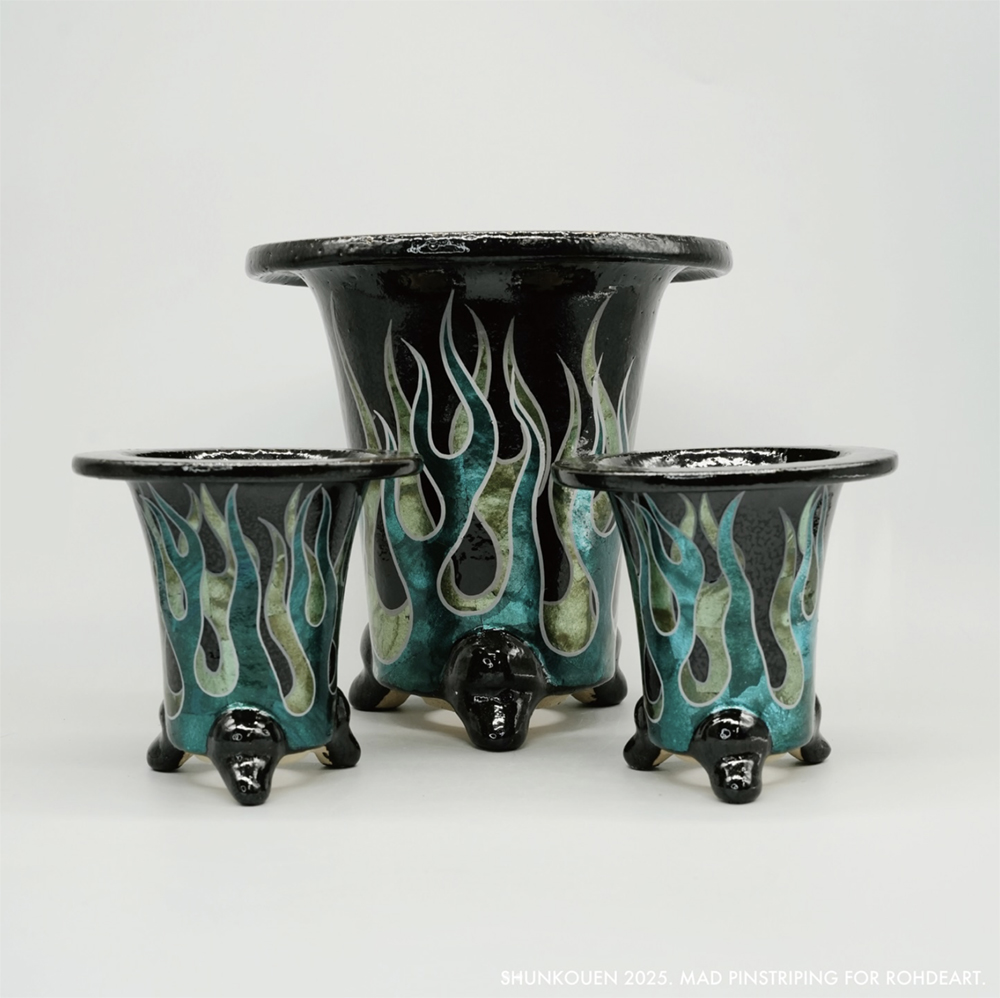
Photo courtesy of Shunkouen
Shunkoen, a renowned Omoto nursery with roots dating back to the Edo period, has launched a project called “ROHDEART,” which connects the historic tradition of hand-painted Omoto pots with contemporary art.
The result is a new generation of Omoto containers — bold, unconventional, and unconstrained by fixed ideas, as shown in the photo above.
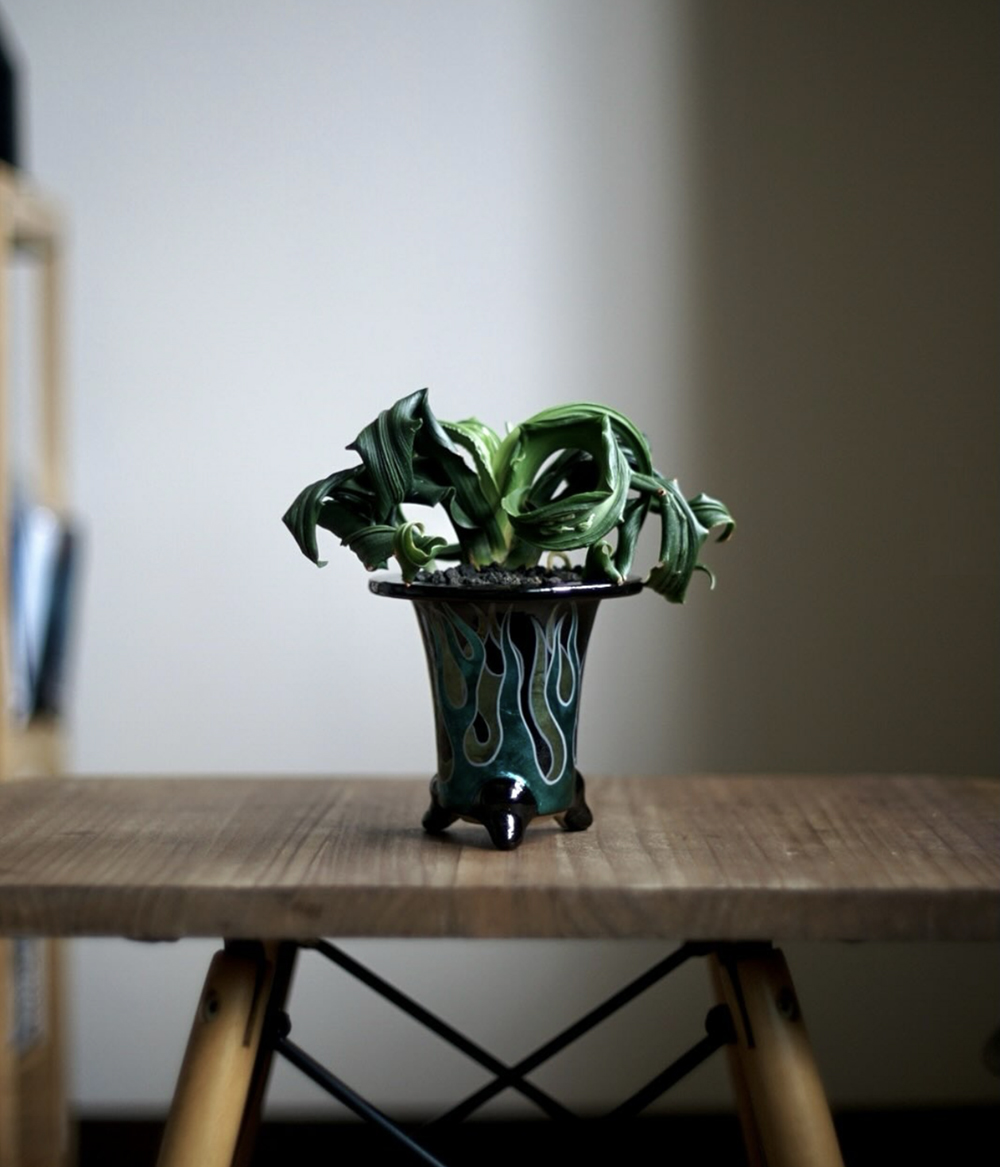
With the expressive power of these pots, the possibilities for Omoto expand — becoming freer, more dynamic, and more adventurous.
You’ll quickly realize that Omoto is an exceptionally versatile plant, equally at home in both Japanese and Western interiors.
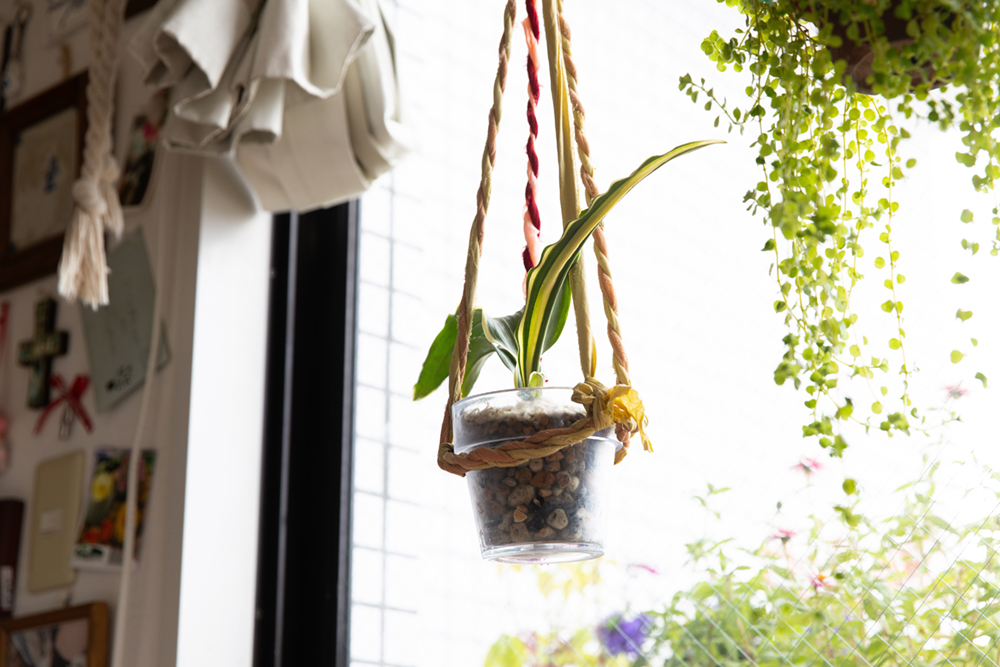
The photo above shows an example from the author’s home in Tokyo.
Seven years ago, I planted the cultivar ‘Hattori-tora’, known for its beautifully rippled leaf edges, in a glass pot purchased at the lifestyle store ”TODAY’S SPECIAL”.
Using a handmade hanging rope crafted by my wife, I suspended it from a curtain rail.
Viewed while lying down, the plant takes on an almost fantastical presence — like an imaginary bird spreading its wings in a dreamlike world.
③ Enjoy the Process of Hybridization

In the world of Omoto, there is also the joy of creation — the challenge of producing new hybrid cultivars through cross-pollination.
Every year, tens of thousands of Omoto seeds are sown across Japan, and from countless crosses, seedlings with a wide range of unique characteristics emerge.
Yet only a very small number are officially registered as new cultivars with the Japan Omoto Association — a highly selective process.
That said, the true excitement lies not in registration itself, but in the journey: making the cross by hand, watching the seeds germinate, and selecting favorites from among the seedlings.
This spirit of experimentation — the willingness to try — is at the very heart of Omoto hybridization.
The fact that Omoto has been cultivated continuously since the Edo period is deeply connected to this history of constant innovation, with new varieties being created generation after generation.
To begin hybridizing Omoto, you’ll need high-quality parent plants suitable for crossing. Today, however, carefully selected, well-documented parent stock is easier to obtain than ever before.
With around ten well-bred plants — designated for pollen collection and pollination — the process itself is not especially difficult.
For a practical demonstration, we recommend watching the YouTube videos by Mr. Mizuno of Houmeien, which clearly show the pollination process step by step.
(The videos are in Japanese, but English subtitles can be enabled in the settings.)
What matters most in hybridization is sourcing reliable parent plants with proven lineage from trusted growers — and being willing to invest the necessary time and care.
One advantage of Omoto is that its pollen can be stored, making it possible to perform crosses across different seasons.
Perhaps one day, a cultivar you create yourself will be officially registered and become widely known. That sense of possibility — the blend of dream and romance — is what makes Omoto hybridization so compelling.
The Japan Omoto Association also offers guidance to those interested in breeding Omoto, so if you have questions, don’t hesitate to reach out for advice.
【Contact the Japan Omoto Association】📩
Omoto Encyclopedia|Beautiful Varieties Classified by Leaf Form
Omoto has a well-established system of classification. Broadly speaking, varieties are divided into three main groups: small-leaf (Rasha type), medium-leaf (Usuba type), and large-leaf types.
However, introducing Omoto strictly by lineage can quickly become complex. In this section, the author takes a simpler, more visual approach — showcasing beautiful Omoto varieties based purely on the appearance of their leaves.
All plants shown in the photos below were cultivated by growers widely regarded as masters of the craft.
Source & Photos: Omoto Encyclopedia by houmeien
Bold, Eye-Catching Varieties with Tightly Curled Leaves
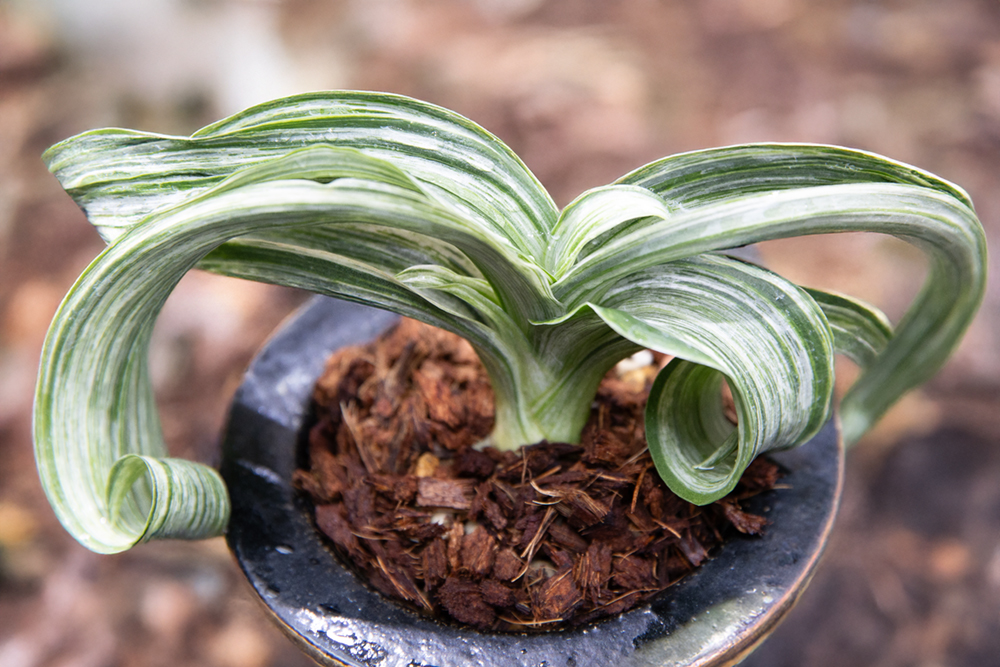
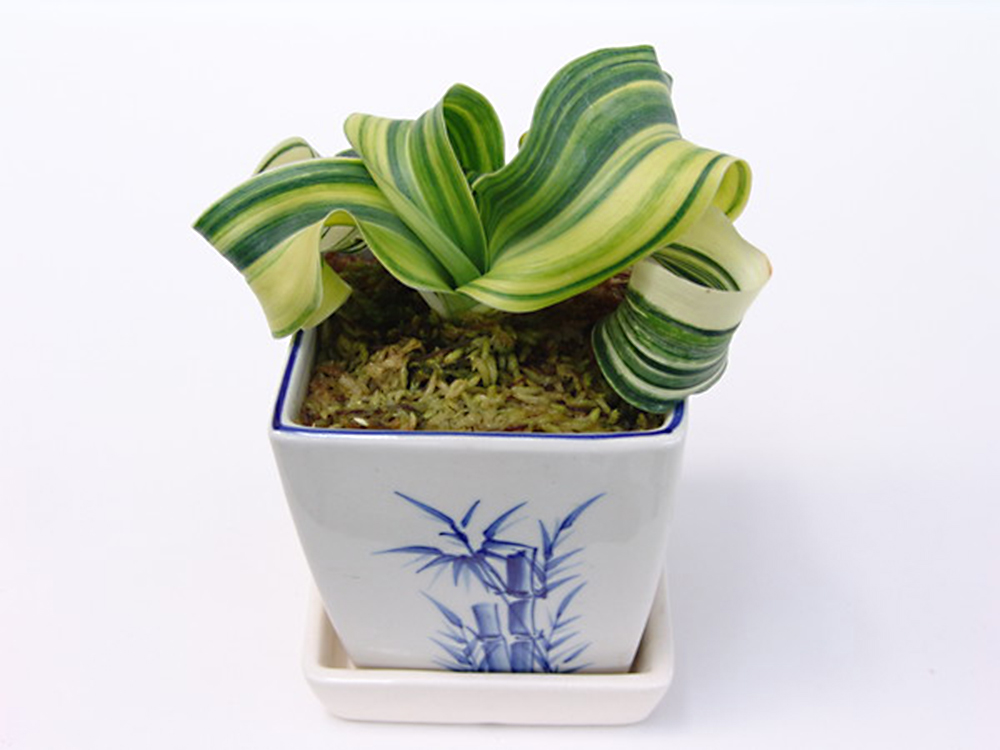
Varieties with naturally curled leaves, known as “Shishiba” (lion-leaf foliage), are classified as the Shishi type and are the most popular among Omoto enthusiasts.
The enjoyment of observing the unique curling patterns and their subtle variations over time is called “Shishi-gei” — literally, the art of lion-leaf foliage.
Depending on the plant, this leaf art can appear bold and dynamic, or refined and elegant.
Shishi-type Omoto fully showcase this expressive quality, making them an excellent choice for those who want to enjoy Omoto with strong visual impact.
Maikojishi (舞子獅子)

Shimajishi (縞獅子)
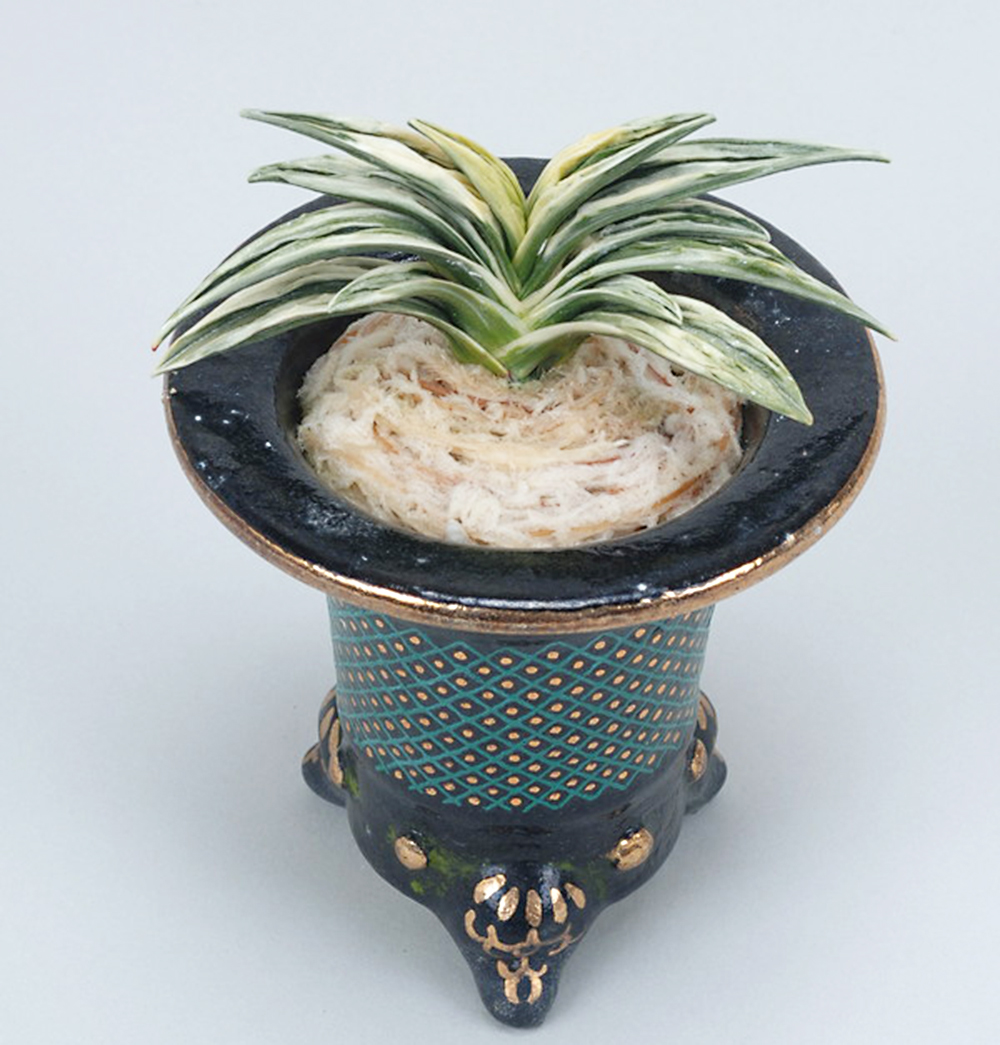
Compact Varieties with Refined Leaf Art
In Omoto terminology, small-sized cultivars with leaves measuring 3–15 cm(approx. 1–6 in) are classified as Koha-shu (small-leaf varieties).Despite their compact size, these plants display a strong presence through their distinctive and expressive leaf art.
Rikiwa (力和)
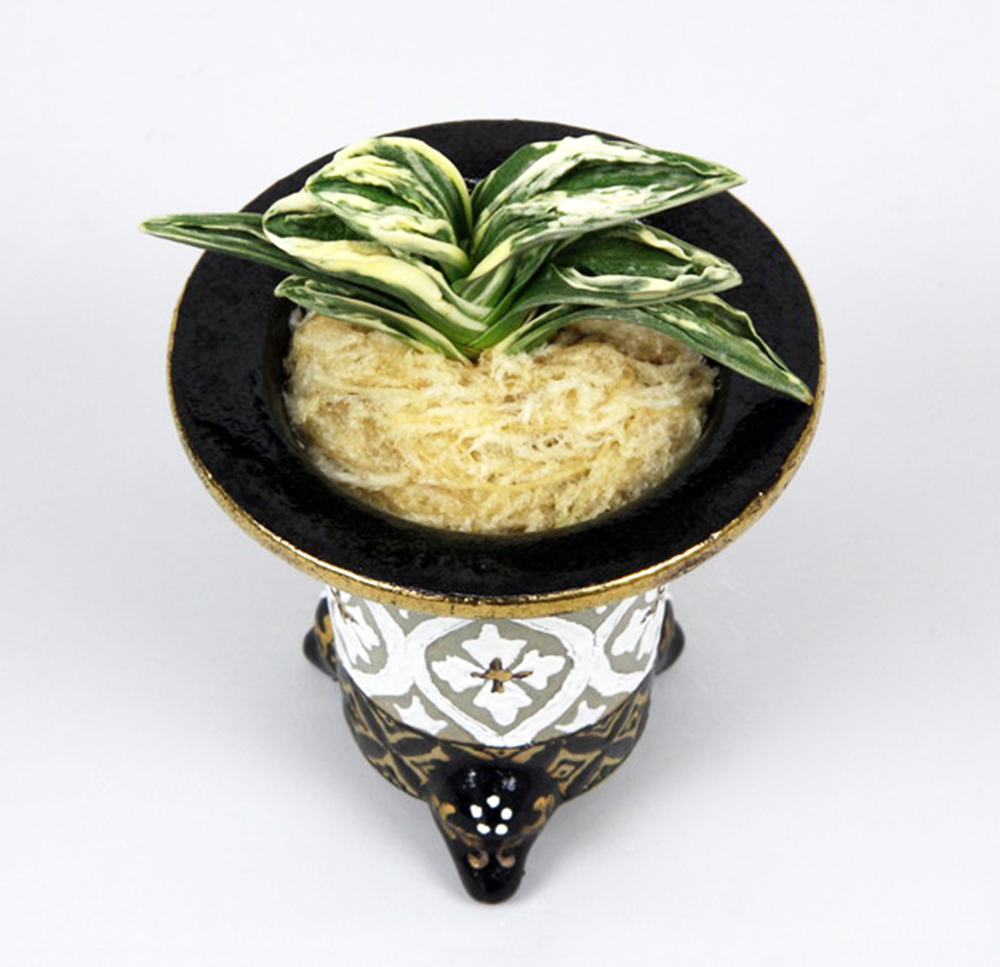
Zuisen (瑞泉)
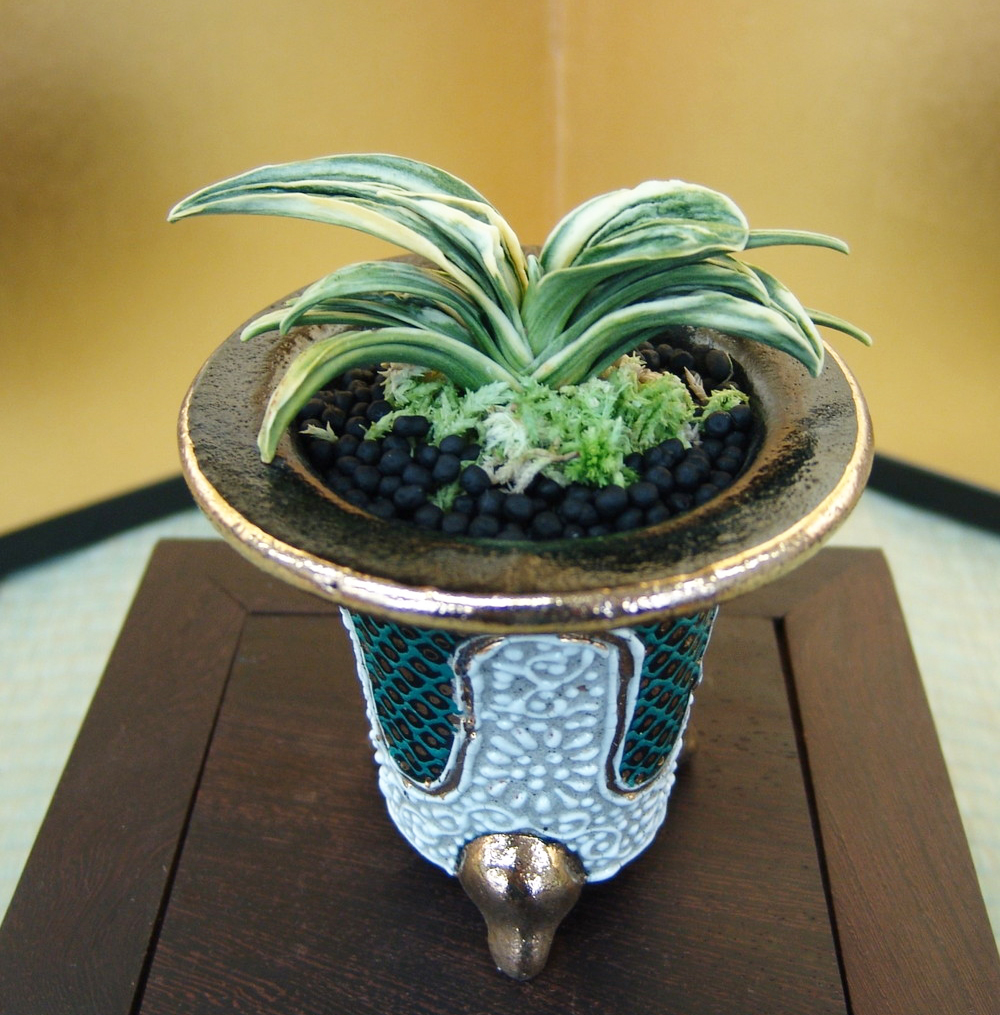
Shuko (珠光)
Medium-Sized Varieties with Strong, Expressive Leaf Art
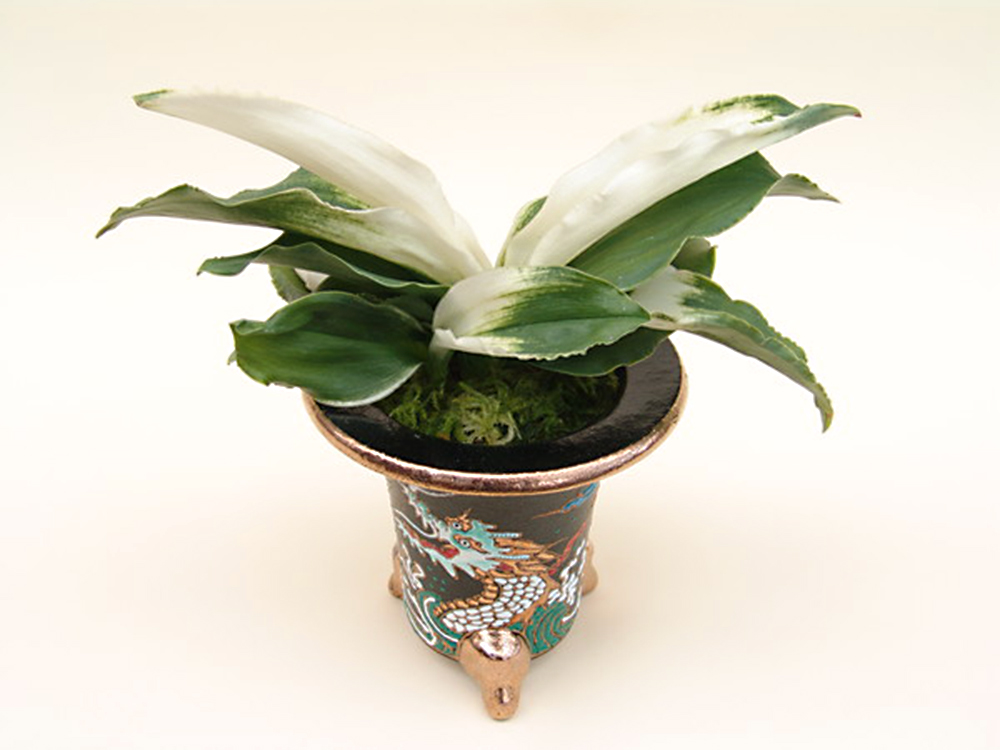
In Omoto terminology, medium-sized cultivars with leaves measuring approximately 15–25 cm (approx. 6–10 in) are classified as Chuba-shu (medium-leaf varieties).
Their larger scale allows leaf art to be enjoyed more dynamically, and when the plants set berries, their bright berries can also be appreciated during winter.
Chiyoda-no-Matsu (千代田の松)
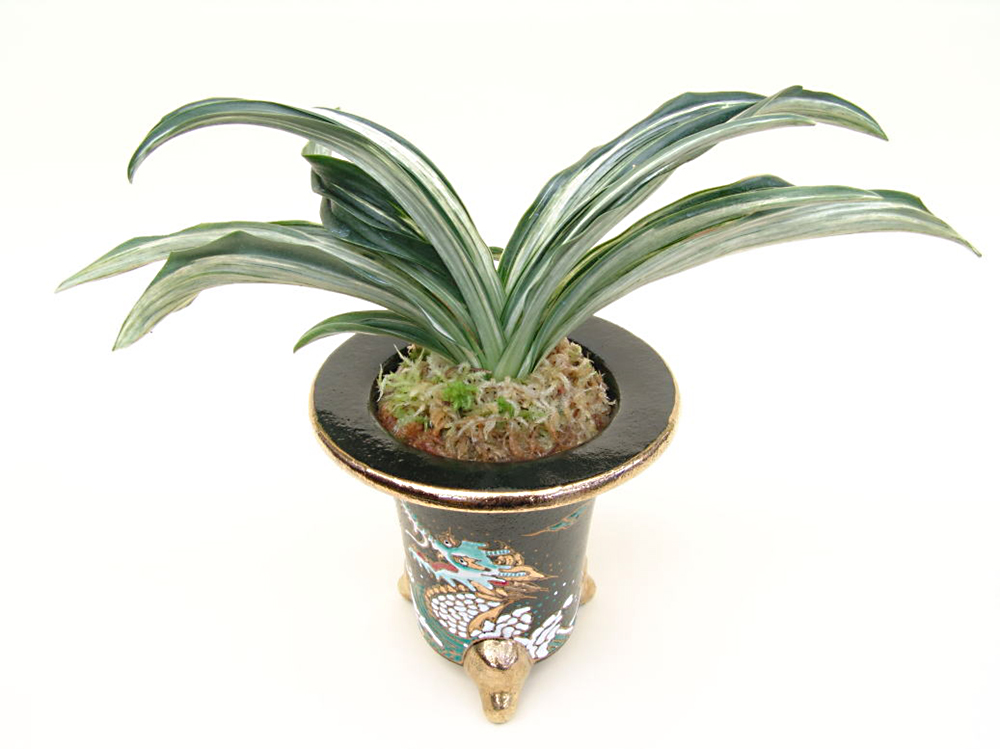
Fuku-no-Hikari (福の光)
Large-Leaf Varieties with Powerful, Commanding Leaf Art
In Omoto terminology, large cultivars with leaves measuring approximately 25–50 cm(approx. 10–20 in) are classified as Oba-shu (large-leaf varieties).
Their broad leaves make their leaf art especially striking, and they are also popular as housewarming gifts, sometimes referred to as “moving-in Omoto.”
Gairinzan (外輪山)
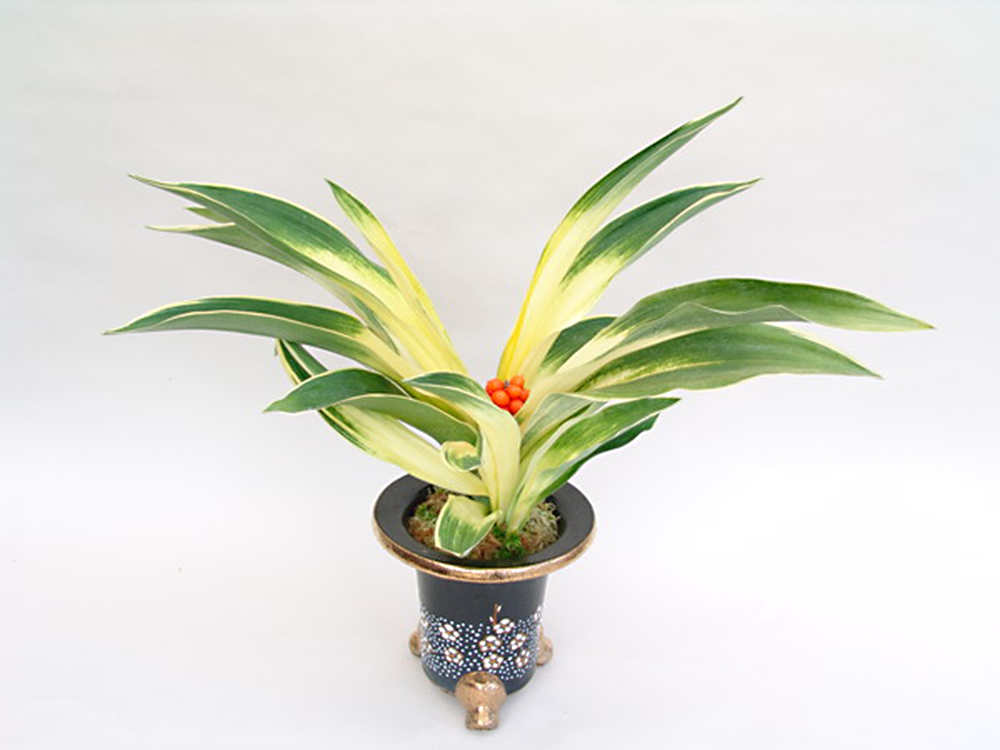
Akitsushima (秋津島)

Slender, Sharply Defined Leaves with a Quiet Elegance
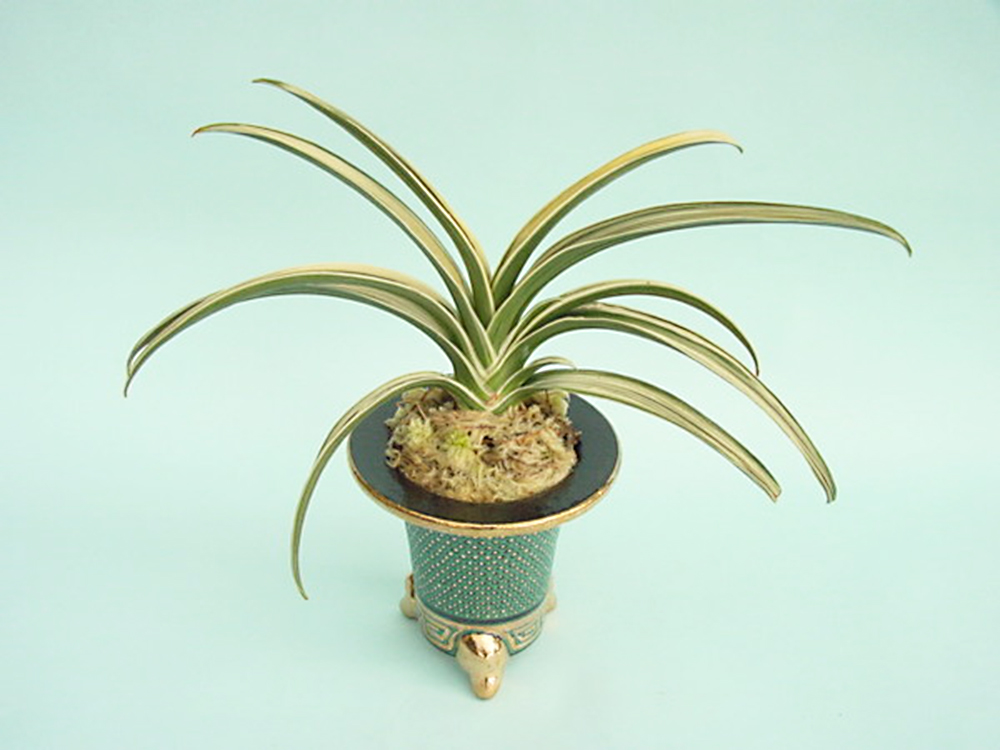
Though large in size, leaves that curve gracefully while remaining narrow and slightly rolled are referred to in Omoto terminology as Toiba.
Compared to broad-leaf forms, this leaf type conveys a more subdued, refined elegance — quiet rather than showy.
Tenkinsho (天錦章)
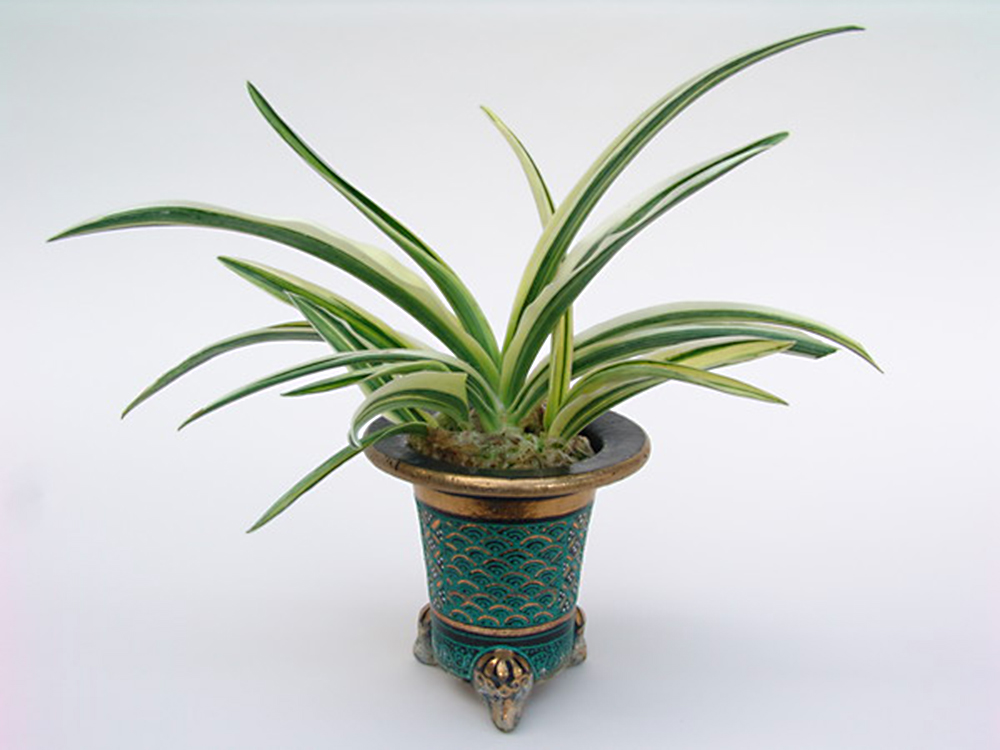
Seigaiha(青海波)
Easy Omoto Care for Beginners: Advice from Experts
Choosing the Right Location and Environment

Omoto is a plant native to Japan and has been cultivated here since ancient times.
Thanks to its strong cold tolerance, it can withstand temperatures as low as −5℃ (23℉) and can generally be grown outdoors without difficulty.
That said, to avoid unnecessary stress, it is best to move Omoto indoors once nighttime temperatures fall below 0℃ (32℉).
Omoto enjoys bright light, but modern sunlight can be surprisingly intense.
Direct sun may cause leaf burn, especially during seasons when daytime temperatures rise above 25℃ (77℉).
During these periods, using a shade cloth that blocks about 40% of sunlight is recommended.
Even in winter, providing light is important. However, winter sun has become stronger in recent years, so light shading of around 20% helps protect the leaves while still allowing enough brightness.
Strong winds can cause the leaves to rub against each other, leading to damage on the foliage—one of Omoto’s most valued features.
Placing the plant where it is sheltered from wind, or providing a simple windbreak, will help maintain its beauty.
For balcony growing in apartments, a small plant shelf works very well.
By attaching shade cloth around the shelf and adjusting it seasonally, you can achieve both sun protection and wind control.
Be sure to keep Omoto away from air conditioner outdoor units, as the hot or cold air they release can negatively affect the plant.
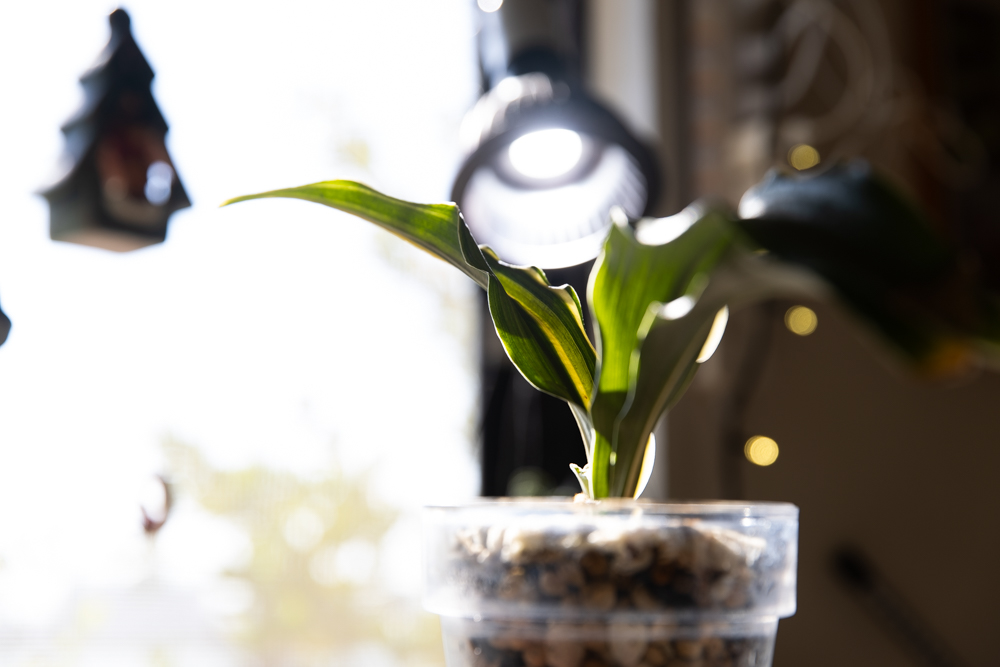
In high-rise apartments in large cities, where outdoor growing conditions can be difficult, Omoto can also be grown entirely indoors by using plant-specific LED grow lights.
However, when grown indoors, air circulation is essential.
Using a circulator or small fan to keep air moving around the plant is necessary to replicate natural outdoor conditions.
Omoto is typically grown with sphagnum moss around the base of the plant, which makes it prone to retaining excess moisture.
If poor ventilation causes prolonged humidity, the roots can weaken and, in the worst case, develop root rot.
To prevent this, it is crucial to establish a proper watering rhythm—allowing the growing medium to alternate clearly between moist and dry conditions.
From this perspective, a circulator plays a vital role: it promotes evaporation, prevents stagnant moisture, and helps keep the roots healthy.
Potting Medium
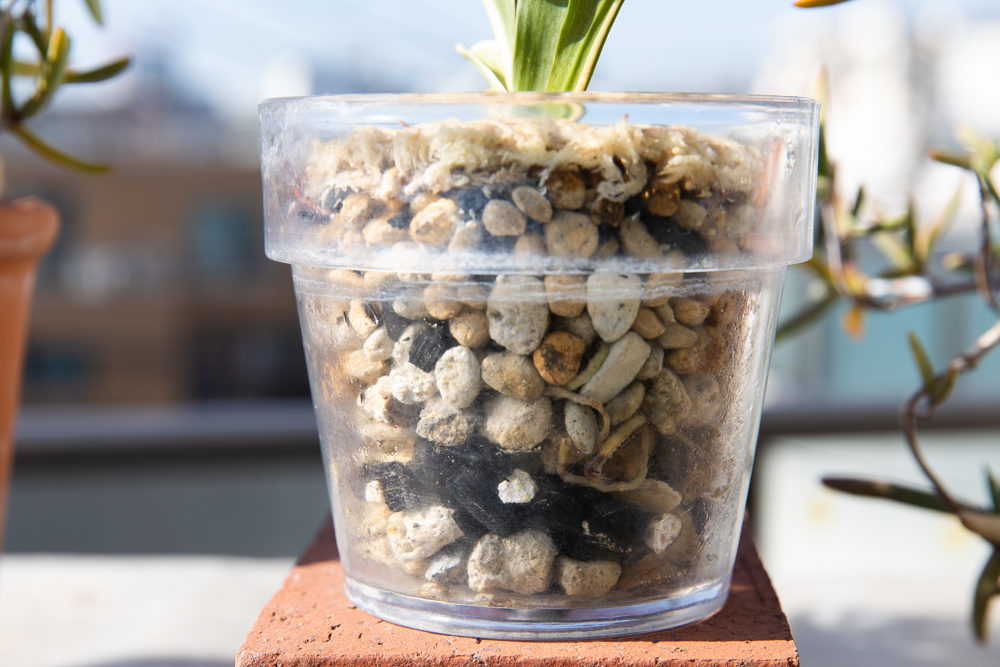
The pot is intentionally slightly larger than the plant, and a glass pot is used to reveal the interior.
To ensure adequate airflow under these conditions, a coarse-grained potting medium was selected.
For Omoto, the potting medium should be free-draining, so that water does not remain stagnant inside the pot.
River gravel, pumice, fired clay, and other well-draining materials are commonly used as the main components.
Commercially available mixes such as “alpine plant soil” or “orchid mix” can also be used as suitable alternatives.
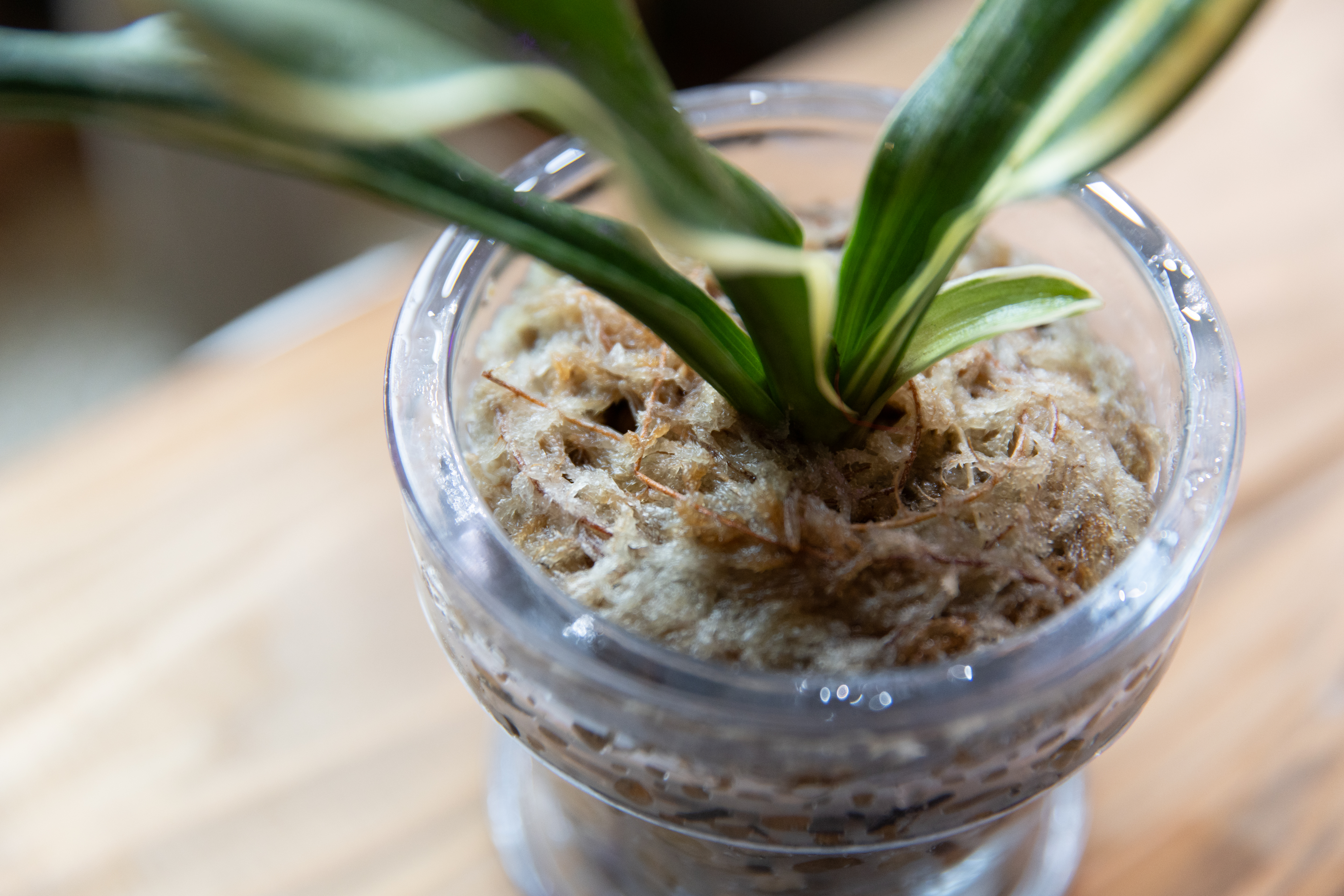
In Omoto cultivation, it is standard practice to place a thin layer of sphagnum moss on the surface of the potting medium (known as top dressing).
This layer of moss helps prevent the surface from drying out too quickly, reduces the loss of soil particles during watering, and suppresses the growth of moss and algae.
It also plays an important role in enhancing the overall appearance of the pot, making it an essential finishing touch—especially for ornamental display pots such as Nishikibachi.
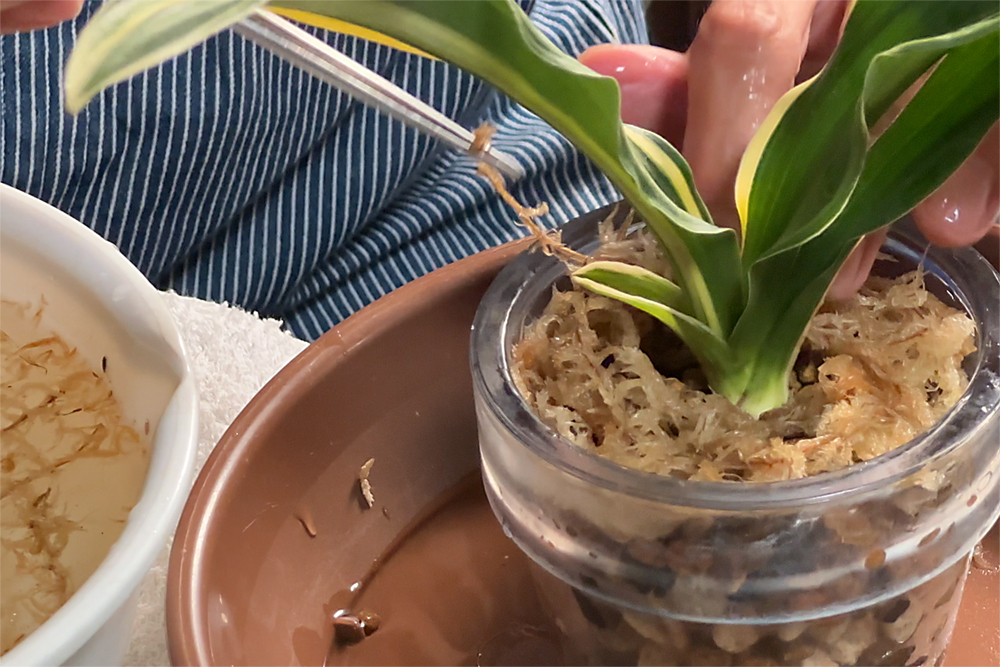
The key is to apply the moss very thinly, with a thickness of about 5–8 mm(0.2–0.3 in)as a guideline.
Do not press it down firmly; instead, spread it lightly and softly around the base of the plant, just enough to gently cover the surface of the soil.
Applying the moss too thickly can restrict airflow and lead to poor ventilation, so moderation is important.
Coconut Husk Chips as an Alternative to Sphagnum Moss
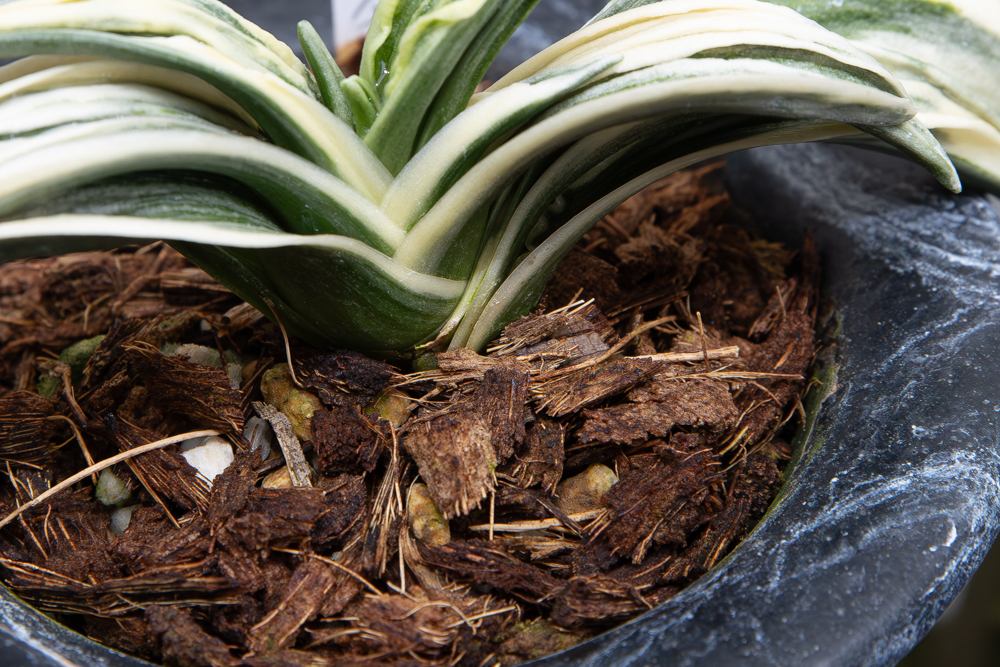
Btw, Kondo-san’s method uses coconut husk chips, like those shown in the photo above, instead of sphagnum moss as a top dressing.
Coconut husk chips offer excellent air permeability and are easier to manage than sphagnum moss, which is why some professional growers prefer them for everyday care during the growing stage.
They are also cost-effective, so using this kind of material is perfectly acceptable and poses no problem for cultivation.
Watering and Fertilization
Watering (⚠️ Pay Close Attention to Sphagnum Moss)
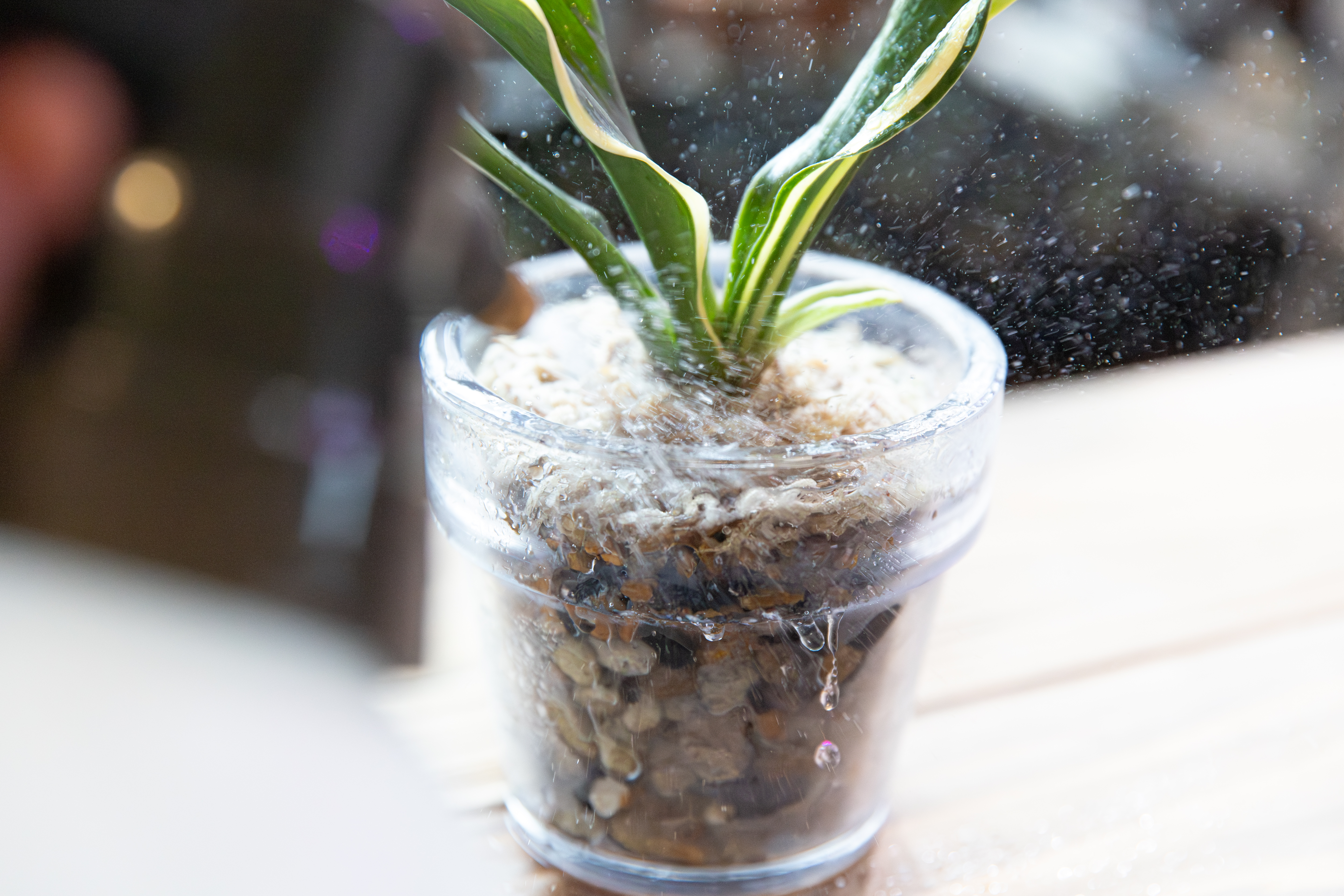
As a basic rule, water thoroughly once the surface of the potting medium has dried, continuing until water flows out vigorously from the drainage holes at the bottom of the pot.
This “thorough flushing” creates a leaching effect, washing away organic acids and other waste products produced by root metabolism, and helps keep the growing environment inside the pot clean and healthy.
However, there is one important point to be especially careful about: ⚠️ the presence of sphagnum moss.
Sphagnum moss is not used solely for appearance. During the root growth periods in spring and autumn, it helps prevent excessive drying and provides a stable level of humidity within the pot.
That said, for beginners, sphagnum moss can make it difficult to judge the correct timing for watering.
This is because even if the surface moss appears dry, the interior of the pot may still retain sufficient moisture.
For this reason, especially when you are still getting used to caring for Omoto, it is best not to water on a fixed schedule. Instead, we recommend checking how moist the inside of the pot actually is before watering.
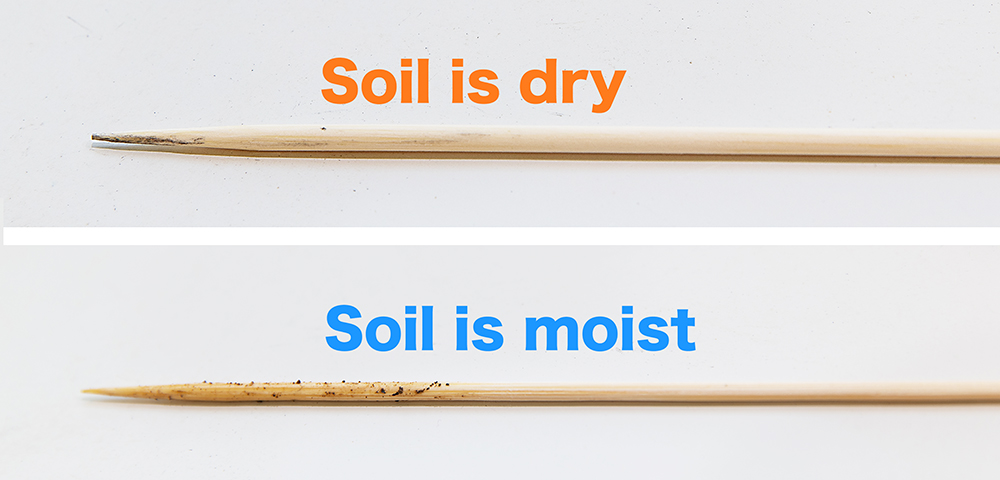
Using a soil moisture meter is one option, but an even simpler and more reliable method is the bamboo skewer test.

Insert a bamboo skewer deeply into the pot near the edge, wait about 30 seconds, then pull it out.
If the skewer feels damp or has soil clinging firmly to it, watering is not yet necessary.
In periods when Omoto growth slows—such as in midsummer or midwinter—limit watering to lightly misting the sphagnum moss once the surface has dried.
During summer in particular, take extra care to avoid excessive moisture buildup, as poor ventilation can easily lead to overheating and rot.
Fertilizing (⚠️ Avoid Overfeeding)
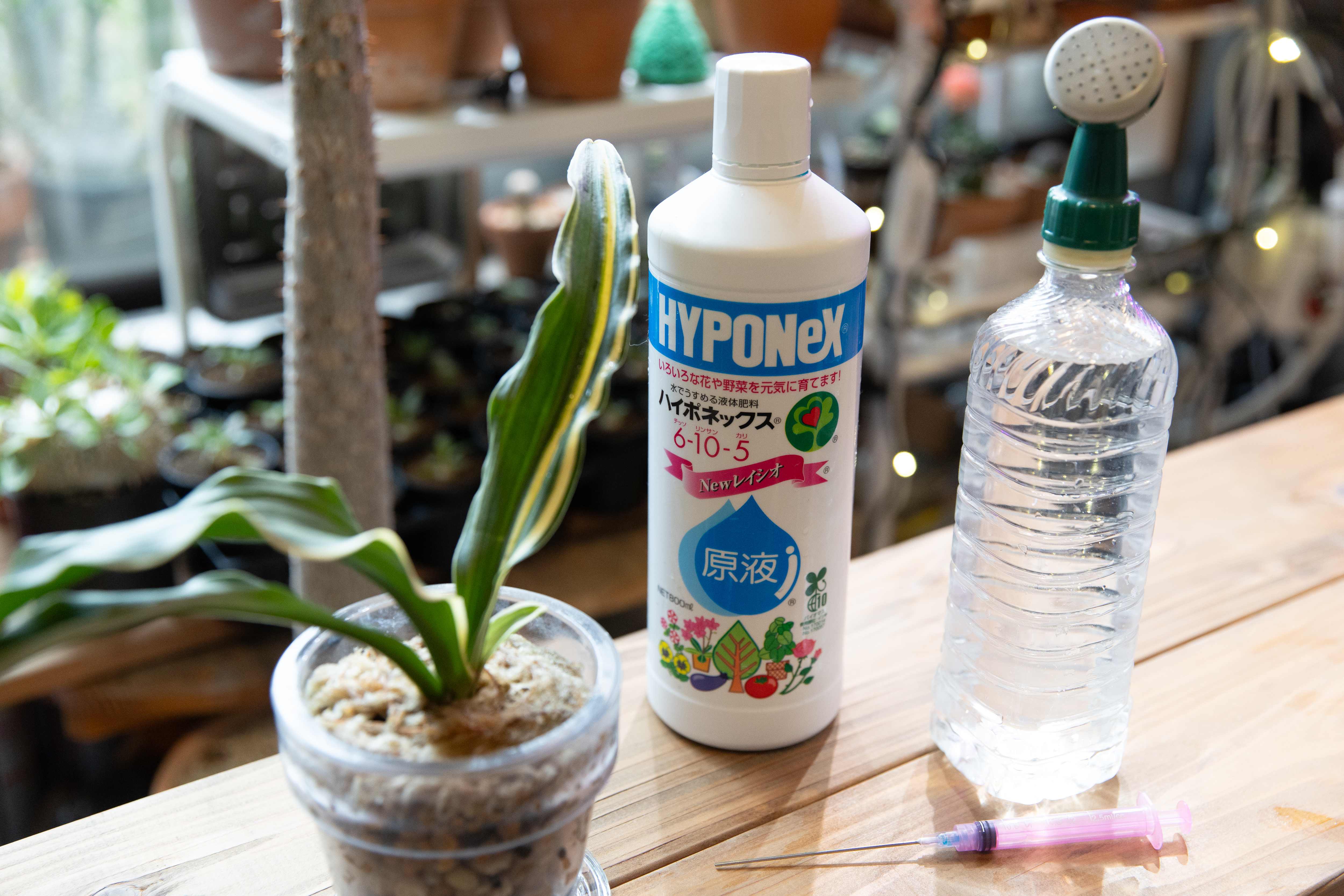
For fertilizing, placing solid bonsai fertilizer pellets after the spring and autumn equinoxes is a reliable approach.
Liquid fertilizer can also be used as an alternative.
When using liquid fertilizer, dilute it to the concentration recommended for orchids.
Because liquid fertilizer is absorbed quickly, it’s safer to err on the side of over-dilution rather than making it too strong.
If the solution is too concentrated, it can damage the roots and soften plant tissue, which may eventually lead to root rot.
Using a horticultural or cosmetic syringe makes it easy to measure precise amounts accurately.
During the active growing season, liquid fertilizer can be applied every two weeks, timed with regular weekly watering.
However, as explained later, if a base fertilizer has already been mixed into the soil at the time of repotting, both solid and liquid fertilization should be withheld.
Tips for Choosing the Right Pot

As mentioned earlier, enthusiasts who enter their prized Omoto in exhibitions or competitions typically use ornamental display pots known as Nishikibachi for formal presentation.
That said, using Nishikibachi for everyday display is by no means a bad choice.
In fact, Nishikibachi are inherently well suited for growing Omoto.
As long as care is taken to prevent damage, keeping your plant permanently displayed in a Nishikibachi can be an excellent option.
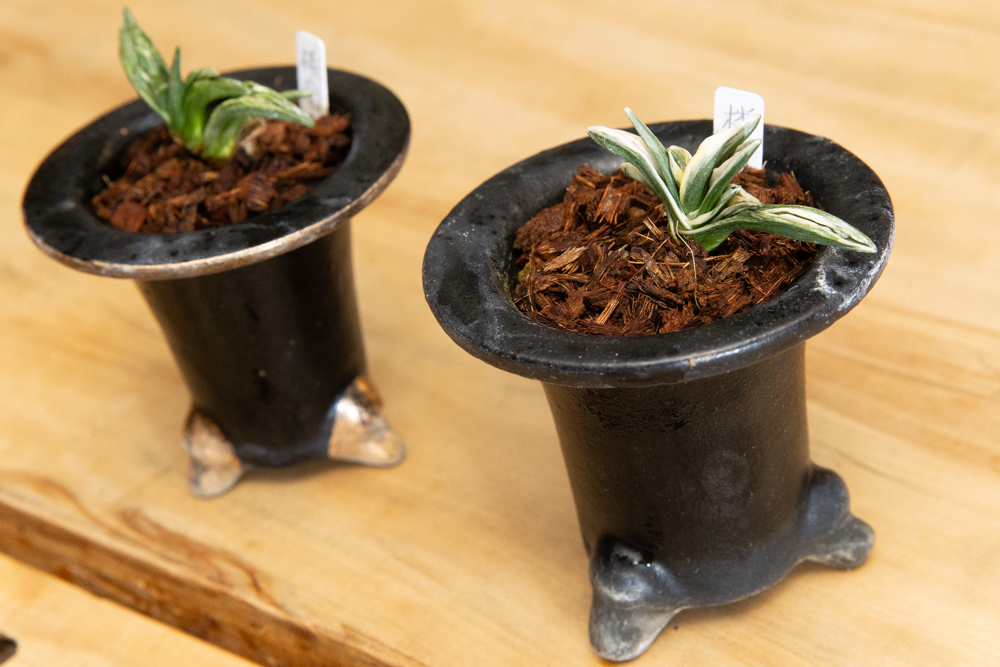
Aside from Nishikibachi, the most commonly chosen alternative is the Kokuraku-bachi, a standard Omoto pot with a simple, unadorned finish, like the one shown above.
Because of its restrained design, it harmonizes beautifully with Omoto.
That said, Omoto can also be grown successfully in orchid pots or even standard terracotta pots without any issues.
Repotting
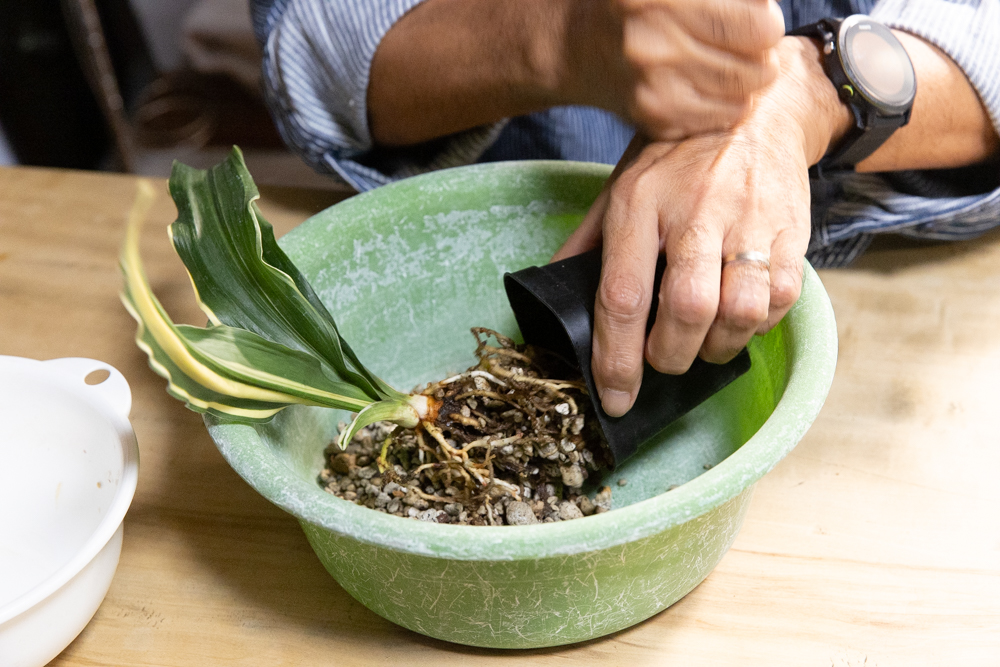
Repotting is best done once a year, ideally after the spring or autumn equinox.
Gently remove the plant from its pot and carefully wash away any old soil from the swollen portion of the main root.
At this time, trimming away damaged or weakened roots helps stimulate the growth of fresh new roots and revitalizes the plant overall.
You can see this process demonstrated step by step in the video below, which provides a clear visual reference.
Under normal cultivation, there is no need to mix base fertilizer into the soil when repotting.
However, if your goal is to actively encourage flowering for hybridization, or to improve fruiting on medium to large plants, adding a small pinch of base fertilizer to the potting mix can be effective.
Key Points for Year-Round Care
In Omoto cultivation, the most important factor is maintaining a clear distinction between the active growing season and the dormant period.
During spring and autumn, when the plant is actively growing, provide sufficient water and fertilizer to encourage healthy development.
In contrast, it is essential that Omoto experiences real winter cold.
Seasonal temperature changes—warm growth periods followed by genuine cold—are a critical key to ensuring Omoto develops with the strength, balance, and character that define the plant.
This clear rhythm of the seasons is what allows Omoto to grow as Omoto, just as it has for centuries.
Pests and Diseases to Watch For
Omoto is generally a robust and resilient plant, but on rare occasions, thrips may appear during spring or autumn.
When thrips infest plants in spring, they feed on the nutrients of newly emerging growth, which can cause serious damage to young leaves and negatively affect overall plant development.
In addition, be mindful of scale insects and red spot disease, both of which can weaken the plant if left untreated.
As a preventive measure, applying a combined insecticide and fungicide to the foliage in early spring is recommended.
The key to successful Omoto care is prevention—addressing potential issues before they appear.
Advice from Kondo-san
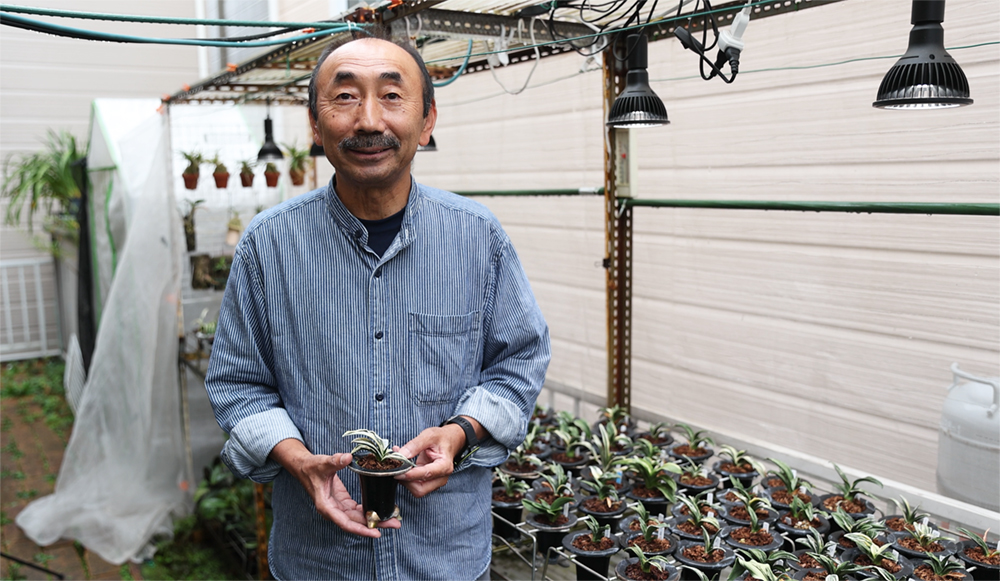
The fastest way to improve at growing Omoto is to have the right mentor or advisor.
Just as in judo or kendo, the world of Omoto has its own philosophy—sometimes referred to as “Omotodo(the Way of Omoto.)”
Who you meet at the beginning, and who you learn from, can greatly influence not only how quickly you improve, but also how deeply you come to enjoy this pursuit.
Personally, meeting a master grower in my neighborhood when I was in high school became the turning point that led me to truly fall in love with Omoto.
Today, there are many experienced Omoto enthusiasts and professionals outside Japan as well.
Using platforms like Facebook to casually connect with like-minded growers is a great way to find a community that suits you.
In the end, it is the connections between people that make this hobby truly rewarding.
Where to Buy Omoto in Japan
Buying from Specialized Growers
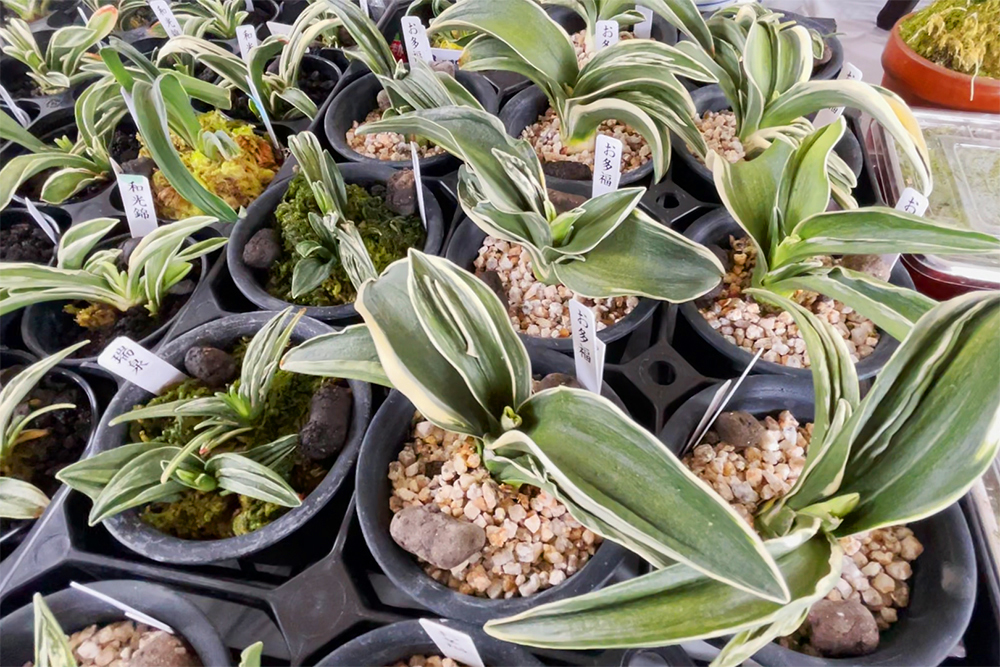
The best place to find Omoto—ranging from beginner-friendly plants to museum-quality masterpieces—is through specialized Omoto growers.
Japan is home to many nurseries dedicated to Omoto cultivation. Here, we introduce three producers who kindly contributed to this article.
Houmeien (Aichi Prefecture)
A prestigious nursery with over 100 years of Omoto history, Toyoake-en is one of Japan’s most respected growers.
Fourth-generation grower Toyotaka Mizuno also shares easy-to-understand and engaging Omoto content on YouTube, making the plant accessible to a wide audience.
Shunko-en (Ibaraki Prefecture)
Shunko-en is a top-tier grower, having won first place for 12 consecutive years at the Japan Omoto Masterpiece Exhibition, along with the Prime Minister’s Awardand other honors.
On Instagram, second-generation grower Hiroyuki Sakai presents Omoto as a form of living art, showcasing its aesthetic depth.
Tatetsu-en (Nagano Prefecture)
Tatetsu-en, which provided the kokedama-style Omoto photos featured earlier in this article, is run by third-generation grower Yusuke Tanaka.
Through Instagram and YouTube, he actively shares modern and approachable ways to enjoy Omoto.
Exceptional plants carefully raised by these forward-thinking specialists can be purchased in Japan via the following online shops.
※Please contact each shop directly to confirm whether international shipping is available.
In addition to the three nurseries listed above, Japan has many other specialized growers.
The official website of the Japan Omoto Growers Association provides a nationwide directory of member nurseries.
If you would like to visit a nursery during your travels in Japan, the following link is a useful resource:
⚠️ Taking Omoto Abroad Yourself
⚠️ Important Notes on Exporting Omoto from Japan
If you plan to purchase Omoto in Japan and export it overseas, proper procedures are required.
First, confirm that your destination country permits the import of plants belonging to the Asparagaceae family.
If inspections are required, these must be conducted by a Japanese Plant Protection Station.
Once the plant passes inspection, a Phytosanitary Certificate will be issued.
This certificate is required during the export plant inspection at the airport.
For detailed information, please contact the Plant Protection Station via the link below:
https://www.contactus.maff.go.jp/j/pps/form/qa_e.html
Buying Omoto at Garden Centers in Tokyo and Nearby Areas

Although the selection is limited, Omoto can also be found at garden centers in Tokyo and the surrounding areas.
【Major Garden Centers】
- Ozaki Flower Park (Nerima, Tokyo)
- Protoleaf Futako-Tamagawa (Setagaya, Tokyo)
- Yoneyama Plantation The Garden – Main Store (Yokohama, Kanagawa)
【Home Improvement Stores】
- Konan Kohoku Inter Store (Yokohama, Kanagawa)
What Is the Japan Omoto Association?
The Japan Omoto Association is an organization dedicated to the preservation, study, and promotion of Omoto, a plant deeply rooted in Japanese tradition.
Its activities include the evaluation and registration of new cultivars, the management of official cultivar names, the organization of exhibitions, and the publication of Omoto journals and reference catalogs.
The Association also conducts research, hosts study groups and lectures, and promotes international exchange related to Omoto culture.
The Association traces its origins back to 1931, when its predecessor, the Japan Omoto Federation, was established.
Since then, it has continuously worked to protect Omoto’s classical aesthetics and cultural heritage, while encouraging its wider appreciation as a horticultural plant and as a form of living art.
Through these efforts, the Japan Omoto Association has contributed to the development of a rich cultural tradition that nurtures both artistic sensibility and a deep respect for nature.
URL:https://www.omoto-jp.org
Conclusion: Omoto — Where Tradition Meets the Present
Writing this article while speaking with Kondo-san of the Japan Omoto Association allowed me to gain a much deeper understanding of Omoto’s long-standing traditions and the world surrounding this plant.
Beyond the plant itself, Omoto is accompanied by a rich culture of pots, tools, and accessories, offering the pleasure of collecting, selecting, and refining one’s own aesthetic over time.
Omoto is a rare plant that embodies both the depth of a classical horticultural tradition and the refined beauty of a modern houseplant.
Spending time cultivating a single, carefully chosen Omoto—while engaging with the spirit of Japanese wabi-sabi—is an experience that feels both meaningful and deeply rewarding.
⸻⸻⸻⸻⸻⸻
Article Cooperation
Japan Omoto Association
URL: https://www.omoto-jp.org
Email: info@omoto-jp.org
⸻
Houmeien (Omoto Nursery)
URL: https://houmeien.co.jp/
Contact: https://houmeien.co.jp/ec/contact
Address: 165 Unagiike Hane-cho Okazaki-shi, Aichi/Japan
Tel: +81-564-51-4714
Fax: +81-564-55-1706
Business Hours: 11:00–15:00 (Irregular holidays)
⸻
Shunkouen (Omoto Nursery)
URL: https://syunkouen.ocnk.net/
Email: itakoomoto@gmail.com
Address: 2-7-2 Hinode Itako-shi Ibaraki/Japan
Tel: +81-90-4128-9634
Fax: +81-299-66-2655
Business Hours: 8:00–17:00 (Open daily)
⸻
Tatetsuen (Omoto Nursery)
Website: https://www.omoto.net/pg331.html
Email: shop@omoto.net
Address: 188 Akanuma Nagano-shi Nagano/Japan
Tel: +81-26-251-3001
Fax: +81-26-251-3002
Business Hours: Weekdays 9:00–17:00 (Closed Thursdays)
Credit
Text & Photo (non-credit) / Garden Story Editorial Team
Follow our official SNS accounts
to receive the latest information!






Latest Articles
-
Gardens & Shops
Love Houseplants? Discover the Appeal of Miniature Bonsai
Discover the appeal of miniature bonsai, especially for houseplant lovers. Learn how to enjoy and care for these tiny trees, plus recommended species for beginners, with insights from Masa Koike of K…
-
garden
Discover the Stunning European-Style Fountain Garden at Suma Rikyu Park
The Suma area has long been known as a place of relaxation and is home to historical sites dating back to the Heian period. Kobe Municipal Suma Rikyu Park (hereafter “Suma Rikyu Park”) was created on…
-
free garden

Discover the Stunning Flower Fields of Kurihama Flower Park
Kurihama Flower Park was developed by the City of Yokosuka as a relaxing retreat for local residents. In spring, its vast flower fields burst into bloom with one million poppies, while autumn brings …
Follow us


